- Beautiful pixel art praised
- Core gameplay is fun
- Controls are poor across platforms
- Gameplay becomes repetitive quickly
- Combat feels clunky and stiff
- Poor optimization on PC
Emotions
Archetypes
Hardware
What players like:
Common complaints:
Gameplay feedback:
Performance notes:
Recommendations:
Other player notes:
Similar games
Blend with other games


Review evidence
Why players say this
Review evidence
Why players say this
Steam review verdict
Beautiful pixel art and fun core gameplay are let down by poor controls, repetitive gameplay, clunky combat, and poor optimization.
What players like
Beautiful pixel art praised: Multiple reviews highlight the game's pixel art as visually appealing, charming, and well-crafted. The art style is consistently praised as a standout feature.
Core gameplay is fun: The fundamental gameplay mechanics are widely considered enjoyable and engaging. Reviewers find the game fun without needing much explanation, indicating intuitive design.
Overall game quality high: Reviews often describe the game as great, amazing, or even a masterpiece, noting high quality for its price and addictive nature. The game is considered a very good indie title.
Dungeon and shop mix works: The combination of dungeon crawling and shop management is a frequently praised feature. Reviewers find the blend of these mechanics creative, fun, and surprisingly well-executed.
Relaxing and cozy experience: Many reviews describe the game as relaxing, comfy, and easy to get into. It is seen as a pleasant and chill experience that can be enjoyed calmly.
Common complaints
Controls are poor across platforms: A large number of reviews complain about the controls being unresponsive, clunky, and poorly designed on both keyboard and controller. Controller support is described as torturous, and keyboard bindings are often nonsensical, making the game difficult to play regardless of input method.
Gameplay becomes repetitive quickly: Players across multiple clusters report that the game becomes monotonous after a few hours or after clearing just a few dungeons. The repetitive dungeon layouts, reskinned enemies, and grinding loop are frequently cited as the main causes of boredom.
Combat feels clunky and stiff: Many reviews highlight that the combat system is unpolished, with hitboxes being unfair and attacks feeling unresponsive. The fighting mechanics lack depth and variety, leading to a frustrating and monotonous combat experience.
Combat lacks variety and depth: Players say the combat is boring and lacks meaningful combo systems or enemy variety, making fights feel repetitive. The lack of engaging mechanics reduces the overall enjoyment of the game.
Keyboard controls are nearly unplayable: Several players explicitly state the game is practically unplayable with a keyboard and mouse, citing awkward bindings and lack of mouse support. This makes PC play frustrating without a controller.
Gameplay and performance
Dungeon exploration and crawling: Players regularly enter dungeons to fight enemies, collect loot, and progress. This activity is a central pillar of the gameplay loop, alongside shop management.
Shop management and selling items: The game is primarily a shop management simulator where players set prices, manage inventory, and sell items to customers. This is a core gameplay element frequently mentioned by reviewers.
Hybrid of shopkeeping and dungeon crawling: The game blends two distinct mechanics: running a shop and exploring dungeons. Reviewers frequently describe this hybrid as the game's core identity, creating a unique gameplay experience.
Roguelike and roguelite elements: The game incorporates roguelike characteristics such as procedural dungeons and permadeath (or similar runs), which add replayability. This is a common theme in player feedback.
Day and night cycle: Players manage the shop during the day and explore dungeons at nightkele. This alternating routine provides structure and variety, serving as a key gameplay loop.
Poor optimization on PC: Several reviews complain about poor optimization on PC, with the game running badly on the reviewer's systemressions of performance issues are common, indicating an inconsistent experience across different hardware configurations.
Frequent crashes and launch failures: Users report the game crashing frequently or failing to launch altogether, with crashes occurring at specific events like dungeon transitions, warping, and boss kills. This points to stability issues that can disrupt gameplay significantly.
Runs well on low-end hardware: Multiple users report the game runs smoothly even on very old or low-spec computers, including a 16-year-old laptop and a 'potato' PC. This suggests the game is well-optimized for weaker hardware setups.
Perfectly optimized for Steam Deck: Positive feedback highlights that the game runs perfectly on the Steam Deck, consuming low power and performing better than on other platforms. This makes it a recommended experience for handheld owners.
Poor controller recognition: There are poor controller button recognition issues, and the controller frequently stops working, which is confirmed as a game-specific issue. This severely impacts gameplay for controller users.
Recommendations
Game highly recommended overall: Multiple clusters strongly recommend the game, citing it as fun, worth it, and awarding high scores like 9/10 and 10/10. This indicates a broadly positive reception.
Best value on sale: Many reviewers suggest purchasing the game during a sale or at a discount, indicating the full price may not be ideal. Some state it is worth only when discounted.
Recommended for roguelike shop fans: The game is particularly recommended for players who enjoy roguelike mechanics combined with cozy shopkeeping or store management. Several clusters highlight this niche appeal.
Not recommended by some: Some clusters do not recommend the game, with negative feedback like 'not worth playing' and 'do not buy'. This indicates a minority of dissatisfied players.
Worth full price: A few clusters assert the game is totally worth buying even without a discount, with some saying they would buy it regardless. This contrasts with sale recommendations, showing mixed pricing opinions.
Buying context
Community fair range: $5.00 - $15.00.
Game completion: 20.0h.
Story completion: 20.0h.
Session length: 2.5h.
The game provides strong initial enjoyment within the first few hours due to novel mechanics and charming presentation, but quickly becomes repetitive and grindy, causing enjoyment to decline sharply.
Friction: confusing tutorial; awkward PC controls; unclear price discovery mechanics; punitive early difficulty.
Player profiles
Chill Casual Player: Casual exploration and steady progression without seeking challenges. Motivation: Relaxation and stress relief through simple, low-stakes gameplay. Stance: sale.
Grind-Dedicated Completionist: Methodical and persistent grinding with focus on efficiency and collection. Motivation: Achieving 100% completion and maxing out upgrades. Stance: sale.
Genre-Savvy Comparer: Analytical, comparing mechanics and measuring depth against known references. Motivation: Finding a game that matches or improves upon genre classics. Stance: sale.
Platform notes
Performance varies across hardware: low-spec Windows systems receive mixed feedback with both playable and broken experiences, mid-range VRAM faces optimization issues, high-end VRAM has mixed controller and frame-rate problems, while the Steam Deck runs the game well.
Windows <8GB VRAM / <16GB RAM: mixed. Mixed reports: one user finds the game good despite boot lag from high-quality videos, while another reports persistent black screen making it unplayable.
Windows <8GB VRAM / 16-31GB RAM: mixed. Mixed reports: one user praises graphics and low requirements, but another criticizes poor optimization and is unable to progress past the first boss.
Windows 12-15GB VRAM: negative. Negative report: the game is not optimized for ultrawide, has poor mouse support, and features unskippable slow dialogue and cutscenes.
Steam Deck: Moonlighter on Steam Deck presents a mixed experience: while performance and power efficiency are praised, the game suffers from severe controller issues, poor text scaling, and stability problems that require forcing Proton Experimental or other workarounds. Users must tinker to achieve a playable state, and some encounter black screens. Overall, it is not a seamless experience but can be enjoyable after configuration.
Linux and Proton: The native Linux build of Moonlighter has controller mapping issues, especially with DualSense, requiring users to force Proton Experimental or default Proton. The Proton version itself runs well and is recommended by the community. The game is not broken on Linux, but the native port needs work.
Extra review signals
Monetization: The reviews contain no evidence of microtransactions, pay-to-win mechanics, or predatory monetization. Monetization is limited to a one-time purchase of the base game and an optional DLC expansion. Complaints about in-game pricing refer to gameplay systems, not real money. The game is fair and non-predatory.
External guides: User feedback consistently highlights a heavy reliance on external resources for pricing data and basic game mechanics. The shop pricing system is particularly problematic, requiring players to consult spreadsheets or guides. Additionally, many in-game systems lack clear explanations, leading to guesswork and the need for cheat sheets or wikis. A minor technical bug was also noted.
Other review notes
Free promotion influenced purchases: Many reviewers obtained the game for free through a promotion or sale, which influenced their perception and purchase decisions. This likely increased the player base but may affect review bias.
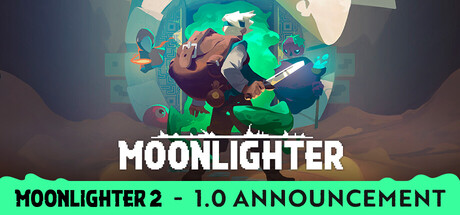
Sequel existence and expectations: A sequel, Moonlighter 2, is mentioned as announced or in development, with reviewers expressing anticipation. This indicates the game's success and a continuing franchise.
Comparisons to similar games: Reviewers frequently compare the game to titles like The Binding of Isaac, Cult of the Lamb, and Zelda, noting similarities in gameplay and style. These comparisons help define the game's genre and appeal.
DLC adds significant content: Players mention the DLC provides additional content, sometimes more than the base game, including an extra boss. This suggests the DLC is a substantial part of the overall experience.
Variable game length reported: Playtime estimates vary widely, from short one-sitting runs to over 20 hours, depending on playstyle and content. This suggests the game accommodates different engagement levels.