- Memorable and deep characters
- Exceptional soundtrack and story
- Masterpiece with philosophical themes
- Poor keyboard and mouse controls
- Side quests feel like filler
- PC port has performance issues
Emotions
Archetypes
Hardware
What players like:
Common complaints:
Gameplay feedback:
Performance notes:
Recommendations:
Other player notes:
Similar games
Blend with other games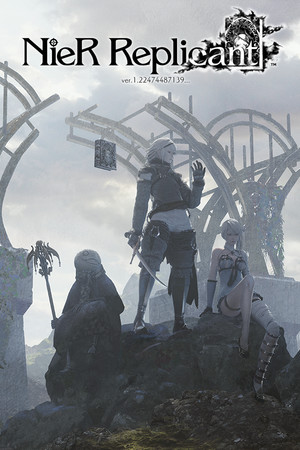





Review evidence
Why players say this
Review evidence
Why players say this
Steam review verdict
A philosophical masterpiece with memorable characters and an exceptional soundtrack, though its PC port suffers from performance issues, poor keyboard and mouse controls, and filler side quests.
What players like
Memorable and deep characters: Characters like 2B, 9S, and A2 are highlighted for their depth, development, and emotional resonance. Players find them unforgettable and well-written, with strong chemistry and growth.
Game is a masterpiece: Players overwhelmingly praise the game as one of the greatest ever made, highlighting its exceptional gameplay, beautiful design, and unforgettable experience. The high frequency and specific praise indicate a universally acclaimed title.
Soundtrack is exceptional: The soundtrack is repeatedly described as one of the best of all time, with many noting its emotional impact and perfect fit with the game's atmosphere. This consistent high praise underscores its critical role in the experience.
Well-written and engaging story: The narrative is frequently described as brilliant, well-crafted, and captivating, with strong plot twists and unique storytelling. Players find the story a compelling reason to play.
Deep philosophical themes: The game is lauded for its profound philosophical questions about existence, life, and meaning, often referencing existentialist thought. Players find it thought-provoking and emotionally impactful, elevating it beyond typical gaming.
Common complaints
Keyboard and mouse controls are poor: Players report that keyboard and mouse controls are awkward, unintuitive, and sometimes unplayable, especially for dodging which requires a double tap. This makes the game significantly harder compared to using a gamepad.
Side quests feel like filler: Many side quests are described as tedious, repetitive, and involving excessive running around, with rewards not worth the time. Some are confusing to track, adding to the frustration.
No autosave feature: The absence of an autosave feature is a major annoyance, as players must manually save and can lose progress if the game crashes. This adds stress and inconvenience, especially during critical moments.
9S hacking minigame is repetitive: The hacking minigame for 9S is criticized as boring, frustrating, and drawn out, becoming repetitive over time. It is often the only viable option in fights, which limits gameplay variety.
Gameplay is not polished: Overall gameplay is described as average, lacking polish, and having many flaws. Some players find it terrible or insufficiently playable, indicating a general dissatisfaction with the core experience.
Gameplay and performance
Multiple playthroughs required for full story: The game is designed to be played multiple times, with each playthrough revealing new perspectives and leading to different endings. Players must complete several routes to fully understand the narrative and reach the true ending.
Hack-and-slash combat with action elements: The core gameplay is hack-and-slash action combat, featuring combos, weapons, and boss fights. It blends elements of bullet hell and souls-like combat for a unique challenge.
Multiple routes and endings: The game is structured into multiple routes (A, B, C, E) and features several endings, including a true ending E. Players must play through all routes to experience the complete story.
Open world with side quests: The game features an open-world structure with a vast explorable map, fast travel, and numerous side quests. Side quests often involve fetch and kill objectives and extensive map traversal.
Hacking minigames for 9S: The game includes hacking minigames, particularly in Route B, where players control 9S. These minigames are styled like old arcade machines and add variety to the gameplay.
Performance varies widely: Some players report smooth performance on low-end hardware, while others experience lag, frame drops, or crashes. This inconsistency suggests optimization issues that depend on system configuration.
PC port is poor: Multiple reviewers report the PC port is below mediocre, shameful, or poorly made, requiring mods to work properly. This indicates widespread dissatisfaction with the port's quality.
60 FPS cap: The game is capped at 60 FPS, preventing higher frame rates on capable hardware. Some note that modding to exceed this cap can break the game, as it's designed around 60 FPS.
Freezing and crash bugs: Several reviewers encountered freezes, crashes, or a bug where the game freezes but continues audio. Some fixes include switching to DX11, enabling Steam controller overlay, or turning off Vsync.
Resolution and LOD issues: The game has an LOD adjustment issue that cannot be fixed with quality settings, and on Windows it may output at a lower resolution than set. Mods are needed to fix these issues, but they don't always improve performance.
Recommendations
Highly recommended overall: Many reviewers strongly recommend the game, calling it exceptional and a must-play. They emphasize that players will not regret spending time and money on it.
Play NieR Replicant first: Several reviewers recommend playing the predecessor, NieR Replicant, before Automata to understand the world and story better. This enhances the impact of the narrative.
Use a controller: Reviewers consistently advise using a controller or gamepad instead of keyboard and mouse for a much better experience. This suggests the game's controls are optimized for gamepads.
Don't stop after credits: Reviewers emphasize not quitting after the first credits or ending, as the game continues and reveals more content. This is crucial for experiencing the full story.
Great for story lovers: The game is recommended for players who enjoy deep stories, elaborate character design, and a phenomenal soundtrack. It appeals to action RPG fans who value narrative.
Buying context
Community fair range: $15.00 - $30.00.
Game completion: 61.5h.
Story completion: 21.5h.
Nier: Automata has a notoriously punishing tutorial with no save points that frustrates many players, but those who push through the first hour or into later routes find a deeply rewarding, emotionally resonant experience.
Reported time to anchor: 1h.
Friction: Long tutorial without save points; No checkpoints, restart from beginning on death; Repetitive early content and side quests; Camera and lock-on issues; Confusing controls and lack of tutorial guidance; Hard difficulty spikes in the opening.
Unlock drivers: Getting past the tutorial; Unlocking save points; Learning evasion and combat mechanics; Reaching route B/C perspective changes; Understanding the progression system; Getting invested in the story.
Player profiles
Existential Story Devotee: Story-focused, immersive, willing to play multiple routes to uncover all narrative layers. Motivation: To experience a profound, emotionally resonant story that explores existential and philosophical questions. Stance: buy.
Completionist Achievement Hunter: Completionist, grinding, doing all side quests, using guides, possibly buying achievements. Motivation: To achieve 100% completion and obtain all achievements/trophies. Stance: sale.
Gameplay Critic Pragmatist: Critical, analytical, may use mods to fix issues, may skip side quests. Motivation: To enjoy solid gameplay and technical polish; they are frustrated by design flaws. Stance: sale.
Platform notes
The game performs well on most Windows and Linux/Proton configurations, especially lower-end systems, with stable 60 FPS and good optimization; however, higher-end Windows users frequently cite the 60 FPS cap and poor cutscene quality as significant drawbacks.
Windows <8GB VRAM / <16GB RAM: positive. Runs well even on low-end hardware, with most users reporting smooth performance and only minor visual bugs.
Windows <8GB VRAM / 16-31GB RAM: positive. Performance is solid, with no major technical problems; occasional audio cutouts were the only notable issue.
Windows 8-11GB VRAM: positive. Most users report stable 60 FPS and good optimization, though a few complain about the 60 FPS cap and poor optimization.
Steam Deck: NieR: Automata runs flawlessly on Steam Deck with native controller support and no required tinkering. Minor visual limitations like 30fps cutscenes and lack of upscaling exist, but they do not hinder the experience. Keyboard/mouse controls are poor, but irrelevant on Steam Deck.
Linux and Proton: The game generally runs well on Linux with some users requiring minor tweaks like gamescope or switching to Vulkan. There are isolated reports of freezing and modding difficulties, but overall the game is playable and well-optimized for most Linux users.
Extra review signals
Monetization: The user reviews mention paid DLC and a vague cash grab accusation, but there is no direct evidence of microtransactions, pay-to-win, gacha, or a real-money shop. The game appears to be a one-time purchase with traditional DLC, and the criticisms are either unsubstantiated or speculative.
Mod reliance: The audit reveals a strong community consensus that NieR: Automata on PC requires mods to achieve acceptable performance and visual quality. Users frequently cite the FAR mod for fixing technical issues and texture packs to avoid a dated 'PS2' look. However, there is no mention of crashes on startup or other game-breaking bugs that prevent the game from running. The reliance is on enhancement and optimization rather than mandatory fixes for functionality.
External guides: User feedback reveals a strong dependency on external wikis and guides due to insufficient in-game information. The most critical issue is the lack of farming and drop data, forcing players to consult wikis for resource grinding. Navigation, obscure mechanics, and inventory management also contribute to the wiki reliance.
Other review notes
Multiple endings require replay: The game features numerous endings, including 26 total, with the true ending requiring multiple playthroughs. This design encourages replayability but may frustrate some players.
Lack of Chinese localization: Players frequently complain that the game lacks official Chinese language support, despite having a Chinese store page. This is a significant barrier for Chinese-speaking players.
Compared to NieR Replicant: Reviewers often compare the game to NieR Replicant, with some finding Replicant more impactful in dialogue and emotional intensity, while others prefer this game's gameplay.
Connected to Drakengard lore: The game is part of a larger saga that includes Drakengard and NieR Replicant, with its universe and story deeply connected to these titles. This enriches the experience for series veterans.
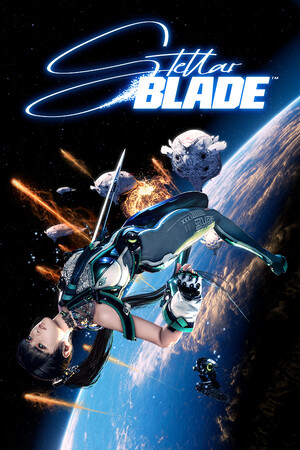
Comparisons to Stellar Blade: Many reviewers compare the game to Stellar Blade, with mixed opinions on which is superior in combat, outfits, and music. Some find this game better and more mature, while others prefer Stellar Blade.