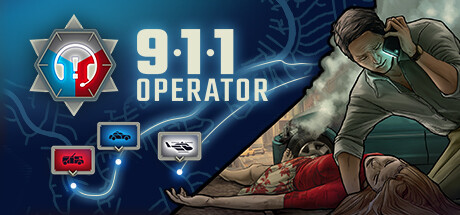
- Engaging, strategic, and addictive emergency dispatch simulation.
- Authentic 911 operator experience with global maps.
- Accessible gameplay allows for casual relaxation.
- Gameplay becomes repetitive, lacking long-term depth.
- Suffers from poor UI, controls, and frequent bugs.
- Unbalanced difficulty can lead to stressful play.
Emotions
What players like:
Common complaints:
Gameplay feedback:
Performance notes:
Recommendations:
Other player notes:
Similar games
Blend with other games






Review evidence
Why players say this
Review evidence
Why players say this
What players like
Engaging, Strategic, and Addictive: Players consistently find the game fun, highly engaging, and addictive due to its unique concept and strategic depth. It offers a captivating blend of chaos and thoughtful decision-making, providing an immersive experience for both short and long play sessions.
Accessible for Casual Relaxation: Despite its intense themes, the game is often described as a good casual game suitable for passing time, relaxing in the evening, or overcoming gaming burnout. Its intuitive interface and stable performance contribute to an accessible and generally low-stress experience.
Authentic 911 Operator Experience: The game provides a deeply realistic and immersive simulation of being an emergency dispatcher. Players feel the urgency, responsibility, and stress of making critical decisions in real-time, fostering appreciation for actual 911 operators.
Practical Real-World Educational Value: The game offers significant educational value, teaching players basic first aid, emergency protocols, and how to behave in various crisis situations. Useful tips are integrated into gameplay and loading screens, providing practical knowledge that could be life-saving.
Global Real-World Map Integration: A standout feature is the ability to download and play on real-world maps of almost any city globally. This adds a unique layer of authenticity, personalization, and educational value, allowing players to dispatch services in their own hometowns.
Common complaints
Repetitive Gameplay & Limited Depth: A vast majority of players found the core gameplay loop extremely repetitive, quickly leading to boredom and a feeling of monotony. The game is perceived to lack significant depth, content, or replayability to justify its price, often feeling like a short, basic experience or a mobile game. Many feel the game is not worth its cost, especially considering the additional expense and perceived lack of value from DLCs.
Poor UI & Control Design: The user interface is widely criticized for being inconvenient, unreadable, and outdated. Key issues include overlapping unit/incident icons that hinder selection and unit management, a lack of essential hotkeys (e.g., for time control, multi-unit selection), and an overall clunky control scheme that negatively impacts gameplay efficiency and player experience.
Frequent Bugs & Technical Problems: Players reported numerous bugs, including frequent game crashes, freezing, and critical save file issues that led to lost progress. The game is often described as feeling raw, unfinished, or unpolished, with a perceived lack of developer attention to fixing these persistent technical flaws across various platforms.
Unbalanced Difficulty & Stressful Play: The game's difficulty balance is criticized for being poorly implemented, with drastic and unrealistic spikes, particularly in higher modes that remove core features like pausing. This leads to overwhelming situations and makes the game feel more like a stressful chore than an enjoyable experience, frequently resulting in player frustration or being "fired" in-game.
Unrealistic & Illogical Simulation: The game fails to accurately simulate real-world 911 operations, featuring illogical penalties for appropriate responses, unrealistic call scenarios, and mechanics that don't align with actual dispatcher roles (e.g., hiring staff, political correctness). This detracts from the immersive simulator experience many players expect.
Gameplay and performance
Emergency Dispatch Simulation Core: Players assume the role of an emergency dispatcher, taking various calls, assessing situations, and strategically deploying police, fire, and medical units on a city map. The core gameplay revolves around managing limited resources and making critical decisions under pressure to prioritize and resolve diverse incidents.
Challenging Strategic Management: The game offers adjustable difficulty levels, ranging from relaxed to overwhelming, requiring strategic thinking, quick decisions, and efficient resource allocation. Players must multitask and prioritize incidents, as mistakes are costly and limited resources can lead to chaos under pressure.
Diverse Global City Maps: Players can operate in numerous real-world cities, including their own, with maps sourced from open databases. The game offers different modes, such as career progression through challenging cities and a free play mode for open-ended dispatching.
Accessible Gameplay, Variable Length: Despite potential complexity, the game has simple controls and a clear tutorial, making it easy to learn. Gameplay sessions can be short (10 mins) or longer, with career modes offering 5-10 hours of content, expandable via DLC, catering to both casual and dedicated players.
Customizable Units & Equipment: Players actively manage their emergency services by buying new vehicles, hiring staff, and purchasing various equipment, from basic tools to specialized vehicles like helicopters. Units can be upgraded, and personnel can be assigned to optimize response capabilities.
Optimized for low-end PCs: The game is highly optimized, running smoothly on older or low-spec hardware, including 'potato PCs' and low-end office laptops. It also performs exceptionally well on portable devices like the Steam Deck, maintaining stable frame rates even with power limitations. The game's small file size and generally well-aged technical foundation contribute to this accessibility.
Average graphics, weak soundtrack: The graphics are considered standard for a simulation game of its style, rated around 8/10, meeting expectations. However, the soundtrack receives a lower rating (5/10), with at least one reviewer opting to mute it during gameplay due to its quality or repetition.
Recommendations
Worth playing, ideally on sale: Many players recommend the game, often giving it positive ratings (7-10/10), especially for those interested in its unique concept. However, a significant number advise purchasing it only when it's free or heavily discounted (80% off or under $5-$10), as they don't find it worth its full price.
Developer support and bug issues: Criticisms include a perceived lack of developer attention to bugs, leading to a poorly made game with language-specific issues. Some players express reluctance to purchase future games from the developer due to these concerns, and the gameplay itself is also described as boring.
Sequel 112 Operator recommended: A strong and frequent recommendation is to play the successor, '112 Operator', instead. Reviewers suggest '112 Operator' offers significant improvements, a clearer UI, and a more detailed experience, rendering '911 Operator' a less optimal choice, especially if one has experience with the sequel.
Appeals to simulation/strategy fans: The game is highly recommended for players who enjoy management, simulation, and strategy genres, particularly those interested in emergency services, micromanagement, and decision-making under pressure. It caters to those who like map-based games and coordinating chaotic situations.
Tutorial is broken: A critical flaw highlighted by reviewers is the broken tutorial system. This issue significantly hinders new players' ability to learn the game mechanics, with some stating they would not keep a game with such a fundamental problem in their library.
Other review notes
Widely Acquired for Free: A significant number of players obtained the game for free or at a deep discount, often during special promotions or giveaways. This accessibility was a major factor for many trying out the game.
Enjoyable for Short Sessions: The game is generally well-received as a casual experience, suitable for passing a few hours or evenings. However, many players note its repetitiveness can limit long-term engagement, making it better for short-term fun rather than extended play.
Potential for Deeper Content: While the game's concept is praised, many reviewers express a desire for more detailed gameplay, larger maps, and a greater variety of scenarios or calls. Players hope developers will continue to expand the content and features, suggesting an upgraded version could be excellent.
Builds Empathy for Dispatchers: The game effectively conveys the challenges and stresses of being an emergency dispatcher, leading many players (including real-life operators) to express increased respect and admiration for those in the profession. It highlights some aspects of the real job, though not always perfectly accurately.
Localization & Map Challenges: Players encountered specific issues with map downloads, sometimes requiring workarounds like changing game language. While multiple languages are supported, there's a demand for more specific regional localization (e.g., Russian voice acting) and adjustments for local terminology.