- Cozy and fun gameplay
- Relaxing and meditative experience
- Beautiful visuals and art style
- Gameplay becomes repetitive and dull
- Building and placement issues
- Limited content and early access

Emotions
Archetypes
Hardware
What players like:
Common complaints:
Gameplay feedback:
Performance notes:
Recommendations:
Other player notes:
Similar games
Blend with other games




Review evidence
Why players say this
Review evidence
Why players say this
Steam review verdict
Cozy, relaxing, and visually beautiful with meditative fun, though repetitive dull gameplay, building placement issues, and limited early-access content hold it back.
What players like
Cozy and fun gameplay: Players repeatedly describe the game as cozy, fun, and charming, with a relaxing and calming atmosphere.
Relaxing and meditative experience: Feedback highlights the game as excellent for relaxation, quiet, and emptying your mind, with a calming and spiritual experience.
Beautiful visuals and art style: Many reviewers praise the stunning, pretty, and aesthetically pleasing visuals, including the nice and stylish art style.
Pleasant background music: The music is frequently described as pleasant, lovely, and spot on, enhancing the overall experience.
Stable and bug-free: Reviewers note that the game runs smoothly without glitches or bugs, even in Early Access.
Common complaints
Gameplay becomes repetitive and dull: The gameplay loop is described as repetitive, dull, and increasingly boring over time, with bonus activities turning into an exhausting clicker and many clickable activities becoming hard to track. It lacks novelty and fails to sustain engagement.
Building and placement issues: Placing buildings, stalls, and decorations can be clunky, with inconsistent snapping behavior and restrictions like inability to place on certain floor types. These issues force workarounds and reduce building satisfaction.
Limited content and early access: Players report that the game currently lacks substantial content and can be quickly exhausted, with few items, shops, and decorations available. The early access state feels sparse and offers low gameplay substance.
Poor performance and optimization: Players experience lag after long sessions, FPS drops below 20 in fully built cities, and optimization problems on laptops. Minimum hardware requirements are also reported as inaccurate.
Terrible visibility and readability: The game is darker than expected, making navigation difficult, and poor visibility affects players with visual impairments. Fonts, icons, and text are hard to read, and some text overflows or blends into backgrounds.
Gameplay and performance
Core market building and management: Players build and decorate market structures, manage shops and farms, and produce goods in a cozy building game.
Building placement and decoration: Players place buildings, stalls, and decorations, with construction and management gameplay focused on customization.
Relaxing, stress-free pacing: The game has a calm pace with no real time limits or grinding, and players can stop at any point without negative consequences.
Spirits and characters interact: Spirits wander the market, speak emotional dialogue, and give bonuses, while cute characters interact with placed objects.
Japanese spirit world setting: The game is set in a Japanese village or spirit world, featuring folklore themes and mono no aware flavor.
Mixed performance experiences reported: Some players report excellent performance with high FPS, while others experience optimization issues, frame drops, and hardware strain. This inconsistency suggests performance varies significantly by hardware configuration.
Optimization issues and inaccurate requirements: Players report optimization problems and note that the minimum hardware requirements are not accurate. This can lead to poor performance on systems that supposedly meet the requirements.
Frame rate drops in large cities: Players report significant FPS drops, sometimes to 20 FPS or lower, when the city is fully built. Performance also degrades after long play sessions, indicating potential memory leaks or optimization problems.
Game runs stably despite Early Access: Despite being in Early Access, the game is reported to run stably and smoothly, with no major performance concerns for some players. This positive feedback contrasts with reports of optimization issues.
Works well on handheld devices: The game works surprisingly well on a Legion Go 2 running Steam OS, indicating good compatibility with portable hardware. This suggests the game is optimized for a range of devices.
Recommendations
Ideal for pure relaxation: Many reviewers recommend the game for players seeking a chill, stress-free experience to decompress, with no real-time limits, grinding, or pressure. It is repeatedly described as cozy and perfect for sitting back and relaxing.
High praise from satisfied players: Numerous reviewers express strong recommendations, calling it wonderful, a masterpiece, or absolutely worth playing. The overall sentiment is overwhelmingly positive with phrases like 'highly recommended' and '10000% recommended'.
Strong Japanese aesthetic and Ghibli vibe: The game's Japanese folklore inspiration and Studio Ghibli-like atmosphere are frequently praised, attracting fans of Spirited Away and similar aesthetics. This visual and thematic style is a major draw for many reviewers.
Great for decoration and management fans: Players who enjoy decorating, building, and managing structures—similar to The Sims or Theme Hospital—find the game highly appealing. The combination of creativity and light management is a recurring highlight.
Price concerns and refund requests: A few reviewers mention waiting for a discount, avoiding purchase if money is tight, or requesting a refund, suggesting the game may not offer enough value for some at full price.
Buying context
Game completion: 2.0h.
For players seeking stress-free, decoration-focused building, the game appears enjoyable from the start: the tutorial is easy or skippable, and progression rewards simply playing. Others find the loop repetitive and dull, with path-replacement tedium contributing to refunds.
Friction: Replacing path tiles requires removing decorations on or next to them, which becomes tedious during larger changes.; Some players find the gameplay quickly becomes dull and repetitive.; Frustratingly dark visuals can reduce enjoyment.; Mismatched music can reduce enjoyment.; The game is seen by some as lacking new or interesting ideas for the genre..
Player profiles
Cozy Stress-Relief Player: Low-pressure, ambient sessions focused on relaxing, building, and exploring without performance goals. Motivation: To unwind and manage stress through a calm, cozy atmosphere. Stance: buy.
Creative City Decorator: Methodical but unhurried building, decorating, and experimenting with colors and environmental filters. Motivation: To express creativity through city planning, decoration, and visual customization. Stance: buy.
Solo-Dev Supporter: Follows early-access development, values performance and polish, and may suggest features such as local co-op. Motivation: To support a passionate small developer and get strong value from an indie early-access release. Stance: buy.
Platform notes
The Windows 12-15GB VRAM cohort reports strong performance, with stable and smooth gameplay and high frame rates in the provided reviews.
Windows 12-15GB VRAM: positive. Users report the game runs stable and smooth, with one reviewer seeing over 180 FPS at 1440p.
Other review notes
Solo developer behind the game: Reviewers frequently mention the game is made by a single independent developer who is clearly passionate and invested. Some note that updates may be slower due to the solo development effort.
Anticipation for future updates: Players express eagerness to see how the game develops and look forward to more content and features from the developer. Many are curious about future additions and hope for a roadmap.
Early Access release status: Many reviews note the game is currently in Early Access, with some considering it well-cooked for that stage and already enjoyable. Others highlight it has only been available for a few days, indicating a fresh release.
Spirited Away and Ghibli vibes: Reviewers frequently compare the game's atmosphere to Spirited Away, especially the market scenes, and mention a Studio Ghibli vibe. The theme draws on Japanese folklore and the spirit market.
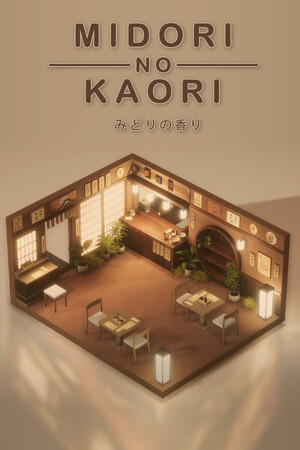
Comparisons to Midori no Kaori: The game is often compared to Midori no Kaori, with some finding it even more comforting and a more expanded follow-up. It is also noted as being by TheLaba, following their previous game.