- Gameplay is fun and addictive
- Art style is beautiful
- Stat system punishes specialization
- Team quests penalize imbalance
- Late game feels empty
- Game-breaking bugs persist
Emotions
Archetypes
What players like:
Common complaints:
Gameplay feedback:
Performance notes:
Recommendations:
Other player notes:
Similar games
Blend with other games




Review evidence
Why players say this
Review evidence
Why players say this
Steam review verdict
Fun and addictive gameplay with beautiful art, but the stat system punishes specialization, team quests penalize imbalance, a hollow late game, and persistent game-breaking bugs hold it back.
What players like
Gameplay is fun and addictive: The gameplay is praised as fun, addictive, and enjoyable with a compelling loop. Players find the game high quality, worth the price, and hard to put down.
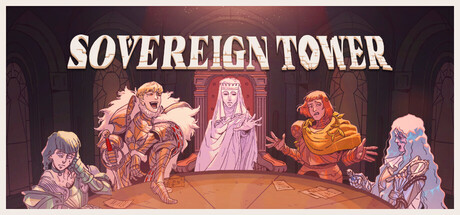
Art style is beautiful: The art style and direction are repeatedly praised as beautiful, striking, and refined. Players appreciate the unique and appealing visual presentation.
Story is engaging and well-written: The story is described as interesting, great, and wonderful. Players find the narrative engaging and well-thought-out, with excellent storytelling.
Characters are endearing and memorable: Characters are loved for being engaging, endearing, and memorable. Each character feels distinct with diverse personalities and explorable backgrounds.
Choices have real impact: Choices in the game are highlighted as having real impact and long-term consequences. Players appreciate that their decisions matter and influence future events.
Common complaints
Stat system punishes specialization: Many reviews criticize the stat system for punishing specialized builds, as quests either require high individual stats or penalize teams for member weaknesses. This forces players to level all knights evenly, undermining character design and strategic depth.
Team quests penalize imbalance: Team quests penalize uneven stats, treating a knight's weaknesses as a liability rather than allowing strengths to compensate. This discourages specialization and encourages indiscriminate balanced leveling.
Character storylines underdeveloped: Character storylines, especially for knights, are underdeveloped, often ending abruptly or lacking post-ending content. Interactions are shallow, and romances feel unearned or inconsequential.
Late game feels empty and dull: The story and gameplay lose momentum in the mid-to-late game, with fewer side quests, repetitive missions, and a decline in narrative quality. This makes the latter half feel boring and drawn-out.
UI navigation cumbersome: UI and navigation issues, such as excessive clicking for simple actions, lack of shortcuts, and impractical castle layout, are common complaints. While not game-breaking, they detract from overall enjoyment.
Gameplay and performance
Rewind and time loop: Reviewers frequently highlight a time travel or rewind mechanic, often described as a core feature. This includes a time-loop system, a counter, and a demon power that allows rewinding. The mechanic is central to gameplay and unlocks new dialogue and decisions.
Choices drive branching story: The game is heavily choice-driven, with many story branches and dialogue options that influence outcomes. Reviewers emphasize that choices matter and have consequences, providing significant replayability. The branching narrative is a key feature.
Dispatch knights on quests: A core gameplay loop is dispatching knights on quests, where success depends on matching skills and equipment to the mission. Reviewers note that knights have unique strengths, weaknesses, and personalities, making assignment a strategic decision. This system is a major part of the game.
High replayability and paths: The game offers high replayability through multiple playthroughs and varied paths. Unique content is reserved for subsequent runs, and the many story branches encourage exploration. This is a frequently cited positive trait.
Kingdom and round table management: Reviewers describe the game as a kingdom manager, involving management of a realm, tower, and knights. The round table interface is a central hub for assigning tasks and managing knights. This management aspect is a core component.
Glitchy stair loading animation: Players noticed that the stair loading animation appears glitchy, which may detract from the game's visual polish. This issue likely occurs during transitions between areas, breaking immersion.
Recommendations
Game highly recommended overall: Multiple reviewers strongly endorse the game, with some calling it a 'diamond' and 'must-try'. The general sentiment is overwhelmingly positive and highly recommended.
Great value for price: Several reviewers highlight the game's value for its price, particularly at launch or sale prices. Others mention it's worth the cost, especially for fans of choice-based games like Slay the Princess.
Appeals to multiple genres: The game is praised for appealing to fans of choice-based, management, and dating sim genres. Features like personality tracking and medieval knight management are highlighted as strengths.
Great for story and RPG fans: Reviewers recommend the game to fans of story-driven games with interesting mechanics, including visual novels and RPG hybrids. It's noted for its engaging narrative and gameplay systems.
Ideal for medieval fans: Recommended for those who enjoy storytelling, choices, humor, and medieval themes. However, it's noted as not for people who dislike reading, and it suits fans of knights and grand armor designs.
Buying context
Community fair range: $14.99 - $24.99.
Game completion: 12.0h.
Story completion: 8.0h.
Session length: 5.0h.
Players find the game immediately engaging and addictive, with minor usability complaints that do not delay enjoyment.
Friction: tedious zoom and drag for knight missions; long quest times; non-skippable tutorial boxes on new saves.
Player profiles
Replay-Driven Narrative Explorer: Methodically explores every narrative branch through multiple runs, rewinding time to discover all dialogue variations and character outcomes. Motivation: To uncover every story path and hidden character background via replay and time-rewinding mechanics. Stance: buy.
Management Strategy Enthusiast: Analytically optimizes trait-matching and resource allocation when dispatching knights, focusing on strategic kingdom management and decision efficiency. Motivation: To engage in deep strategic planning and enjoy the dispatch-based management loop. Stance: buy.
Disappointed Quality Critic: Critically evaluates game design, balance, and polish; expects tight mechanics and bug-free execution. Motivation: To identify and articulate flaws that undermine the experience, seeking a well-crafted and balanced product. Stance: no buy.
Other review notes
Demo drives anticipation: The game's demo generated anticipation, with many reviewers playing it before release and buying the final version immediately. The demo is seen as representative of the full experience.
Frequent Dispatch comparisons: The game is frequently compared to Dispatch, Reigns, and Yes, Your Grace. While some find it better than these titles, others feel it doesn't meet the benchmark set by Dispatch.
More than a visual novel: Reviewers note the game resembles a visual novel but offers more depth and branching story trees. It is repeatedly emphasized that the game transcends the typical visual novel label.
Worth the price: While the game is not cheap, reviewers consider it worth the price paid. They note good value for money at release.
French cultural gem: The game is highlighted as a French gem, made in Brittany and containing cultural references to the region. This origin is seen as a positive trait.