- Stunning Visuals and Art
- Puzzle Design Praised
- Excellent Level and World Design
- Random Crashes During Gameplay
- General FPS Drops and Stuttering
- Poor Enemy Variety
Emotions
Archetypes
What players like:
Common complaints:
Gameplay feedback:
Performance notes:
Recommendations:
Other player notes:
Similar games
Blend with other games


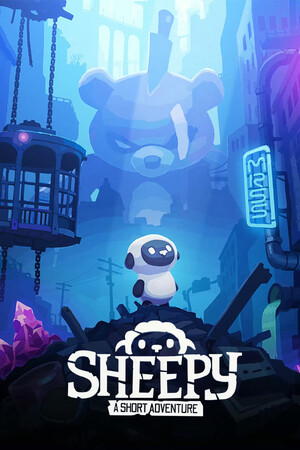


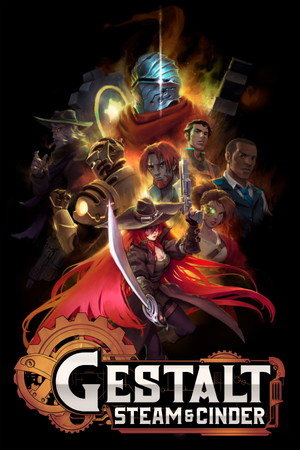
Review evidence
Why players say this
Review evidence
Why players say this
Steam review verdict
Stunning art, clever puzzles, and excellent world design shine, but random crashes, stuttering FPS drops, and weak enemy variety hold it back.
What players like
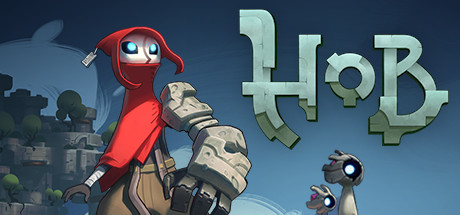
Stunning Visuals and Art: The art style, graphics, and visual presentation are widely acclaimed as beautiful, vibrant, and creative. Many reviews mention the pleasant and polished cartoony aesthetic.
Puzzle Design Praised: Players consistently highlight the clever, intuitive, and entertaining puzzles that are accessible yet engaging. The puzzles are often described as satisfying and brain-tickling without being overly difficult.
Excellent Level and World Design: The level design and world layout are frequently praised for their ingenuity, connectivity, and attention to detail. The world is described as well-crafted, visually appealing, and imaginative.
Combat Simple but Functional: Combat is generally described as simple, serviceable, and easy to learn, though some find it decent or enjoyable. It lacks complexity but is adequate for the game's focus.
Rewarding Exploration and Secrets: Exploration is highly rewarding, with well-hidden secrets and mysteries to uncover. Players enjoy discovering new areas and feel that exploration pays off.
Common complaints
Poor enemy variety: Many players note that enemy variety is low, with repetitive and dumb enemies that don't justify upgrades. Combat feels predictable as a result.
Lack of guidance and direction: Players feel lost because the game provides almost no guidance on where to go or what to do. This lack of direction is a common complaint.
Thin and minimal story: Many players report that the story is barely present, oversimplified, or mediocre. The narrative is often described as spotty and lacking depth.
Bland and simplistic combat: Combat is criticized for being underbaked, bland, and simplistic, with repetitive and redundant mechanics.
No boss fights: Many players point out the absence of boss fights, except possibly a final encounter. This lack of challenging enemies is disappointing.
Gameplay and performance
Puzzle-focused gameplay: Puzzles are a core activity with progressively increasing difficulty and satisfying interlocked designs. Multiple clusters emphasize puzzle-solving as central to the experience.
Dialogue-free storytelling: The story is told without dialogue or text, relying on character gestures and visual cues. This wordless narrative approach is noted as making the game language-independent.
Exploration as core focus: Exploration of the environment is a main driving force and is described as rewarding. Many reviewers highlight exploring areas as a central activity.
Combat is minor and optional: Combat exists but is not intense, elaborate, or mandatory. It is described as simple and often unnecessary, with limited difficulty.
Platforming mechanics: The game features platforming mechanics and is often called a platformer. Platforming is blended with other genres like metroidvania and puzzle-solving.
Random crashes during gameplay: Players experience occasional to frequent crashes, sometimes requiring relaunching the game. Crashes can happen at various points, including after loading a save or changing locations.
General FPS drops and stuttering: Players encounter FPS drops and stuttering regardless of resolution, often occurring several times throughout the game. This can lead to inconsistent performance and immersion-breaking moments.
Runs well on older PCs: Several users report that the game runs smoothly and plays fine on moderate or even old computers. Performance is generally stable for these configurations.
Integrated graphics defaults cause stuttering: The game sometimes defaults to integrated graphics, causing stuttering and slow animations. Manually changing NVIDIA control panel settings to high-performance processor resolves the issue.
Severe Steam Deck performance issues: Multiple users report horrible FPS drops, lag spikes, and continuous stuttering on the Steam Deck even at the lowest settings. These issues significantly hurt the gameplay flow and overall experience.
Recommendations
Not recommended: Some reviewers cannot recommend the game and advise against playing it. They express negative opinions about the overall experience.
Worth the price: Many players consider the game worth its price, time, and money, especially when purchased on sale. Several reviewers highlight that it offers good value even at full price.
Recommended on sale: A significant number of reviewers recommend picking up the game on sale or during discounts. They suggest waiting for a good deal to get better value.
Controller strongly recommended: Many reviewers strongly recommend using a controller to play this game. A controller is considered a must for the best experience.
For action-adventure fans: The game is recommended for fans of action-adventure and metroidvania genres. It also appeals to those who enjoy puzzle and platformer elements.
Buying context
Community fair range: $10.00 - $20.00.
Game completion: 24.0h.
Story completion: 15.0h.
Session length: 3.5h.
Endgame: 5.0h.
Players often find Hob enjoyable early, with some won over in the first few hours, but many report that enjoyment fades after the opening or by mid-game as repetition, backtracking, and weak progression guidance take over.
Friction: No tutorial or explicit guidance; Cryptic and disconcerting opening; Progression mechanics poorly taught or reinforced; Required traversal paths not visually obvious; Backtracking through earlier areas; Confusing world design on first playthrough.
Player profiles
Exploration-Driven Puzzle Adventurer: Explores methodically, solves environmental puzzles, and engages in platforming and light combat. Motivation: Discovering and solving puzzles in a beautiful, interconnected world with light combat and platforming. Stance: buy.
Completionist Achievement Hunter: Plans multiple playthroughs, hunts collectibles and secrets, and pursues 100% achievements. Motivation: Fully completing the game, unlocking all achievements, and uncovering every secret. Stance: buy.
Casual Cozy Low-Stress Player: Plays on easy difficulty, takes short chill sessions, and avoids demanding combat or complex puzzles. Motivation: Relaxing in a cozy, low-stress adventure with easy puzzles and pleasant visuals. Stance: buy.
Platform notes
Steam Deck: The Steam Deck version is not a seamless native experience. Reviews repeatedly report severe stutter, frame drops, and low FPS, with occasional crashes, even after reducing settings or using Proton Experimental. Linux and Steam Deck users must also rely on Proton and sometimes a special 'no launcher' launch mode, making this firmly a tinkering-required case. Controller support is generally good, and the game remains playable for some with heavily reduced graphics, but the technical friction is substantial. The evidence supports a score of 60, above the minimum of 40 triggered by Proton/launcher workarounds but below the broken tier because crashes are intermittent and the game still launches.
Linux and Proton: Evidence shows the game can run on Linux/Proton, but users report minor setup friction: the settings launcher may need launch config changes, Proton is required because the game is Windows-only, and one Steam Deck user experienced heavy stutter even with Proton Experimental. There are no reports of total launch failure, anti-cheat/DRM blocks, or broad incompatibility.
Extra review signals
External guides: The dominant user complaint is a lack of in-game guidance, forcing players to consult external walkthroughs and strategy sites to understand progression, discover multiple endings, and grasp unexplained systems. No reviewer mentions farming, drop rates, loot tables, inventory management, crafting, or blueprint concerns, so the feedback does not fit Tier 1 or Tier 2. The evidence centers on learning systems and finding content (guidance, missable endings, unexplained mechanics), which maps to Tier 3 'The Student'.
Other review notes
Zelda-style exploration and combat: Many players compare the game's structure, exploration, and combat to The Legend of Zelda series. The game is described as a relaxing yet challenging Zelda-like adventure with a similar blend of elements.
Runic Games closure and consequences: Runic Games was shut down by Perfect World in 2017, making this their final game. As a result, no updates, patches, or sequels will ever be released, leaving existing issues unfixed.
From Torchlight creators: The game is developed by Runic Games, the team behind the Torchlight series. It is often referred to as their swansong and final work.
Dialogue-free narrative: The game features no in-game dialogue, voice acting, or written text, delivering its story entirely through visual and environmental cues. This unique wordless narrative style is praised for being universally playable regardless of language.
Short playtime around 10-15 hours: Players report completing the game in roughly 10 to 15 hours, with some spending additional time on achievements or a second playthrough. It is not a hundred-hour game.