- Unique deckbuilding and puzzle mix
- Charming hand-drawn art style
- Addictive and rewarding gameplay loop
- Engaging resource summoning mechanic
- Unclear mechanics and poor UI
- Unit balance is broken

Emotions
Archetypes
What players like:
Common complaints:
Gameplay feedback:
Performance notes:
Recommendations:
Other player notes:
Similar games
Blend with other games





Review evidence
Why players say this
Review evidence
Why players say this
Steam review verdict
A charming hand-drawn deckbuilder-puzzler with an addictive, rewarding loop and clever resource summoning, though unclear mechanics, a poor UI and broken unit balance hold it back.
What players like
Unique deckbuilding and puzzle mix: The combination of deckbuilding, tactical combat, and geometric puzzle mechanics feels fresh and original. Players highlight the clever integration of card draws with spatial reasoning on the battlefield, creating a distinctive gameplay loop.
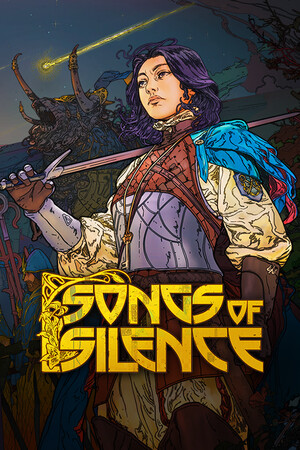
Charming hand-drawn art style: Players consistently praise the hand-drawn, comic-book-like visuals for giving the game personality and fitting the WWII setting. The art is described as unique, clean, and polished, with detailed animations that enhance the overall charm.
Addictive and rewarding gameplay loop: Many players find the game very enjoyable and addictive after a couple of hours, with satisfying plays once the summoning mechanics and terrain bonuses are understood. Achieving goals and unlocking wanted cards through the quest tree feels rewarding.
Engaging resource summoning mechanic: Managing resource tokens to summon units is a unique and satisfying mechanic that requires planning and spatial reasoning. Spotting the right shape of resources to call in units or shift infantry into better terrain is genuinely rewarding, and enemy capture of tokens adds anticipation.
Deep yet accessible strategy: The game offers simple base mechanics that are easy to learn but allow for deep and diverse tactical gameplay. Players appreciate the balance between accessibility and strategic depth, making it enjoyable for both newcomers and strategy fans.
Common complaints
Unclear mechanics and poor UI: The interface is not informative, missing tooltips and clear explanations for hand size, enemy movement, and placement restrictions. Players must discover rules through trial and error, and rotating elements stutter.
Unit balance is broken: Enemy tanks have far higher values than player tanks, mechanized infantry plus artillery kills everything, and some gold/silver cards are weaker than white cards. Heavy tanks and tank destroyers are undesirable, and a barracks byproduct is absurdly strong.
Poor replayability and longevity: Multiple reviewers note limited replay value, with little to gain from repeated playthroughs and low longevity after higher difficulties. The modest scope and niche appeal contribute to this issue.
Rules unfairly favor enemy AI: Players face asymmetric rules where the AI moves units freely up to maximum range without the resource and movement constraints imposed on the player. Enemy units are pre-spawned and can attack immediately while player units must spend entire turns deploying.
Core gameplay is resource-placement puzzle: About 90% of playtime is spent arranging barrels, crates, and ammo with maneuver cards to enable unit placement, rather than tactical combat. The game is essentially a resource-placement puzzle, not the tactical strategy game reviews describe.
Gameplay and performance
Deckbuilding and card mechanics: Players highlight deckbuilding as a central mechanic, with cards chosen after missions, limited deck slots, and random draws. Decks are picked before battles, and cards define unit deployment and maneuvers.
Puzzle-like placement and patterns: The game is often described as a puzzle/tactics hybrid where players rotate and place supply items to match card patterns, using spatial reasoning to summon units. Geometric patterns and placement rules are key to gameplay.
Turn-based WWII tactics core: The game is consistently described as a turn-based strategy/tactics game set in WWII, with missions and multiple difficulty settings. It blends tactical combat with deckbuilding and puzzle-like resource placement.
Resource management and unit deployment: Players manage resources like trucks, ammo, and fuel to deploy units, with cards requiring specific placement relative to crates and ammo. Resource tokens are placed to request units, and enemy capture can block summoning.
Campaign structure and replayability: The campaign consists of 12 missions across different theaters of operation, replayable on higher difficulty levels with random card assortments. Unlocked cards persist across restarts.
Rotating elements cause stutter: A reviewer notes that rotating elements stutter and lag during gameplay. This points to a specific performance issue affecting smoothness in certain scenes.
Excellent Steam Deck performance: Reviewers report the game runs well on Steam Deck. The feedback is positive but low frequency, suggesting solid handheld compatibility for users.
Great controller play on Steam Machine: Players highlight strong performance and handling when using a controller on Steam Machine. This indicates good optimization and control support for that setup.
Recommendations
Recommended for genre fans: Multiple reviewers recommend the game specifically for fans of turn-based strategy, deckbuilding, and logic puzzles. They consider it a good fit for players who already enjoy these genres.
Worth the price: Reviewers state the game is worth its price, with several explicitly recommending it at its current cost. This suggests good value for the experience offered.
Highly recommended overall: Several reviewers give high recommendations, including wholehearted endorsements. The game is praised for its concept and gameplay, appealing to fans of strategy and military themes.
Niche appeal only: The game is described as not for everybody and suited to a niche audience. Its mix of strategy, puzzles, and cards may not appeal to a broad player base.
Try the demo first: Some reviewers suggest trying the demo before purchasing, either to test compatibility or to hold off on buying. This indicates uncertainty about universal appeal.
Buying context
Game completion: 3.5h.
Session length: 1.5h.
Players describe a learning curve and early opacity, but strategy-focused players report that resource management clicks and the gameplay becomes addictive after a couple of hours. One negative reviewer found the opening weak and very short.
Reported time to anchor: 2h.
Friction: Unit interface information is poorly presented; Simple music and sound effects; Learning curve; Resource management is obscure at first; Insufficient tutorial and tooltips.
Unlock drivers: Resource management clicks into place; Strategy gameplay depth turns addictive; Replayability encourages another attempt.
Player profiles
WW2 Turn-Based Tactics Veteran: Deliberate turn-based play with deck building, positioning units to avoid hard counters such as artillery versus mechanised infantry. Motivation: Solving layered tactical puzzles through planning, calculation, and unit-counter management. Stance: buy.
Short-Session Puzzle-Tactics Player: Plays in short bursts, treating each scenario as a puzzle to be solved with deck combinations and tactical sequencing. Motivation: Quick, snackable mental challenge that fits short play sessions while still offering strategic depth. Stance: buy.
Solo-Dev Supporter and Community Regular: Plays steadily and follows updates, engaging with the developer and other players on Discord while appreciating the handmade art and polish. Motivation: Supporting a responsive solo developer and seeing the project grow through updates and community contact. Stance: buy.
Platform notes
Linux and Proton: The provided dataset contains only one relevant review, and it reports smooth Steam Deck performance with default settings. There is no evidence of Linux-specific launch failures, Proton tweaking requirements, anti-cheat blockers, or stability problems. Overall, the available evidence points to out-of-box compatibility rather than Linux friction.
Other review notes
Solo Developer Handmade Art: Multiple reviewers highlight that the game was developed by a single person, with handmade art and animations rather than AI-generated content. This adds a personal, crafted feel that fits the WWII setting.
Short Campaign Twelve Missions: The game contains 12 missions across 4 theaters, and the campaign can be beaten on normal difficulty in about 3.5 hours. Some reviewers find the number of maps modest and want more missions with greater complexity.
Demo Available Before Purchase: A demo is available, allowing players to try the game before buying. The full release includes many quality-of-life improvements over the demo, though the unit cap differs from the demo version.
Comparisons to Into the Breach: The game is frequently compared to Into the Breach for its demand for thought and difficult decisions, though it is less punishing of mistakes. Reviewers also compare it to Panzer General, Slay the Spire, and Undaunted.
Puzzle Deckbuilder Not Wargame: Reviewers expected a mix of wargame and roguelite deckbuilder but found the game plays more like a puzzle deckbuilder, with tactics taking a backseat to puzzle mechanics. This mismatch in expectations is a recurring theme.