- Strong Balatro comparison appeal
- Addictive gameplay loop
- Fun and charming experience
- Character variety and playstyles
- RNG and item pool dilution
- Poor explanation of mechanics
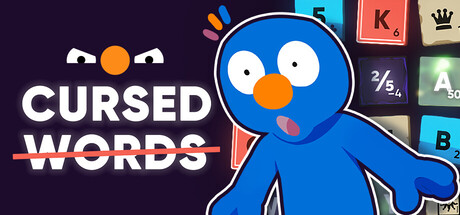
Emotions
Archetypes
What players like:
Common complaints:
Gameplay feedback:
Performance notes:
Recommendations:
Other player notes:
Similar games
Blend with other games




Review evidence
Why players say this
Review evidence
Why players say this
Steam review verdict
Its Balatro-like hook and addictive, charming loop shine through varied characters and playstyles, but diluted item pools, heavy RNG, and weak mechanic explanations can frustrate.
What players like
Strong Balatro Comparison: Players frequently compare the game to Balatro, praising its similar satisfaction and replayability while noting it stands on its own. Many consider it one of the best Balatro-inspired roguelikes.
Addictive Gameplay Loop: Reviewers consistently describe the game as highly addictive and fun, often mentioning the 'just one more game' feeling. This widespread enthusiasm highlights a compelling core loop.
Fun and Charming Experience: The game is widely described as fun, wacky, and full of charm, with many reviewers calling it a good game overall. Its creativity and chaotic nature contribute to the enjoyment.
Character Variety and Playstyles: The diverse cast of characters, each with unique playstyles, adds significant variety and replayability. Players appreciate how characters encourage different approaches.
Unique Word-Roguelike Hybrid: The combination of word games and roguelike elements is frequently praised as original and well-executed. Players enjoy the blend of word-building with roguelike power-ups and modifications.
Common complaints
RNG and item pool dilution: As players unlock more items, the item pool becomes diluted, making it harder to find useful synergies and increasing reliance on luck. Shop RNG, grid letters, and rare item availability are frequently cited as frustrating.
Poor explanation of mechanics: Many players find that the game does not clearly explain its rules and mechanics, leading to frustration and trial-and-error learning. Tooltips and in-game hints are often missing or unhelpful.
Unbalanced characters and strategies: Some characters and items are significantly stronger than others, leading to a lack of viable strategies. Chess and poker-based characters are often cited as underpowered or confusing.
Cursed tiles and wildcards unclear: Cursed and wildcard tiles are not clearly distinguished from normal tiles, leading to confusion and reliance on guessing. Their effects are often unexplained, making gameplay frustrating.
Word validity and dictionary issues: The dictionary includes obscure words and excludes some valid ones, causing frustration. Non-English languages have balance and functionality issues.
Gameplay and performance
Balatro-like word roguelike: The game is frequently described as a word-based roguelike that draws heavy inspiration from Balatro, blending word play with roguelike deckbuilding and synergy mechanics. Multiple clusters highlight this comparison, indicating its core identity.
Multiple playable characters: Players appreciate the variety of characters, each offering distinct playstyles and mechanics, which enhances replayability. This feature is consistently praised across several clusters.
Boggle/Scrabble-inspired word building: Core gameplay involves forming words from letter tiles on a grid, reminiscent of Boggle or Scrabble, but with roguelike elements. This familiar yet modified word game foundation is central to the experience.
Word roguelike hybrid: The game is commonly categorized as a word roguelike or roguelite, merging word puzzle mechanics with roguelike structure. This hybrid genre is a defining characteristic.
Unique tile types: The game uses unconventional tiles such as chess pieces, numbers, and symbols in place of letters, adding a creative twist to word formation. This mechanic is noted for its originality and strategic depth.
Poor performance on high-end PCs: Players report lag, stutters, and overall poor performance on fast computers, including top-notch gaming PCs and Steam Deck. The game is described as unoptimized or running not very well.
Slow loading times: Loading things takes far too long, and loading times are slow even on high-end hardware like a top-notch gaming PC and Steam Deck. One cluster also mentions frequent crashes when loading.
Optimized for modest hardware: The game works on a potato PC and is optimized to run on modest hardware. This positive feedback highlights that the game can run well on lower-end systems.
Runs flawlessly on Steam Deck: Some players report flawless performance on Steam Deck. This contrasts with reports of poor performance on the same device, indicating mixed experiences.
Menu lag when selecting character: The game lags a bit in the menu specifically when selecting a character. This is a distinct performance issue from general in-game stutters.
Recommendations
Ideal for word game fans: Many reviewers highly recommend the game to those who enjoy word games, including Scrabble, Boggle, or Wordle, and even to players who typically avoid word games.
Strongly recommended overall: Across numerous clusters, players give enthusiastic general recommendations, calling it fantastic, incredible, and a must-play.
Perfect for Balatro fans: Reviewers frequently compare it to Balatro, saying anyone who enjoyed that game will likely love this one as a solid Balatro-like.
Worth the price: Many players state the game is worth the money, including at full price, and consider it a valuable purchase.
Great for roguelike enthusiasts: Fans of roguelikes and roguelites consistently recommend the game, noting it fits well within the genre's expectations.
Buying context
Community fair range: $10.99 - $13.99.
Game completion: 50.0h.
Session length: 2.0h.
Endgame: 100.0h.
Most reports describe a slow, restrictive opening that becomes fun after roughly an hour, especially once the third character and new unlocks arrive. Some players enjoy it immediately or later sour on unlock-driven RNG, but the clearest transition evidence is an early unlock threshold.
Friction: Early game feels slow; Restrictive early word requirements; Initial runs feel shallow or easy; Tutorial-like early mechanics; Limited strategy before unlocks; Missing explanation for chess/poker mechanics.
Unlock drivers: Unlocking the third character; Unlocking new characters and items; Chess-piece character enabling long-word synergies; New mechanics and build variety; Escaping pure word-game constraints; Synergistic item builds.
Player profiles
Balatro-Style Build Breaker: Drafts stickers, stamps, and items to force exponential score builds and replays runs for ridiculous combinations. Motivation: Chasing absurd synergies and game-breaking combos in a Balatro-style roguelite. Stance: buy.
Accessible Word-Puzzle Dabbler: Looks for valid words and board solutions at a relaxed pace, using hints on lower difficulties and often playing in short handheld sessions. Motivation: Accessible word hunting and spatial puzzle satisfaction with light roguelike strategy. Stance: buy.
Hardcore Build Optimizer: Replays tough bosses, carefully tunes stickers, stamps, and build choices, and climbs higher difficulty levels for long-term mastery. Motivation: Mastering difficult runs and optimizing builds against escalating challenges. Stance: buy.
Platform notes
Steam Deck: The Steam Deck experience is generally stable, with multiple users reporting flawless performance and successful launch. The main friction comes from missing controller support, which forces touchscreen or trackpad input and makes controller play difficult. One user also notes small text, though a built-in zoom feature mitigates it. No external launcher, battery drain, or crash issues appear in the reviews. Because the game is playable but requires input compromises and readability adjustment, friction is moderate.
Linux and Proton: The available feedback is uniformly positive about Steam Deck operation. Users report the game working fine and running flawlessly, with no Linux, Proton, anti-cheat, launcher, or driver workaround complaints. This points to a works-well Linux/Proton experience.
Extra review signals
External guides: The dominant external-data dependency is instructional: players report that mechanics and word meanings are poorly explained in-game, with no tooltips or encyclopedia, pushing them to Google or a wiki to learn how systems work. There is no evidence of farming/drop-rate needs, inventory or crafting planning, or navigation/bug-fix issues as the primary complaint.
Other review notes
Heavily compared to Balatro: The vast majority of reviews compare the game to Balatro, often calling it a Balatro-like or Balatro clone with words. Many find it a worthy successor that captures the same feel and synergy-building loop.
Blend of Balatro and word games: Reviewers frequently describe the game as a mix of Balatro and Scrabble or Boggle, sometimes nicknamed Scrabbalatro or Boggle Balatro. This fusion is seen as a fresh take on both genres.
Generous demo available: Many reviewers highlight that a free demo is available, often describing it as lengthy and full of content. The demo gives a strong impression of the full game and helps with purchase decisions.
Different pace and complexity: A few reviewers note that the game is more complicated and slower than Balatro, with a different relationship with the player. Others find it slightly easier or less RNG-heavy.
Runs well on Steam Deck: Several reviewers report that the game runs perfectly on Steam Deck, using trackpads or touch screen for input. A built-in zoom feature helps with small text.