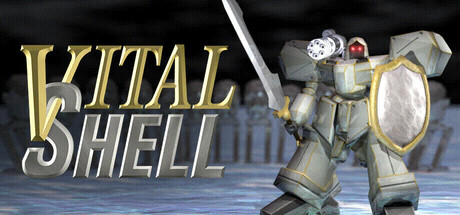
- Authentic PS1 retro visual aesthetic
- Outstanding drum and bass soundtrack
- Fun and addictive survivor gameplay
- Stylish and cohesive art direction
- Severe shortage of content
- Gameplay feels unpolished overall
Emotions
Archetypes
Hardware
What players like:
Common complaints:
Gameplay feedback:
Performance notes:
Recommendations:
Other player notes:
Similar games
Blend with other games




Review evidence
Why players say this
Review evidence
Why players say this
Steam review verdict
A stylishly authentic PS1-style survivor game with an outstanding drum and bass soundtrack and addictive fun, but its severe content shortage and unpolished gameplay hold it back.
What players like
Authentic PS1 retro aesthetic: The low-poly PS1-style graphics are widely praised for their nostalgic appeal and personality, with many reviewers noting the visuals capture the era perfectly. This aesthetic is a major draw and is frequently cited as a highlight.
Outstanding drum and bass soundtrack: The soundtrack, particularly its drum and bass and jungle influences, is repeatedly called great, addictive, and a perfect fit for the game's style. Many reviewers consider the music a standout feature that enhances the overall experience.
Highly fun and addictive gameplay: Reviewers consistently describe the game as very fun, enjoyable, and addictive, with many highlighting the core loop as engaging and satisfying. The overall gameplay experience is repeatedly praised as a strong positive.
Stylish and cohesive art direction: The game is praised for its amazing style, with visuals that are stylish and oozing with personality. The art style is consistently highlighted as a strong point.
Satisfying progression and replayability: The progression system is fun and satisfying, with a solid sense of advancement from start to finish. Additionally, the game offers high replay value due to its design.
Common complaints
Severe content shortage: Multiple reviewers report the game lacks enough content, with some noting it only holds attention for a few hours. The limited content also undermines replay value.
Gameplay feels unpolished: Reviewers call the gameplay generic and lacking in game feel, with little polish overall. This core complaint affects the fundamental experience.
Lacking enemy variety: Enemy designs are described as bland and repetitive, with a shallow unit pool that makes non-boss encounters visually boring. Many players feel this hurts long-term engagement.
Difficulty too low: Several reviewers find the game too easy and not hectic, wishing for more challenge. It is described as not a super deep, challenging game.
Game is too short: The main campaign runtime is considered quite short, and the game is described as not terribly long on content. This ties into the broader content shortage.
Gameplay and performance
Vampire Survivors-style survivor gameplay: The game is repeatedly described as a Vampire Survivors or survivor-like experience, with wave-based auto-attacking and roguelite runs. Some reviewers also compare its structure to Brotato.
Mecha theme and playable mechs: Players pilot customizable battle mechs with distinct archetypes and abilities. The mech theme is a central identity of the game, from visuals to combat.
Mech customization and upgrade system: During runs, players build their mech with new weapons and abilities, and use gem and weapon combination systems for build experimentation. A deep upgrade and progression system supports this customization.
Roguelite structure with meta progression: The game follows a roguelite loop with short runs, persistent meta-progression upgrades, and unlockables. Progression carries across runs and is tied to achievements.
Twin-stick arena shooter combat: Combat is fast-paced, top-down, and arena-based, with twin-stick shooter controls and an auto-attack option. It is often described as a bullet heaven or bullet hell roguelite.
Excellent Steam Deck performance: Multiple players report the game runs perfectly, greatly, or amazingly on the Steam Deck. This is the most frequently praised performance aspect.
Performance struggles on low-end laptop: One player experienced framerate problems on a low-end laptop, contradicting the generally positive performance reports. This suggests optimization may vary across specific low-end configurations.
Graphics glitches until driver update: A player encountered graphics glitches that were resolved after updating their graphics drivers. This indicates a potential driver compatibility issue for some users.
Minor crashes reported: One player reported minor crashes that affected both the game and their computer. This is an isolated stability concern with limited detail.
Recommendations
Strong value at budget price: Multiple clusters highlight the game's low asking price as its standout strength, with reviewers calling it an excellent deal and 100% worth the money. The consensus is that the game delivers far more than what players pay for.
Broadly recommended, especially on sale: Many reviewers give a straightforward recommendation, often emphasizing that it is worth buying on sale or at full price. The overall sentiment is consistently positive across clusters.
Try the demo first: A frequent recommendation is to download and try the demo before committing to a purchase. Reviewers suggest that the demo reliably shows whether the full game will appeal.
Appeals to PS1-era nostalgia: Reviewers recommend the game specifically to fans of PS1 and Saturn-era games, citing its retro atmosphere and early-2000s free-game vibe. Nostalgia for that console culture is a strong selling point.
Suited to short, light sessions: The game is recommended for players who want quick relaxation or time-killing without a heavy time commitment. It works well in short bursts between other games.
Buying context
Community fair range: $5.00 - $10.00.
Game completion: 10.0h.
Story completion: 6.0h.
Session length: 0.3h.
Reports mostly describe an addictive, pick-up-and-play loop, but the clearest progression quote says early boredom fades once the game is figured out; others report immediate fun or later drop-off.
Friction: Slow early progression; Unclear tutorial and guessing what to do; Boring opening stages and bland weapons; Meta-progression grind through Devotions; Limited content and item pool makes grinding feel sloggy; Initial waves are hard without knowing the systems.
Unlock drivers: Figuring out the game's systems; Reading the in-game manual; Picking up XP crystals during a match; Using the unlock-all save option; Selecting a Devotion buff tree after unlocking everything.
Player profiles
Retro PS1 Nostalgia Seeker: Plays accessible action runs while savoring low-poly visuals, retro menus, and old-school sound. Motivation: Relive PS1-era nostalgia through a modern action game. Stance: buy.
Survivor-like Roguelite Optimizer: Runs short repeatable stages, tests weapon and mech loadout combinations, and optimizes meta-progression choices. Motivation: Experiment with builds and synergies inside a polished survivor-like loop. Stance: buy.
Mech Shell Build Tinkerer: Swaps shells, experiments with targeting and movement tools, and adapts to each mech's strengths and weaknesses. Motivation: Pilot distinct mech shells and tune their abilities and loadouts. Stance: buy.
Platform notes
Across the two Windows VRAM cohorts, reported performance is positive: lower-VRAM users say the game runs well, while the higher-VRAM cohort has only limited but non-negative evidence.
Windows <8GB VRAM: positive. Included reviews are recommended and report the game running well, including on lower-power ARM hardware.
Windows 16GB+ VRAM: positive. Performance evidence is limited, but the single included review is recommended and there are no negative reports.
Steam Deck: The reviews overwhelmingly describe a seamless native Steam Deck experience. Users report flawless performance, native 16:10 support, a native Linux build, low power mode viability, and comfortable controller input. Only one isolated graphical glitch is mentioned, with no evidence of external launchers, small text, anti-cheat failures, battery drain, or stability problems that would require tinkering or indicate a broken experience.
Linux and Proton: The available feedback is limited but uniformly positive toward Linux support. Users specifically appreciate the native Linux build and the Linux port, with no reported Proton, launch, stability, performance, or anti-cheat blockers.
Extra review signals
Monetization: The reviews contain no direct evidence of predatory monetization. Feedback focuses on satisfaction with the current low purchase price and willingness to buy future DLC or sequels if more content is added. Because no review describes an in-game shop, paid currency, loot boxes, gacha pulls, battle passes, paid power, or paid convenience, the game appears to remain a one-time-purchase product.
External guides: The filtered reviews are positive and focus on the game's arcade/roguelike pick-up-and-play loop and its in-game wiki/strategy guide. The guide is described as always accessible and thematically presented as a PS1-era Prima guidebook, which suggests low external data dependency rather than a wiki-tax complaint. No review mentions farming, drop rates, loot tables, inventory management, crafting requirements, quest outcomes, build guides, hidden secrets, complex mechanics, maps, navigation problems, or bugs. Under the strict scoring hierarchy, no Tier 1, Tier 2, or Tier 3 keyword trigger is present, so the default score applies.
Other review notes
Vampire Survivors comparison: Frequently compared to Vampire Survivors for its horde-killing auto-weapon loop and upgrade progression, often with the caveat that it offers more than a simple clone.
PS1-era visual style: The game's low-poly, retro visual aesthetic is widely described as inspired by the PlayStation 1 era, extending to its UI and overall presentation.
Brotato comparison: The game is compared to Brotato for its round-based structure and casual-friendly complexity, with some finding it less replayable but more accessible.
Low and affordable price: Multiple reviewers highlight the game's inexpensive price point, often comparing it to the cost of a snack, making it easy to recommend.
Limited content and scope: Some reviewers feel the game currently has a small scope and limited content or replay value, though others note it offers more than it first appears.