- Engaging gameplay with roguelite progression
- Great music and pleasing art style
- Abundant unlockables and strong meta progression
- Repetitive and monotonous gameplay
- Excessive grinding and slow progression
- Undisclosed AI-generated content and crashes
Emotions
Archetypes
Hardware
What players like:
Common complaints:
Gameplay feedback:
Performance notes:
Recommendations:
Other player notes:
Similar games
Blend with other games







Review evidence
Why players say this
Review evidence
Why players say this
Steam review verdict
Engaging roguelite gameplay, great music, pleasing art, and rich unlockables are marred by repetitive grinding, crashes, and undisclosed AI content.
What players like
Positive overall game reception: Many reviewers describe the game as fun, great, or good overall. It is considered a solid and enjoyable experience.
Great music and sound: The music and sound design are consistently highlighted as excellent. Many players find the soundtrack immersive and enjoyable.
Pleasing art style: The art style is widely appreciated for being nice, fitting, and visually appealing. It contributes positively to the overall experience.
Affordable and great value: The game is frequently described as well-priced and offering excellent value for money. Players feel the quality exceeds the low price point.
Engaging gameplay loop: The core gameplay loop is frequently praised as fun, addictive, and engaging. Players find it keeps them hooked for hours.
Common complaints
Repetitive and monotonous gameplay: Players frequently report that the game becomes boring and repetitive, especially after several hours. Many describe it as a chore with high repetition.
Excessive grinding required: The game feels grindy, particularly in the early game, with slow and tedious progression. Out-of-run upgrades and material gathering also require significant grinding.
Undisclosed AI-generated content: The developer does not disclose the use of AI on the store page, and AI voices are used without clear indication. This has caused dissatisfaction among players.
Limited skill variety and slots: Players criticize the lack of skill/ability variety and the low number of active skill slots (only 4). Skill combinations are also fixed and limited.
Slow and tedious progression: Progression pacing is slow, and the overall loop becomes tedious. Many feel the game lacks a satisfying sense of growth.
Gameplay and performance
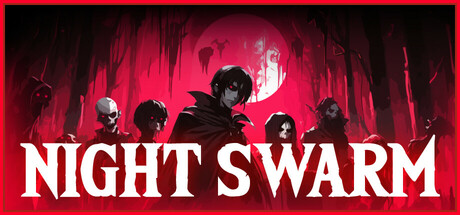
Vampire Survivors-like Core Genre: Most reviewers identify the game as a Vampire Survivors-style roguelike where you play as a vampire clearing hordes of enemies. This is the dominant genre classification across many clusters.
Roguelite Survival Progression: The game is widely described as a survival roguelite with run-based and out-of-run progression. Players note roguelike and survivor elements are mixed together.
Multiple Difficulty Levels: Reviewers consistently mention Normal, Nightmare, and Hell difficulties, with some noting higher tiers unlock after completing a level. The game offers multiple difficulty settings.
Skill Fusion at Level 10: A specific mechanic allows two skills at level 10 to fuse into a stronger skill starting from level 1. This is a frequently mentioned and detailed system.
Base Building and Castle Upgrades: Players can build and upgrade a base or castle, with meta progression tied to castle repairs and improvements. This system provides permanent upgrades.
Inconsistent performance across hardware: While some users report smooth performance even on older systems, others experience severe issues regardless of high-end hardware. This inconsistency suggests poor optimization.
Frequent crashes and freezes: Players report frequent crashes and freezes, often during loading screens, at the start of runs, in later stages, or during endless mode. Some crashes occur repeatedly after updates and force restarts.
Performance drops in combat: Frame rates drop significantly during combat, especially with many mobs, projectiles, or skill effects on screen. Dodging and companion abilities can also cause stutters or freezes.
Severe lag in endless mode: Multiple reports describe severe frame rate drops and unplayable lag in endless mode, especially after stage 15 or level 20, with FPS dropping below 5 and freezes at higher levels. This appears consistently across different hardware.
Optimization issues after updates: Some players note that initial performance issues were fixed by updates, but others report that recent updates introduced crashes and freezes. Overall optimization is described as poor in places.
Recommendations
Appeals to survivor-like fans: Reviewers note that players who enjoy survivor-type games will get a lot of playtime and enjoyment from this title. It is frequently recommended specifically to fans of the survivor-like genre.
Not recommended overall: Several reviewers give a clear negative recommendation, stating they would not recommend the game and advising others to avoid it. Some mention it is only worth considering if heavily discounted.
Worth checking out: A few reviewers give a positive but less emphatic recommendation, saying the game is definitely worth checking out and recommending it. This reflects a generally favorable impression.
Wait for a sale: Many reviewers recommend buying the game only when it is discounted, often suggesting a sale price or half price. Some explicitly advise against purchasing at full price.
Specific price thresholds recommended: Several reviewers specify that the game is worth buying only under a certain price, such as 5,000 to 7,000 Korean won. They recommend waiting for a discount below that threshold.
Buying context
Community fair range: $4.99 - $9.99.
Game completion: 15.0h.
Story completion: 13.0h.
Session length: 0.7h.
Endgame: 52.0h.
Night Swarm often starts as an okay or grindy experience, then clicks for many players after the first completed run and enough meta-progression unlocks make power growth and harder difficulties feel rewarding; others bounce off the grind or report post-update decline.
Reported time to anchor: 30m.
Player profiles
Survivor-Like Build Veteran: Experiments with synergies, companions, relics, and castle upgrades while pushing higher difficulties. Motivation: To enjoy a familiar survivor-like loop with deeper builds and long-term meta progression. Stance: buy.
Grind-Weary Meta-Progression Critic: Pushes difficulty tiers and meta unlocks but finds the pacing repetitive, currency-bloated, and RNG-dependent. Motivation: To find a challenging, meaningful roguelite loop without excessive grind. Stance: no buy.
Casual Time-Killer / Genre Newcomer: Plays short, casual runs, sometimes one-handed, and avoids heavy meta grinding. Motivation: To relax, kill time, and enjoy an easy power fantasy. Stance: buy.
Platform notes
Performance reports vary by Windows VRAM cohort: lower-VRAM systems describe smooth play, while higher-VRAM systems more often report crashes and severe endless-mode FPS drops.
Windows <8GB VRAM: positive. Reports indicate smooth performance with no lag even when many enemies are on screen, and the game runs very fluidly.
Windows 12-15GB VRAM: positive. Both included reviews recommend the game, although they mention rare crashes at stage start and during endless runs.
Windows 16GB+ VRAM: negative. High-end systems report severe FPS drops in endless mode, poor optimization, and crashes during long runs.
Steam Deck: The Steam Deck audit finds mixed but severe friction. Some users report smooth performance and natural controls, yet other reviews cite unreadable small text, poor optimization, a refund, and frequent crashes. Because the dataset contains unreadable UI and frequent crashes, the experience falls into the Broken band rather than Seamless or Tinkering Required.
Linux and Proton: The provided reviews focus primarily on visual style and gameplay, with only two mentions of Linux-related platforms. Both mentions are positive, confirming that the game runs well on Steam Deck without any noted Proton or compatibility issues. A separate request for a Steam Deck update to improve resolution and readability is a comfort concern, not a compatibility blocker, and is therefore excluded from the Linux/Proton audit. Overall, there is no evidence of Linux/Proton friction.
Other review notes
Frequent comparisons to Vampire Survivors: Many reviewers describe the game as a survivors-like similar to Vampire Survivors, often noting it scratches a similar itch. Some consider it a more developed or improved take on the formula.
AI-generated assets and voice acting: Multiple reviews mention the use of AI-generated assets and voice acting, with some noting it is undisclosed on the store page. Others point out that the developers plan to replace AI voices with real voice actors.
Hades comparisons for progression and story: Reviewers frequently compare the game's progression system, base upgrades, companion recruitment, and story elements to Hades. The mix of Hades-style growth with Vampire Survivors gameplay is a common point of reference.
Frequent updates and active developer feedback: Many reviews praise the developers for frequently updating the game with new content and actively responding to user feedback. The game is still being updated, with more content planned on the roadmap.
Lack of originality compared to peers: Some reviewers feel the game offers nothing really new, merely collecting positive aspects from other games without adding unique elements. It is seen as derivative of similar titles in the genre.