- Praise for impressive graphics
- Highly enjoyable and engaging
- Great satisfying gameplay feel
- Strong survivors-like bullet hell
- Essential for roguelike fans
- Monotonous and boring gameplay
Emotions
Archetypes
Hardware
What players like:
Common complaints:
Gameplay feedback:
Performance notes:
Recommendations:
Other player notes:
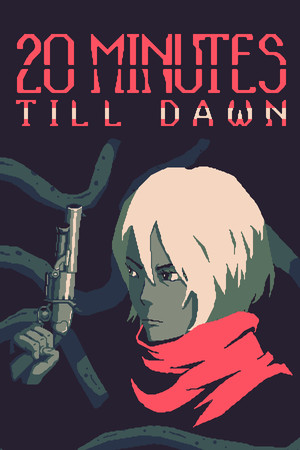
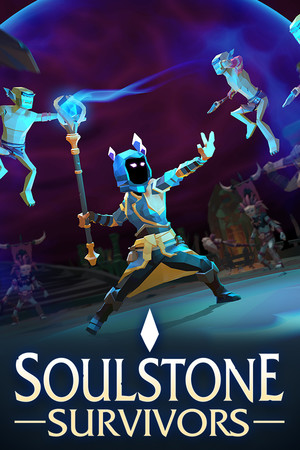
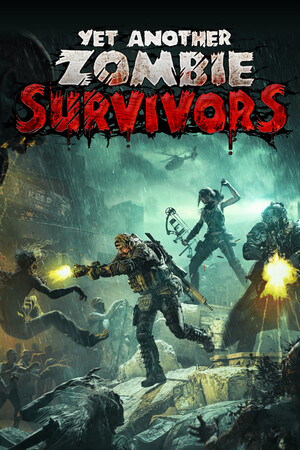
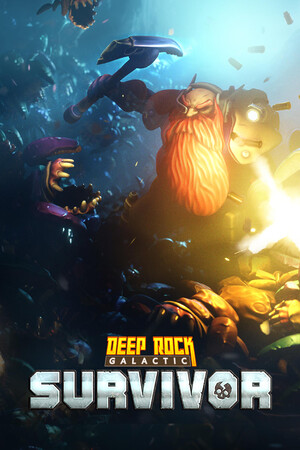
Similar games
Blend with other games





Review evidence
Why players say this
Review evidence
Why players say this
Steam review verdict
Impressive graphics and a satisfying survivors-like bullet hell make it engaging and essential for roguelike fans, though the gameplay can grow monotonous and boring.
What players like
Praise for graphics: Reviewers consistently highlight beautiful, impressive, and visually pleasing graphics. The art style and visual effects are frequently cited as a major strength.
Highly enjoyable and engaging: The game is widely praised as fun, addictive, and top-notch, with many considering it one of the best in its genre. It offers hours of enjoyment and excitement.
Great gameplay feel: Players describe the gameplay as polished, satisfying, and well-paced, with controls that feel responsive. The visceral and badass combat further enhances the experience.
Strong bullet hell/survivor gameplay: The game excels as a bullet hell and survivor-like, with many calling it one of the best in these genres. Its simple yet enjoyable gameplay loop keeps players engaged.
Fun time killer: Many reviewers find the game perfect for passing time, offering quick fun sessions. It is described as a great way to kill 15 minutes or enjoy longer play.
Common complaints
Monotonous and boring gameplay: Players consistently describe the core gameplay as monotonous, repetitive, and dull, leading to boredom quickly. Many note the game becomes tedious and even headache-inducing.
Lack of skill synergy: Skills are perceived as disconnected with little to no meaningful combinations or synergies. Skill evolutions and strong combo synergies are rare, making build choices unengaging and encouraging mindless spamming.
No sense of progression: Players feel no sense of becoming stronger or developing between runs. The lack of progression removes motivation to keep playing.
No innovation for genre: The game brings nothing new or unique to the genre and feels bland compared to other titles. It lacks fresh ideas that would set it apart.
No online co-op: The game lacks online multiplayer and proper co-op modes, limiting play with friends to local only. Players specifically request online co-op functionality.
Gameplay and performance
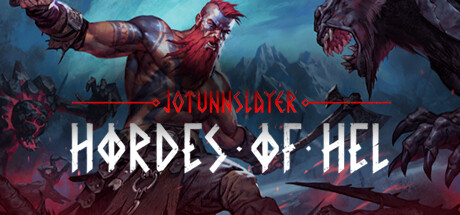
Survivors-like Norse roguelite: The game is repeatedly described as a Vampire Survivors-style survivors-like roguelite set in Norse mythology, blending horde survival with roguelike runs.
Multiple difficulty tiers: The game offers selectable difficulty levels including easy, normal, hard, insane, and nightmare, with scaling that increases over time.
Characters, skills, and gods: Feedback describes many playable characters with distinct skills, classes, and Norse gods that can be chosen and combined, with synergies between them.
Meta progression and upgrades: Players mention a meta-progression system where experience unlocks new heroes and allows permanent upgrades to characters, gods, and skills outside individual runs.
Local co-op support: Players highlight local co-op for up to two players on the same PC, often noting it requires two input devices.
Strong performance on PC: Several reviewers report the game runs flawlessly, smoothly, or exceptionally well on their PCs, including low-end machines and Linux. Some achieve over 100 FPS on ultra settings even with many effects.
Mixed optimization reports: Opinions on optimization are sharply divided: many call it poor or lacking, while others praise it as excellent with DLSS support and smooth performance on various hardware. The game asks a lot from the PC for a simple top-down 2D title.
Endless mode performance collapses: Endless mode suffers severe FPS drops after extended play, with frame rates falling from 60 to as low as 10 FPS even on high-end hardware like a 5090 laptop. After about 30 minutes, most maps become slideshows.
Excessive loading times: Players report extremely long load times before entering levels, leaving missions, and at startup, sometimes lasting several minutes. One reviewer noted load times are long enough to do chores before the game starts.
Frequent crashes: Players experience crashes during loading screens, between scenes, after completing levels, and during local co-op, with some unable to enter the game at all. One crash resulted in lost save data.
Recommendations
Essential for Roguelike Fans: The game is repeatedly recommended to fans of roguelikes and roguelites, with strong endorsements from players familiar with the genre. Even those who suggest caution for others still recommend it to genre enthusiasts.
Strong Overall Value: Reviewers widely consider the game worth its price, with many calling it a must-buy even at full price. This is the most frequent positive theme across clusters.
Great for Survivors-Like Fans: Players who enjoy survivors-likes and horde-survival games strongly recommend it, often comparing it to genre staples. It is seen as a solid entry for fans of the subgenre.
Buy on Sale: A common recommendation is to purchase the game only during a sale, with some specifying a deep discount. This suggests perceived value is good but not exceptional at full price for these reviewers.
Not Recommended by Some: A notable minority explicitly do not recommend the game, even when free or on sale. Their negative stance contrasts with the overall positive reception.
Buying context
Community fair range: $7.99 - $9.99.
Game completion: 20.0h.
Session length: 0.3h.
Many players report a rough opening of systems confusion, difficulty spikes, and meta-progression grinding, after which the god/skill combat loop becomes enjoyable; some click immediately, and others burn out later.
Friction: No tutorial or first-hour systems confusion; Early difficulty spikes and enemy swarms overwhelming weak starting characters; Meta-progression and talent-point grind gating smooth play; Slow or weak early character progression; Mandatory repetitive objectives interrupting the core survival loop; Difficulty scaling that demands meta power more than strategy.
Unlock drivers: Understanding how god and skill systems work; Completing the first two games or learning sessions; Investing enough talent points or global passives to smooth difficulty; Unlocking more builds and upgrades over time; Developer rebalancing that quickened progress and improved skills and passives; Playing co-op with friends.
Player profiles
Genre Veteran Build-Crafter: Optimizes meta-currency per run, pushes to Insane difficulty, and critically evaluates balance and build viability. Motivation: Mastery and deep build-crafting with meaningful, varied progression options. Stance: sale.
Casual Chill Player: Short low-stress sessions, often with auto-attack, played to unwind without daily grind pressure. Motivation: Relaxation and convenient, low-stress time-killing. Stance: buy.
Genre Newcomer: Learning the survivor loop, experimenting with classes and skills, relying on forgiving difficulty. Motivation: An accessible first entry into the survivor/roguelike genre. Stance: buy.
Platform notes
Performance reports vary by VRAM tier: the lower-VRAM and 8–11GB cohorts mostly run well with isolated crashes or stuttering, while the 12–15GB cohort is dominated by crashes and severe FPS drops. Evidence for the 16GB+ cohort is very limited but positive.
Windows <8GB VRAM: positive. Most report smooth play and good optimization, though a few mention memory leaks or launch crashes.
Windows 12-15GB VRAM: negative. This cohort overwhelmingly reports frequent crashes, long load times, lost progress, and severe FPS drops.
Windows 8-11GB VRAM: positive. Most report strong performance and smooth play, with isolated reports of stuttering in crowded scenes and one crash causing lost progress.
Steam Deck: Steam Deck feedback is mixed. The game launches and many users enjoy it on Deck, but a significant subset reports unstable frame rates, drops to 20-40 FPS on busier maps, battery drain, heat, and a need for FSR or lowered settings. Crash and black-screen reports exist but are not consistently confirmed as Deck-specific. Overall, the experience is playable with tinkering, not seamless and not universally broken.
Linux and Proton: Multiple users report excellent Linux/Proton compatibility, with smooth performance on Arch Linux and flawless operation via Proton. One user notes a minor startup graphical glitch (TV test screen image), and another is unsure if an issue is Linux-related or due to Early Access. Overall, the game is highly playable on Linux with only trivial quirks.
Extra review signals
Monetization: The reviews provide direct evidence of a real-money cosmetic DLC shop, including paid skins during early access, a large share of cosmetics behind paywalls, and FOMO-style removal of cosmetic packs. However, reviewers repeatedly state there is no pay-to-win or pay-to-progress system, and the paid character and map DLC appears to be content DLC rather than a cash-driven power system. Under the rubric, the cosmetic shop plus FOMO tactics is aggressive but not predatory or casino-like.
External guides: The reviews most frequently criticize missing in-game systems documentation: no encyclopedia page, vague descriptions, absent tooltips, and awkward stat/DPS explanations push users to external wikis. A secondary theme is alt-tab auto-pausing and restart friction. No Tier 1 farming/drop-rate or Tier 2 inventory/crafting-management evidence appears, while Tier 3 instructional-data issues are clearly present, so the strict priority score is 50.
Other review notes
Conan DLC widely noted: Many reviewers mention a Conan expansion or DLC that adds a playable character, a new zone, and a boss. The Conan license is a key draw and reason for purchase for some players.
Vampire Survivors comparison: Reviewers frequently compare the game to Vampire Survivors, describing it as a prettier or more developed survivor-like. Some see it as a knock-off, while others find it superior.
Paid DLC monetization: The game has paid DLC that adds characters, maps, and cosmetic skins. Some reviewers feel the DLC is extraneous or purely cosmetic.
Short content length: Multiple reviewers note that the game is relatively short, with limited content and replayability. Some mention finishing in a few hours or a couple of evenings.
Unfavorable genre comparisons: Some reviewers consider other games in the same style to be better and find this game lacking in innovation. It is seen as not reinventing the wheel but with well-made fundamentals.