- Engaging and addictive gameplay loop
- Flexible and rewarding skill system
- Cute and polished visuals
- Poor value for price
- Excessive late-game grinding required
- Frustrating and unbalanced UI design
Emotions
What players like:
Common complaints:
Gameplay feedback:
Performance notes:
Recommendations:
Other player notes:
Similar games
Blend with other games




Review evidence
Why players say this
Review evidence
Why players say this
What players like
Engaging and addictive gameplay loop: Players consistently highlight the game's addictive and enjoyable gameplay, particularly in the early to mid-stages. The loop is described as fun, engaging, and well-paced, making it suitable for both active and idle playstyles.
Positive first impressions: The game excels in its initial experience, with players describing it as having one of the best first impressions for an incremental game. The early-game pacing and rewards are particularly well-received.
Non-intrusive and enjoyable soundtrack: The soundtrack is noted as pleasant and non-intrusive, complementing the gameplay without distracting from the experience. Players appreciate its subtle contribution to the overall atmosphere.
Flexible and rewarding skill system: The skill tree and build customization receive high praise for offering free respeccing, diverse build possibilities, and strategic depth. Players enjoy experimenting with different builds and adapting their strategies.
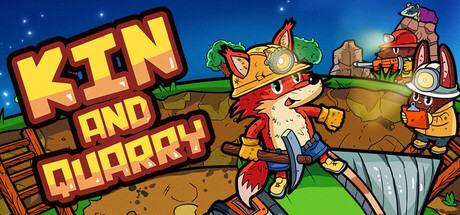
Cute and polished visuals: The game's aesthetics, including HD-2D graphics, cute art style, and visually appealing UI, are frequently mentioned as a strong positive. Players appreciate the polished and relaxing visual experience.
Common complaints
Poor value for price: The game is criticized for its short playtime (finishable in a day) and lack of content relative to its cost. Players feel the price (e.g., $10 or 346 rubles) is unjustified for the experience provided, especially compared to similar incremental/idle games.
Excessive late-game grinding: Players report that progression slows dramatically in later stages, with repetitive tasks and low drop rates making advancement tedious. This issue is compounded by diminishing returns on unit efficiency (e.g., 100 units mining slower than 50).
Unbalanced progression systems: Progression is hindered by exponential resource requirements, unviable end-game builds, and locked talent points. Some upgrades become unusable after ascension, and certain blocks may turn unbreakable, forcing respecs or halting progress.
Frustrating UI/UX design: The interface is described as unintuitive, with issues like annoying unit selection, lack of early exit buttons, and restrictive skill trees. These design flaws exacerbate the grind and reduce enjoyment.
Misleading idle game design: The game requires constant player input (e.g., activity every 60 seconds), contradicting the 'idle' genre label. Features like no early exit for runs or auto-restart further frustrate players expecting a hands-off experience.
Gameplay and performance
Build variety and experimentation: Players can create and switch between multiple builds using two large skill trees, affecting gameplay satisfaction and viability. Builds range from skill-based to resource-focused, with some excelling in end-game scenarios.
Core idle/incremental gameplay loop: The game revolves around a progression system with idle and incremental mechanics, including skill trees, resource gathering, and layered advancement. Players progress through stages with minimal input, often resetting cycles (e.g., every 60 seconds).
Currency and upgrade systems: Multiple currencies (e.g., per-run, meta-progression) fund upgrades in level-up trees. Upgrades are critical for advancing through layers, with some builds relying on specific currency strategies.
Short completion time: Achievements and core progression can be completed in ~5–6 hours, appealing to players seeking concise experiences. However, this brevity may limit replayability for some.
Autonomous unit mechanics: Units act independently but can lag if overused. Damage output scales with unit quantity, and manual control (e.g., WASD) is optional for efficiency-focused playthroughs.
Severe lag and FPS drops: Players report significant lag and frame rate issues, including as low as 5 FPS, particularly when too many units or bomb spam builds are active. This affects gameplay fluidity and responsiveness.
Optimization problems with buffs: Units mining slower when buffs are applied suggests poor optimization, leading to inconsistent gameplay performance and frustration during critical moments.
GPU-specific screen flickering: Players with RX 6700 XT graphics cards experience screen flickering, indicating potential compatibility or driver-related issues that disrupt immersion.
Recommendations
Recommended with discounts: Many players suggest purchasing the game only during sales or at a reduced price (e.g., $3 or in bundles). Full price is often deemed too high for the content provided.
Ideal for genre fans: Fans of digging, incremental, or idle/clicker games are more likely to enjoy this title. It serves as a good entry point for newcomers to the genre.
Casual and short-term appeal: The game is well-suited for casual play, short bursts, or an afternoon playthrough. It offers a heartwarming experience but may not sustain long-term engagement.
Progression issues need fixes: Players report frustration with progression difficulties, particularly around layers 8-10. A hard reset system with boosts and tougher blocks is suggested to improve gameplay.
Outclassed by competitors: While the game is high-quality in its genre, some players feel better incremental or digging games exist, making it a lower priority purchase.
Other review notes
Player drop-off at layers: Players report noticeable attrition at specific game layers, likely due to difficulty spikes or lack of engagement. This data from achievement statistics highlights potential design flaws in progression balancing.
Worker efficiency suggestions: Players propose improvements to worker mechanics, such as adding platforms or portals, to enhance gameplay fluidity and reduce repetitive tasks. These suggestions aim to optimize resource management and player experience.
Spoiler concerns in narrative: A specific character spoiler (ferret with dynamite) is mentioned as self-destructing, which some players feel disrupts immersion or reveals key plot points prematurely. This may impact narrative satisfaction for story-driven players.
Praise for developer track record: Some players note the developer's history of creating solid games, which builds trust in the current title's potential quality. This feedback is more about reputation than direct gameplay critique.