- Exceptional art and music enhance the experience
- Engaging and addictive idle gameplay loop
- Strategic depth with varied build options
- Insufficient content and value for the price
- Tedious and broken late-game progression
- Lack of offline progression is a drawback
Emotions
What players like:
Common complaints:
Gameplay feedback:
Performance notes:
Recommendations:
Other player notes:
Similar games
Blend with other games







Review evidence
Why players say this
Review evidence
Why players say this
What players like
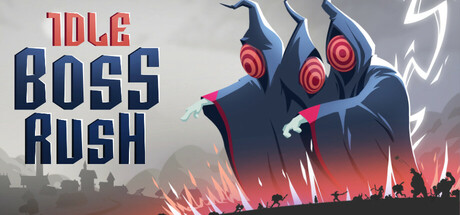
Exceptional Art and Music: The game's art style, visuals, and music are consistently highlighted as major strengths. Boss designs are particularly noted for their unique artistic quality, and the soundtrack is considered top-notch, with distinct themes for each boss.
Engaging and Addictive Gameplay: Players find the core gameplay loop, progression, and unique item upgrade mechanics highly enjoyable and addictive, especially in the early to mid-game. The game offers a satisfying experience for idle game enthusiasts.
High-Quality Idle Experience: The game is praised as a well-made, high-quality idle game that effectively delivers on the genre's appeal. It offers a relaxing experience, suitable for background play, and stands out with its unique approach to progression and item relevance.
Promising Demo Experience: The game's demo successfully captivated players, showcasing its potential and core concept effectively. Many reviewers were hooked by the demo and found it well-paced and engaging.
Strategic Depth and Build Variety: The game offers significant strategic depth through diverse upgrade paths, equipment choices, and numerous playable builds. This allows players to optimize their approach for different challenges and bosses, enhancing replayability.
Common complaints
Insufficient Content & Value: Players feel the game is severely lacking in content for its price, often completing meaningful progression within a few hours. Many compare it unfavorably to its demo or other free/cheaper idle games, citing a lack of depth, originality, and overall value.
Tedious & Broken Late-Game: The late game is characterized by an extreme, unrewarding grind, particularly for boss kills and item drops, which are often required 1000+ times. Progression slows to a halt, becoming boring and tedious, with many players abandoning the game before completion due to this imbalance.
Lack of Offline Progression: A significant complaint for an 'idle' game is the complete absence of offline progress. This forces players to keep the game running constantly to advance, undermining the core appeal of the idle genre.
Unsatisfying Prestige System: The prestige system is widely criticized for being poorly designed and unrewarding. Tying prestige currency to achievements, often requiring repetitive boss kills, makes it feel like a punishing and unsatisfying grind rather than a meaningful meta-progression mechanic.
Poor Item & Skill Balance: Many late-game items and skills are perceived as useless or poorly balanced, offering negligible impact on progression. There's a lack of synergy and meaningful choices, making upgrades feel unimpactful and often capped too early.
Gameplay and performance
Build-centric combat progression: The core gameplay loop revolves around players developing powerful builds, upgrading equipment, and enhancing village facilities to defeat bosses. Finding an 'overpowered' build is a common strategy for efficient progression.
Dual ascension systems: The game features both 'hard' and 'soft' ascension mechanics. Hard ascension resets progress but allows reallocation of ascension points, while soft ascension enables earning points without a full reset, utilizing specific materials. Equipment partially replaces the limited ascension points.
Hybrid idle/active gameplay: The game blends elements of idle and active gameplay, requiring the game to be open for progress as there is no offline gain. While it has incremental aspects, it demands more active engagement than traditional idle games, often involving a significant grind.
Limited feedback on other aspects: Based on limited and low-quality feedback, the game includes basic art and systems, and despite some balance issues, progression is generally manageable. There are also specific goals to fulfill as gameplay evolves.
Automation and resource management: Players manage villagers to create resources and can automate initially manual facilities through upgrades. However, there's a reported bug where gold doesn't enter the village if the camera is moved, impacting resource collection.
Good handheld compatibility: The game performs well on handheld devices like the Steam Deck and ROG Ally, with touch screen controls being perfectly playable, though not as fluid as traditional methods.
Critical game-breaking bugs: Players are reporting significant bugs, including complete loss of progress and spending a large portion of playtime troubleshooting issues. This severely impacts the core gameplay experience.
Memory leak issues reported: Multiple players have experienced memory leaks, leading to system instability and requiring computer restarts. This indicates a serious technical flaw affecting system performance.
No performance issues on high-end PC: One user reported excellent performance on a high-end laptop, suggesting that powerful hardware can mitigate some potential performance concerns.
Potential network interference: One player observed a significant increase in ping in other games after installing this game, suggesting a possible network-related issue or conflict.
Recommendations
Mixed recommendations, price sensitivity: Player recommendations are highly divided, with many suggesting the game is not worth its current price or needs significant updates. However, fans of the idle game genre generally recommend it, especially if on sale.
Needs significant updates/rebalancing: Many players feel the game lacks depth or proper balancing, particularly in the mid-to-late game. They suggest waiting for future updates and balance patches before purchasing or playing extensively.
Demo vs. full game experience: There's a split in opinion regarding the demo; some players bought the full game immediately after the demo, while others suggest the demo is sufficient or even better than the paid product.
Genre comparison and expectations: Players compare the game to other idle titles like Cookie Clicker, suggesting it might lack content. Newcomers to the genre are advised to research before buying.
Other review notes
More detailed statistics: Players want more comprehensive in-game statistical data, particularly detailed DPS information for units, effects, and items, to better understand game mechanics and optimize builds.
Game length and replayability: There's mixed feedback on game length, with some completing it quickly (3-10 hours) while others find it offers sufficient content (around 100 hours) or has potential for long-term play. Players are looking for more reasons to engage over time.
Idle game characteristics: Some players perceive the game as a typical idle clicker, suitable for casual play or as a 'time waster.' This suggests an expectation for more depth or a clearer identity beyond simple idle mechanics.
Quality of life improvements: Players suggest various quality of life features, such as toggles for animations to improve performance, an option to cycle bosses automatically, and better visual clarity by moving gold to a background layer.
Need for localization: There's a clear demand for Chinese and Korean language support, indicating a desire for broader accessibility and a larger player base.