- Evokes strong childhood nostalgia
- Accurately recreates millennium era
- High-quality graphics praised
- Playtime is too short
- Lacks gameplay and narrative depth
- Poor optimization causes low FPS
Emotions
Archetypes
Hardware
What players like:
Common complaints:
Gameplay feedback:
Performance notes:
Recommendations:
Other player notes:
Similar games
Blend with other games





Review evidence
Why players say this
Review evidence
Why players say this
Steam review verdict
Evokes strong childhood nostalgia with accurate millennium-era recreation and praised graphics, but playtime is too short, lacking gameplay and narrative depth, with poor optimization causing low FPS.
What players like
Evokes strong childhood nostalgia: The game consistently triggers vivid childhood memories through its scenes, objects, and environments, resonating deeply with players who grew up in the 80s, 90s, or early 2000s. Many reviewers report feeling transported back to their own past, with specific details like snacks, toys, and home layouts.
Accurately recreates millennium era: The game faithfully captures the aesthetic and atmosphere of the year 2000, including visual symbols, objects, and the overall feel of that time. Players praise its detailed recreation of the era, making it a nostalgic journey for those who lived through it.
Strong atmospheric experience: The game is lauded for its meticulously crafted atmosphere, which is described as nostalgic, surreal, warm, and melancholic. This strong atmosphere enhances immersion and emotional impact, making the experience memorable.
High-quality graphics praised: Reviewers frequently commend the game's graphics, noting their high quality, realism, and attention to detail. Some even compare the visuals to AAA titles, highlighting the game's impressive visual presentation.
Fun and well-made: Reviewers describe the game as fun, enjoyable, and well-crafted, with a good overall feel. It is considered worth experiencing, with many praising its execution and polish.
Common complaints
Playtime is too short: Multiple reviews state the full playthrough lasts only 2-4 hours, with some finishing in under an hour. The short length is a major complaint, especially given the price.
Lacks gameplay and narrative depth: Players report the game has minimal interactive elements, few mechanics, and almost no story, making it feel empty and like a walking simulator. This significantly reduces engagement and replay value.
Poor guidance and unclear objectives: Players frequently get lost or confused about what to do next due to weak tutorials, unclear direction indicators, and a lack of map or route design. This is especially problematic for new players in dark environments.
Lacks save and backtracking systems: The absence of a proper save system prevents players from backtracking to missed areas, forcing them to restart the game. This is frustrating for completionists and those who want to explore fully.
Causes motion sickness: A significant number of players experience dizziness or severe motion sickness due to frequent camera movement, especially when going downstairs or jumping. The abundance of objects on screen exacerbates the issue.
Gameplay and performance
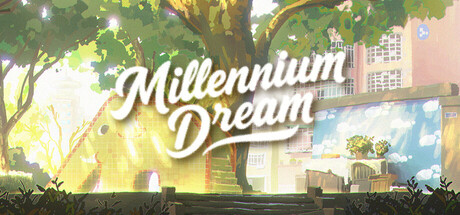
Dreamcore nostalgic millennium setting: The game uses dreamcore and oldcore aesthetics to evoke nostalgia for the millennium era, specifically the 2000s. It features dreamlike, nostalgic scenes and items that transport players back to that time period.
Walking simulator with weak guidance: The game is primarily a walking simulator focused on exploration and scenery, with no combat, tasks, or puzzle difficulty. Players walk through environments with minimal story and weak guidance.
Photography-based gameplay loop: The core gameplay loop consists of walking, taking photos of scenery and buildings, and collecting fragments. It is essentially a sightseeing and photography simulator with exploration at its heart.
Chinese retro nostalgia game: The game is a Chinese retro nostalgia game set in the millennium era, featuring Chinese dreamcore themes and cultural elements from about 20 years ago. It is centered on Chinese nostalgic experiences and settings.
Adjustable time and weather: Players can change the time of day, weather conditions, and apply art style filters. This system allows for modifying the atmosphere and visual presentation of the same locations.
Poor optimization causes low FPS: Multiple players report severe frame rate issues, with FPS dropping to 10-50 even on low settings across various GPUs. This is the most common complaint, indicating widespread performance problems.
Frequent crashes and fatal errors: Several players experience crashes, including fatal errors on startup, during gameplay, and when adjusting settings. Some crashes are specific to certain hardware or features like FSR and high reflection quality.
Motion sickness reported by players: A significant number of players report severe 3D motion sickness, even after adjusting settings. The lack of an FOV slider and blurry graphics may contribute to this issue.
High hardware requirements: The game is performance-heavy even on high-end systems, with players noting that it looks ordinary but demands powerful hardware. Some report average optimization requiring good specs.
Graphics flickering and shimmering: Players notice flickering in shadows, lighting, and distant materials, especially at high settings. This visual artifact detracts from the experience and is reported across different resolutions.
Recommendations
Nostalgia for 90s/2000s players: Multiple clusters emphasize that the game is best suited for players born in the 90s or early 2000s, as it evokes memories of that era. Some clusters specifically recommend it to those who grew up around the millennium, while others note it may not resonate with younger players who didn't experience that time.
Worth the price: Reviewers note that the game offers good value for its cost, with some mentioning it's cheap and worth collecting. Others suggest waiting for a discount if seeking more content, but overall the price is seen as fair.
Leisure and relaxation: Multiple clusters highlight the game as suitable for leisure time, recommending slow-paced play and relaxation. It's seen as an immersive, calming experience for casual players.
General positive recommendation: Several clusters contain straightforward positive recommendations, with reviewers expressing strong approval and urging others to try the game. These range from simple endorsements to high praise for all players.
Nostalgic but buggy: Some clusters recommend the game to nostalgic players who can tolerate bugs, while others advise caution or not recommending it until issues are fixed. This suggests the game has technical problems that may hinder enjoyment.
Buying context
Community fair range: $3.00 - $5.00.
Game completion: 2.0h.
Story completion: 2.0h.
The game is a nostalgia-driven walking simulator that either deeply resonates with players who share the depicted memories or fails to engage those who don't, with no clear progression to fun.
Friction: confusing pacing; messy achievements; lack of interactive content; crashes; unfamiliar items.
Player profiles
Nostalgic Time Traveler: Slowly wanders through environments, pauses at familiar objects, and lets memories surface. Motivation: To relive and emotionally reconnect with childhood memories from the millennium era. Stance: buy.
Liminal Atmosphere Seeker: Wanders freely, adjusts time/weather, takes photos, and appreciates the environment without needing a strong narrative. Motivation: To immerse in dreamlike, nostalgic-yet-uncanny spaces and enjoy the visual and audio atmosphere. Stance: buy.
Quality-Conscious Critic: Explores thoroughly, tries to collect everything, but gets annoyed by technical flaws and design gaps. Motivation: To experience a well-crafted, bug-free game with meaningful content and clear guidance. Stance: sale.
Platform notes
The game generally performs well across most hardware cohorts, with some optimization issues and occasional crashes on high-end systems.
Windows <8GB VRAM: positive. Most players report playable frame rates (60-100 FPS) with DLSS, though a few encounter black screen crashes or low FPS on low settings.
Windows 12-15GB VRAM: positive. Mostly positive reports, with some noting optimization issues like stutters and lower FPS at 4K, but overall playable.
Windows 8-11GB VRAM: positive. All reviews are recommended, with stable frame rates and good optimization, though some mention flickering and frame drops in certain scenes.
Steam Deck: The audit reveals severe stability and compatibility problems on Steam Deck. A user reported a system crash requiring OS reinstallation, while others experienced freezes, black screens, and Proton failures. Performance issues like frequent frame drops are also common. Although one user said the game is playable on Steam Deck, the critical crash and Proton issues dominate, making the experience broken for many.
Linux and Proton: The game runs well on Linux/Proton by default, but there are Linux-specific issues with graphics settings and crash recovery that require workarounds.
Other review notes
Short playtime: The game is consistently described as short, with most playthroughs lasting between 90 minutes and 4 hours. This is a common point of feedback, with many players noting the brief completion time.
Solo developer project: The game was created by a single person handling design, models, environment, and programming. It is recognized as an indie, personal work from a one-person team or small studio.
Nostalgic experience: The game strongly evokes nostalgia, particularly for childhood memories and the 1980s, 1990s, and 2000s eras. It is seen as a journey back to past times, appealing to those who grew up in those decades.
Hope for future DLC: Reviewers express support for the game and hope for future DLC, updates, or new games. There is anticipation for additional content and scenes to be added in the future.
Good value for price: Players frequently mention the game is sold at a low or discounted price and consider it good value for its cost. The price is seen as reasonable relative to the experience offered.