- Beautiful graphics praised
- Enjoyable and smooth gameplay
- Excellent character customization
- Market locked behind subscription
- Severe pay-to-win monetization
- Bots overrun servers
Emotions
Archetypes
Hardware
What players like:
Common complaints:
Gameplay feedback:
Performance notes:
Recommendations:
Other player notes:
Similar games
Blend with other games



Review evidence
Why players say this
Review evidence
Why players say this
Steam review verdict
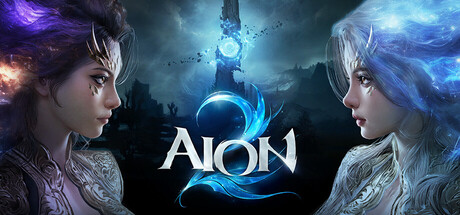
Stunning graphics, smooth enjoyable gameplay, and great character customization are undermined by a subscription-locked market, severe pay-to-win monetization, and bot-infested servers.
What players like
Beautiful graphics praised: Many reviewers highlight the game's beautiful and stunning graphics, with a well-designed world. The visuals are consistently described as impressive and pleasant to look at.
Enjoyable and smooth gameplay: Gameplay is described as fun, smooth, and dynamic, with a satisfying loop. Combat is often highlighted as enjoyable and responsive.
Excellent character customization: The character creator is widely praised for its depth, flexibility, and quality, allowing players to create detailed and unique avatars. Many consider it one of the best in any game.
Good MMO experience: Many reviewers consider it a solid MMO, with engaging dungeons, progression systems, and overall fun. It appeals to both veterans and newcomers.
Fun flying and exploration: Flying and exploring the world are frequently mentioned as enjoyable activities, providing a sense of freedom. The world is immersive and fun to navigate.
Common complaints
Market Locked Behind Subscription: Players cannot buy or sell on the in-game market or auction house without an active paid subscription. This restriction extends to player-to-player trading, forcing free-to-play players into a solo experience.
Severe Pay-to-Win Monetization: The game is widely described as extremely pay-to-win, with paying players gaining significant advantages in combat, leaderboards, and PvP. Free-to-play players cannot compete regardless of grind or skill.
Bots Overrun Servers: Servers are flooded with bots that constantly farm resources, taking nodes from legitimate players and disrupting the economy. The presence of hundreds of thousands of bots makes gathering difficult and ruins core mechanics.
Expensive Battle Passes and Subscriptions: Progression is gated behind multiple paid battle passes and a mandatory subscription, costing hundreds of dollars. Battle passes are also character-bound, requiring repurchase for each character.
Crafting RNG and Low Drop Rates: Crafting is heavily RNG-based, with failure chances even at high skill levels, and basic crafting materials have abysmal drop rates. This makes progression frustrating and reliant on luck.
Gameplay and performance
MMORPG with Varied Content: The game offers a wide range of MMORPG activities including questing, dungeons, world bosses, crafting, and PvP. It features both PvE and PvP endgame content.
Dynamic Combat and Macros: Combat is described as dynamic and satisfying, with a built-in macro system. Players can use macros to automate certain combat actions.
Opt-In PvP with Arenas: PvP is generally opt-in and includes duels, open-world conflict, and structured arenas. There are 1v1 and 5v5 ranked matches, with PvP unlocking at a certain level.
Subscription and Battle Pass Stack: Monetization includes an optional subscription layered on top of multiple battle passes and microtransactions. Some battle passes are character-specific or have multiple paid tiers.
Korean MMORPG Design: The game is described as a Korean MMORPG with a mobile-like interface and grind-heavy design. It follows typical Korean MMO monetization and progression patterns.
Severe large-scale FPS drops: Framerate collapses to single digits or low double digits during world bosses, mass PvP, and populated hubs, even on high-end hardware. Cluster 1, 3, 38, and 75 all report slideshow-level performance in these events.
Mixed performance reports: While many complain about performance, others report the game runs well, smoothly, or flawlessly on their systems. Clusters 2, 5, 56, 86, and 120 provide positive performance experiences.
Frequent server lag and freezes: Servers experience recurring multi-second freezes and lag spikes every few minutes, affecting both open world and dungeon content. Clusters 4, 8, 13, 65, and 78 describe these issues as constant and disruptive.
Poor optimization criticized by many: A significant portion of feedback calls out bad optimization, with stutters, FPS drops, and performance far below expectations for the hardware. Clusters 7, 45, 46, 48, 80, and 117 highlight this widespread concern.
Frequent maintenance and crashes: Servers frequently go down for maintenance or crash, disrupting play sessions and causing rollbacks. Clusters 13, 39, 67, 82, and 99 mention these server stability problems.
Recommendations
Not recommended overall: Multiple reviewers categorically do not recommend the game for various reasons, including dissatisfaction and unmet expectations. The sentiment spans both general and specific criticisms.
Do not spend money: A recurring warning urges players to avoid spending money on the game due to its monetization and perceived lack of value. Reviewers explicitly advise not to buy, download, or invest in the title.
Cautionary warnings to avoid: Strong warnings advise staying away from the game if you value your time, money, or progress, with some calling it a waste. The language is often emphatic, such as 'avoid' and 'stay away'.
Free-to-play low barrier entry: Many reviewers note the game is free to try, making it easy to give it a chance without upfront cost. They recommend trying it casually and deciding based on personal experience since there is no financial barrier to entry.
Aggressive monetization criticized: Paywalls and pay-to-win mechanics significantly limit the free experience, with some stating the game is only enjoyable for those willing to spend heavily. This monetization model draws strong negative feedback.
Buying context
Community fair range: $0.00 - $0.00.
Game completion: 100.0h.
Story completion: 18.0h.
Session length: 3.2h.
Endgame: 28.0h.
Aion 2's dominant time-to-fun report is a slow, tutorial-like, mostly solo opening that opens into endgame co-op around level 45, though many players say the endgame remains repetitive or that early fun fades.
Reported time to anchor: 6h.
Player profiles
Casual PvE Collector: Solo PvE, crafting, gathering, pet and achievement collecting, dungeon runs on weekly timers. Motivation: Relaxed collection and PvE progression without competitive pressure. Stance: buy.
F2P Competitive PvP Player: PvP, Abyss/arena play, gear optimization, and comparing performance against paying players. Motivation: Fair, skill-based competitive PvP and arena progression. Stance: no buy.
Co-op Social MMO Player: Group questing, co-op dungeons, trading, raids, and social guild or faction play. Motivation: Playing and progressing together with friends in a shared online world. Stance: no buy.
Platform notes
Performance is mixed across most large Windows cohorts: smooth play is reported on higher-VRAM/RAM systems, but optimization, crash, and crowded-area lag complaints remain common. The lowest-VRAM/low-RAM cohort is predominantly negative.
Windows 12-15GB VRAM / 16-31GB RAM: mixed. Reports are split between smooth 4K/high-refresh play and serious frame drops, crashes, and poor crowded-area performance.
Windows 8-11GB VRAM: mixed. Some users get smooth high-quality play and easy stutter fixes, while others report terrible optimization, crashes, freezes, and heavy FPS drops in populated zones.
Windows <8GB VRAM / 16-31GB RAM: mixed. Several users report stable or acceptable performance and tolerable crowded-area FPS, but others describe heavy lag, world-boss slowdowns, and GPU crashes.
Steam Deck: Audit of the Steam Deck experience for AION 2 shows multiple broken-range barriers: users report dependency on Proton Experimental, missing or broken controller support, anti-cheat errors that block launch, frequent crashes, and unreadable small text. Performance is playable with FSR and upscaling but compromised in crowded scenes. Some Linux and Steam Deck positive reports exist, but they are outweighed by high-severity technical friction.
Linux and Proton: The dominant Linux/Proton evidence is positive: many users say Aion 2 runs out of the box on Linux, works on SteamOS, or requires only Proton Experimental, GE Proton, or a common Proton build. A minority report occasional Linux-specific crashes, performance quirks, or anti-cheat interference with streaming to Steam Deck. These issues are real but isolated and do not outweigh the broader consensus of working Linux compatibility.
Extra review signals
Monetization: The reviewed feedback overwhelmingly identifies Aion 2 as heavily monetized and pay-to-win. Reviews repeatedly cite a paid subscription required for the market, multiple battle passes, premium currency convertible into gear and progression, energy or stamina limits sold back as convenience, paid revive stones and power consumables, and purchases locked per character or server. Although a minority of reviewers dispute the severity or say they personally do not feel forced to spend, the direct evidence of real-money power and gated core systems is strong. The monetization model fits the predatory pay-to-win category.
External guides: The audit finds substantial external data dependency across the reviews. Users repeatedly report needing wikis, YouTube guides, and outside sources for systems, mechanics, inventory planning, and technical workarounds. Most importantly, the dataset contains explicit Tier 1 evidence about needing external data to learn where to farm and to understand drop rates. Under the strict priority algorithm, the presence of farming and drop-rate data dependency sets the score to 100.
Other review notes
Free-to-play with paid extras: The game is free to download and play, with no barrier to entry for the main story. Additional monetization includes an optional subscription, battle passes, and cosmetic purchases.
Aggressive monetization stack: Multiple monetization layers exist, including a subscription system, two battle passes, a cash shop, and character-specific purchases. This creates a pay-to-win or pay-to-fast environment.
Unfavorable comparisons to Aion 1: Many reviewers feel the original Aion had better PvP, open-world danger, progression pacing, and more features at release. The sequel is often seen as lacking the identity of the first game.
Comparison to other MMOs: The game is frequently compared to Final Fantasy XIV, World of Warcraft, Guild Wars 2, and RuneScape as a more traditional MMO experience. Some see it as an alternative to WoW or similar to Throne and Liberty.
Auction house behind subscription: Access to the auction house requires a monthly subscription, with limitations even after subscribing. This locks a core trading feature behind a recurring paywall.