- Visually stunning art and nostalgic appeal
- Highly enjoyable core tactical gameplay
- Engaging story with unique faction variety
- Severe technical instability and bugs
- Loss of series identity and niche appeal
- Poor replayability and progression issues
Emotions
What players like:
Common complaints:
Gameplay feedback:
Performance notes:
Recommendations:
Other player notes:
Similar games
Blend with other games




Review evidence
Why players say this
Review evidence
Why players say this
What players like
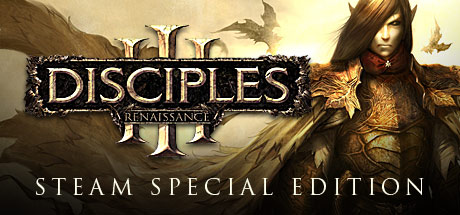
Visually stunning art and design: The game's art style, graphics, and visual design receive widespread acclaim. Players highlight the detailed faction aesthetics, beautiful character art, and atmospheric environments as major strengths. The gothic and fantasy art direction is noted for its uniqueness and high quality, contributing significantly to the game's immersive experience.
Strong nostalgic appeal for franchise fans: The game resonates deeply with fans of the Disciples series, evoking nostalgia and comparisons to *Disciples II*, which is often regarded as a classic. Players appreciate the retained core mechanics, dark fantasy aesthetics, and improvements over previous entries, such as the zoom feature and refined battle strategies. This connection enhances the game's appeal to long-time fans.
Highly enjoyable core gameplay: Players consistently praise the game's core mechanics, combat system, and overall gameplay loop. The turn-based strategy elements, quick combat features, and engaging battles are highlighted as standout aspects that contribute to the game's replayability and fun factor. Many reviewers note that the gameplay alone makes the game worth playing despite other flaws.
Engaging and well-crafted story: The narrative, lore, and storytelling are praised for their depth, twists, and engagement. Players appreciate the well-developed campaigns, compelling cutscenes, and mature themes. While some note that the story could have been expanded further, it is generally considered a strong point that enhances the overall experience.
Unique faction and unit variety: Players enjoy the diversity of factions, each with distinct specializations, evolution paths, and strategic depth. The ability to experience three different campaigns with unique races and upgrade systems adds significant replayability. The balance between factions and units is also praised for preventing any single strategy from dominating.
Common complaints
Severe technical instability: The game suffers from frequent crashes, graphical glitches, freezes, and performance issues across multiple systems and hardware configurations. These bugs disrupt gameplay, force restarts, and in some cases, make the game unplayable. The feedback is consistent and widespread, indicating systemic technical failures rather than isolated incidents.
Loss of series identity: Players feel the game abandoned the unique atmosphere, depth, and charm of previous installments (e.g., Disciples II). The transition to 3D, shallow progression systems, and generic storytelling diluted the series' gothic tone and tactical identity. Many reviewers explicitly compare it unfavorably to earlier games, suggesting a misalignment with fan expectations.
Poor progression and replayability: Units do not retain stats between levels, forcing repetitive grinding. Campaigns lack a balanced difficulty curve, and multiplayer options are shallow. The progression system feels shallow compared to predecessors, with limited strategic variety or meaningful choices (e.g., faction builds, spell research).
Clunky and slow combat: Combat is criticized for being slow, repetitive, and lacking tactical depth. Battles become tedious due to drawn-out animations, limited unit abilities, and an absence of speed controls. Some players resorted to auto-resolve, indicating a lack of engagement. The system also deviates from the series' traditional tactical style, further alienating fans.
Unintuitive pathfinding and controls: Pathfinding issues (e.g., heroes walking through allies, unreachable map elements) and cumbersome camera/interface controls break immersion. The lack of customizable hotkeys (e.g., only Spacebar for skipping turns) exacerbates frustration, especially for players accustomed to modern UI standards.
Gameplay and performance
Hex-based tactical combat system: The game introduces a turn-based tactical RPG system with a hex grid for movement and combat. Units from both sides use class-specific abilities, potions, and magic, shifting from the older melee/ranged attack lines to an open battlefield. This system emphasizes single-unit management, similar to console tactical RPGs.
Three distinct campaigns with factions: Players can choose from three campaigns (Empire, Legion of the Damned, and Elven Alliance), each with six acts and unique storylines. The recommended order for story continuity is Empire-Legion-Alliance, though players can start with any faction. Each campaign offers different perspectives and locations.
Dynamic unit evolution system: Units start at level 1 with no promotions but can evolve into advanced archetypes if the corresponding buildings are constructed in the capital. Unit development is flexible, with multiple paths affecting abilities, appearance, and voice acting. Only the hero's progression carries over between acts.
Adjustable difficulty and AI settings: The game features varying difficulty levels that adjust available resources and enemy AI behavior. For example, on easy difficulty, enemies do not automatically enter defensive mode. Campaigns are set in different locations, each with its own difficulty curve.
Linear mission structure with side objectives: Missions are primarily linear, with the goal of reaching a specific point on the map. However, side objectives like saving peasants or capturing control points add variety. Some encounters are unavoidable, maintaining a structured progression.
UI and menu-related bugs: Specific UI elements, such as the hero's skill tree panel, can become stuck and render the game unusable until a restart. This issue highlights poor UI handling and adds to the overall instability of the game.
Minimal loading time issues: Loading times are generally unnoticeable, indicating that this aspect of the game performs well. This is a minor positive point in an otherwise unstable experience.
Recommendations
Mixed recommendations due to bugs: Players are deeply divided on whether to recommend the game due to its technical issues, including crashes, bugs, and overall instability. While some acknowledge its potential and recommend it with caveats (e.g., waiting for fixes or buying at a discount), others strongly advise against purchasing it in its current state. The feedback highlights a significant risk for players considering the game.
Good value at discounted price: Several players note that the game is worth purchasing only at a steep discount, citing its low price point (e.g., $1.80 with the Resurrection expansion) as justification for tolerating its flaws. This feedback suggests the game may appeal to budget-conscious players willing to overlook technical issues.
Prefer Reincarnation or older versions: Many players suggest avoiding this version of the game and instead recommend the 'Reincarnation' edition, which is described as better optimized, more challenging, and closer to the quality of earlier entries in the series. Others advise sticking with Disciples I or II, which are considered superior in gameplay and polish.
Non-Steam versions preferred: A few players recommend purchasing the CD version over the Steam version, citing fewer bugs and better stability. This point is based on limited feedback but highlights potential platform-specific issues.
Emotional disappointment in quality: Some players express sadness or regret over the game's perceived failure or unfinished state. This feedback is more emotional than constructive but reflects the disappointment of fans of the series. Importance is low due to lack of specificity.
Other review notes
Disciples II preferred over Disciples III: Fans of the series and new players alike recommend Disciples II over Disciples III due to its streamlined design, lack of bugs, and extreme difficulty. Disciples III is criticized for bugs and exploits, despite improved visuals.
Community-driven localization available: A Czech translation patch is available and functional for the Steam version, indicating active community support for localization efforts.
Fan-made patches desired: Players express hope for fan-made patches to improve the game, suggesting dissatisfaction with the current state of the game and a desire for community-driven enhancements.
Campaign-focused design with weak extras: The game appears to be designed primarily for its campaign, with other modes feeling like afterthoughts. This limits replayability and depth outside the main story.
Additional Horde campaign available: An extra campaign featuring the Horde is available, providing additional content for players who seek more gameplay variety.