- Unique and engaging game concept
- Innovative card-based deduction gameplay
- Strong atmospheric immersion
- Card combinations are obscure
- Guess-and-check replaces deduction
- Game is very short
Emotions
Archetypes
What players like:
Common complaints:
Gameplay feedback:
Performance notes:
Recommendations:
Other player notes:
Similar games
Blend with other games 85%CARIMARA: Beneath the forlorn limbs
 82%The Horror at Highrook
 80%TR-49
 79%The Last Door - Collector's Edition
 79%Call of the Sea
 79%Cthulhu: The Cosmic Abyss
 78%Strange Antiquities
 78%Return of the Obra Dinn
 78%Occlude
 78%Out Of Hands
 78%PARANORMASIGHT: The Seven Mysteries of Honjo
 77%The Excavation of Hob's Barrow
Review evidence
Why players say this
Review evidence
Why players say this
Steam review verdict
A unique, atmospheric card-deduction game with an engaging concept, but obscure combinations turn deduction into guesswork and the experience ends far too soon.
What players like
Unique and engaging game concept: The game is widely regarded as interesting, unique, innovative, and fun, with many calling it charming or even a masterpiece. Its originality stands out as a key reason for high praise.
Innovative card-based gameplay: Reviewers consistently praise the card mechanic as unique, fun, and original, with many highlighting it as the game's standout feature. The card system blends inventory, dialogue, and puzzle-solving in novel ways.
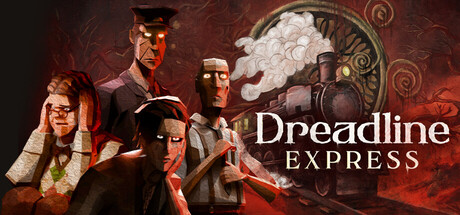
Strong atmospheric immersion: Players repeatedly describe the atmosphere as great, heavy, and immersive, with the train setting and post-apocalyptic Lovecraftian tone receiving special mention. The combination of visuals, music, and environment creates a powerful mood.
Beautiful card artwork and visuals: The card art is specifically praised as beautifully detailed and drawn, adding significant appeal to the card mechanic. Overall visuals are also described as gorgeous and unique.
Great overall experience recommended: Multiple reviewers emphasize that the game delivers a great, enjoyable, and satisfying overall experience that they warmly recommend. The combination of gameplay, story, and atmosphere makes it a standout title.
Common complaints
Card combinations are obscure: Correct card combinations are often non-obvious and become more demanding toward the end. Players resort to guessing because the game provides too little information to narrow down the right cards.
Guess-and-check replaces deduction: Figuring out the mystery and executing the solution in-game are disconnected, forcing players to test combinations until something works. This guess-and-check loop becomes frustrating and makes the investigation feel arbitrary.
Unfindable cards block true ending: Multiple players could not find the last cards needed for the true ending, with no in-game way to locate them. This missing-card hunt prevents completion and causes frustration.
Hunting combinations becomes a grind: Near the end, the large number of cards makes finding the advancing combination tedious, taking hours of searching. Players rushed or brute-forced the final section out of frustration.
Game is very short: The first playthrough lasts under 2 hours, and the game can be completed in less than 5 hours. Overall length feels like a two-evening snack rather than a full game.
Gameplay and performance
Card-based deduction core mechanic: Multiple clusters describe a card system used for deductions, combining cards to find correct combinations, and solving puzzles. Cards function as memories, knowledge, items, and dialogue methods to interact with NPCs and the environment.
Train setting with passengers: The game is set aboard a train with limited space, specifically the last human train on Earth. Players move through narrow carriages and compartments, escaping cabins and meeting passengers.
Lovecraftian psychological horror atmosphere: The game is a Lovecraftian psychological horror adventure with a storyline. It notably avoids cheap jumpscares and chase sequences, focusing on atmosphere instead.
Card combination puzzles: The game features puzzle elements handled through combining cards to find correct combinations. Figuring out which combinations work is central to progression.
Card album collection system: Players collect cards into an album by examining objects, learning from conversations, or deducing from clues. Cards represent characters, objects, events, phenomena, memories, secrets, testimonies, and logical deductions.
Smooth 60fps performance: Multiple reviewers report the game runs at or near 60fps, indicating consistently smooth performance on their hardware.
Bug-free experience: One reviewer encountered no bugs during play, suggesting a stable and polished release.
Works flawlessly on Linux: The game runs without issues on Linux via Proton, showing good compatibility for Linux users.
Fine on Steam Deck: One reviewer reports the game seems to run fine on Steam Deck, indicating acceptable portable performance.
Runs well on reviewer's rig: The game performs well on the reviewer's specific hardware setup, reinforcing positive performance impressions.
Recommendations
Strongly recommended by reviewers: Many reviewers give strong, unequivocal recommendations, describing the game as worth their time and highly recommended.
Worth the low price: Reviewers repeatedly note the price is fair or low relative to the content and playtime, making it more than worth buying.
Fans of Obra Dinn should play: Several reviewers recommend the game specifically to fans of Obra Dinn and similar investigation-style titles, including The Roottrees are Dead and Firewatch.
Recommended for detective story fans: The game is recommended to players who enjoy well-written detective stories in a Lovecraftian setting and solving mysteries.
Unique and underrated experience: Reviewers highlight the game as unique, impressive, and underrated, making it worth trying for that alone.
Buying context
Game completion: 4.0h.
Story completion: 3.5h.
Some reviewers find the puzzles fair and the narrative immediately hooking, but the strongest progression evidence says the game becomes addicting after players understand how its puzzle systems work. Clue-hunting and deduction-card mechanics are the main early friction.
Friction: Natural onboarding and learning curve; Tedious clue-hunting; Deduction cards that are tedious and obscure to find.
Unlock drivers: Understanding how the game works; Figuring things out and being rewarded for it.
Player profiles
Deduction-Driven Mystery Fan: Collects clue cards, cross-references evidence, unlocks dialogue, and follows branching investigative paths. Motivation: Unraveling an interconnected mystery through a coherent card-based narrative system. Stance: buy.
Atmospheric Horror Story Seeker: Explores for narrative and aesthetic payoff, tolerating mild horror rather than seeking constant scares. Motivation: Experiencing an eerie, story-rich world with memorable lore and atmosphere. Stance: buy.
Adventure Genre Newcomer: Plays in a guided, low-friction way and values clear progress over complex optimization. Motivation: Finishing an accessible investigation without frustration or genre expertise. Stance: buy.
Platform notes
Steam Deck: The game runs at 60fps on Steam Deck with responsive controls, but players experience occasional camera jitter and clunky first-person movement in narrow spaces. No external launchers, Proton tweaks, small text, or stability issues are reported. The experience is largely seamless with minor control friction.
Other review notes
Strong Lovecraftian atmosphere: Reviewers repeatedly highlight the game's Lovecraft-inspired themes, Cthulhu style, and overall mythos atmosphere. The creator drew inspiration from H.P. Lovecraft, and references to Leng and Miskatonic University appear in the game.
Short four-to-six-hour length: Many reviewers note the game can be completed in about four hours, with one playthrough taking roughly five to six hours. Some view this brevity as a positive, suitable for an evening.
Compared to Outer Wilds and others: Reviewers compare the game to Outer Wilds for narrative and pacing, Dredge for visual design, and Crow Country for a perceived throughline. It is said to draw inspiration from these titles while remaining its own thing.
Often compared to Obra Dinn: Multiple reviews compare the game's investigation and mystery structure to Return of the Obra Dinn, praising its storytelling, audio, and visuals. It is seen as a brain-teasing mystery in the same vein.
Small-budget Czech production: The game is a Czech domestic production made by one person, David Konečný, as his debut. Its small-budget nature is acknowledged, and the Czech writing is praised for its quality.