- Fun addictive deckbuilding gameplay
- Repetitive formulaic gameplay loop
- Easy to pick up
- Frequent crashes and fatal errors
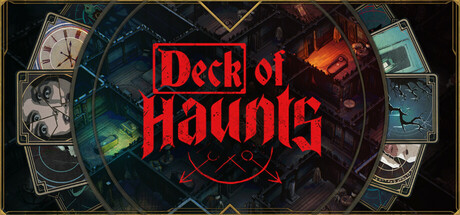
- Strong haunted house theming
- Lacks enough content variety
Emotions
Archetypes
What players like:
Common complaints:
Gameplay feedback:
Performance notes:
Recommendations:
Other player notes:
Similar games
Blend with other games


Review evidence
Why players say this
Review evidence
Why players say this
Steam review verdict
A fun and addictive deckbuilder with strong haunted house theming that is easy to pick up, but suffers from a repetitive formulaic loop, frequent crashes, and a lack of content variety.
What players like
Game is fun and addictive: A large group of reviewers describe the game as fun, engaging, and addictive, with some noting it is relaxing and challenging in a satisfying way.
Easy to pick up: The game is easy to learn and get into, with minimal tutorial time, making it a good casual or relaxing pastime.
Deckbuilding mechanics praised: Reviewers particularly enjoy the deck-building aspects, including the variety of decks and the strategic card synergies, which are well thought out.
Unique haunted house concept: The idea of playing as a haunted house is considered creative and refreshing, with the theme appealing to players.
Strong foundation and potential: The core concept and idea for the game are praised, with many noting a strong base and potential for growth.
Common complaints
Gameplay is repetitive and formulaic: Many clusters indicate that gameplay becomes repetitive quickly with a samey mansion-building loop and little variety. This leads to boredom and low replayability.
Game lacks enough content: Multiple clusters report that the game has insufficient content, variety, and lasting value. Players feel the amount of content is too small relative to expectations and price.
Frequent crashes and fatal errors: The game suffers from frequent crashes, including fatal errors during play and crashes on restart that prevent save loading. These technical issues disrupt gameplay and save progression.
Limited and useless cards: Players report that many cards are useless or situational, with poor draw outcomes and limited variety. This reduces strategic depth and deck-building appeal.
Progression system lacks depth: The meta progression is weak or nonexistent, making leveling feel meaningless and long-term growth unsatisfying. This reduces motivation to continue playing.
Gameplay and performance
Core deck-building gameplay: The game is primarily a deck-building card game, with strategic deck construction and card synergies at its core. It features various deck types and card mechanics that are central to the player experience.
Tower defense hybrid: The game merges deckbuilding with tower defense mechanics, where players use cards to defend against intruders. It combines elements of turn-based strategy and horror survival, creating a unique hybrid experience.
Room building and placement: Players engage in constructing a haunted house by placing rooms, which is a core mechanic alongside deck building. Room placement affects gameplay, with special rooms providing situational effects and requiring spatial planning.
Roguelike with deckbuilding: The game is a turn-based roguelike deckbuilder, combining structural-deck building with permadeath runs and base-building elements. Players progress through runs by surviving a fixed number of nights, with roguelike progression.
Card-based combat: Combat is card-based, where players use various cards to attack enemies, manage health bars, and ensure survival. Hand management is a key part of the strategic gameplay.
Frequent random crashes: Multiple reports indicate the game crashes randomly during gameplay, with some users experiencing frequent crashes that force them out. This is a high-impact issue affecting playability.
Fatal error crashes: The game frequently crashes with fatal error messages and closes by itself, making progress impossible until reinstallation in some cases. This is a common and severe problem.
Steam Deck issues: Several reports mention the game does not work optimally on Steam Deck, including upgrade problems, broken interactions, and room cycling issues. Some also note it runs well and is verified, but the negative experiences stand out.
Optimization and overheating: The game is deemed unoptimized, causing laptops to become excessively hot within 20 minutes, despite low system requirements. It uses high hardware resources, and struggles on higher settings, indicating performance problems.
Late endless run freezes: Freezes and significant lag occur in late endless runs due to the load of entities and combos, and the game lags during large AOE effects. This points to performance issues in content-heavy situations.
Recommendations
Recommended for deckbuilding fans: Multiple clusters indicate that the game is strongly recommended for fans of deck-building, card games, and roguelikes. Specific recommendations highlight the appeal to players who enjoy horror atmospheres and spooky themes.
Wait for a sale: Several clusters advise waiting for a sale before purchasing, noting that the game is worth it at a discounted price. This suggests that the game's value is considered better when purchased at a lower price.
Game worth full price: Some clusters state that the game is well worth the price, even at full price. These reviewers believe the game provides good value for money and strongly recommend its purchase.
Strong general recommendation: Multiple clusters provide general recommendations without specific caveats, such as simply recommending the game or saying they would recommend it. This indicates a widespread positive sentiment towards the game.
Recommended for Dungeon Keeper fans: Several clusters recommend the game to fans of Dungeon Keeper and horror games, especially those who have fond memories of that theme. The game appears to evoke a similar theme and is seen as appealing to that audience.
Buying context
Community fair range: $5.00 - $15.00.
Game completion: 10.0h.
Story completion: 4.0h.
Session length: 2.5h.
The game is initially engaging but loses appeal very quickly (under one hour) due to repetition and lack of variation, though a minority of players find deeper enjoyment after mastering mechanics.
Friction: repetitive gameplay loop; lack of variety in cards and runs; slow progression system; insufficient content; tedious UI interaction.
Player profiles
Genre Newcomer: Casual, learning-focused, seeks accessibility features. Motivation: Exploring a new card game genre with a spooky theme. Stance: sale.
Genre Veteran: Optimizing builds, min-maxing, seeking high difficulty. Motivation: Seeking deep strategic challenge and content depth. Stance: sale.
Atmosphere-Focused Builder: Strategic, building-oriented, enjoys tactical variety. Motivation: Immersive spooky atmosphere and creative house building. Stance: buy.
Platform notes
Steam Deck: The game suffers from text scaling issues making UI unreadable, incomplete controller support requiring mouse input, frequent crashes, and feature-specific bugs on Steam Deck. While some users report smooth performance under Proton, the identified issues severely hinder the handheld experience.
Linux and Proton: Two relevant reviews show conflicting Linux/Proton experiences: one positive (Proton runs smoothly) and one negative (fatal errors on Steam Deck). The isolated negative review is not enough to conclude severe issues, but indicates possible instability.
Extra review signals
External guides: Players report that the game suffers from a pervasive lack of tutorials and explanations for building mechanics, room effects, and card usage. This creates a dependency on external resources to understand basic systems, fitting the 'Instructional Data' (Wiki Tax) category.
Other review notes
Developers actively update game: Reviewers frequently praise the developers for regular updates and content additions. The game is seen as evolving over time, with bug fixes and new features being added consistently.
Developers listen to community: Players appreciate that the developers are responsive to community feedback and actively engage with the player base. They are described as open, quick to respond, and willing to implement suggestions.
Compared to Dungeon Keeper: Several reviews draw direct comparisons to the classic game Dungeon Keeper, noting similarities in theme and overall feel. The game is considered to evoke the spirit of that franchise.
Good value for price: Reviewers find the game offers good value for its price point, often calling it a bargain. The cost is seen as reasonable, especially in comparison to larger AAA titles.
Limited content variety: A significant number of reviewers feel the game's content variety is restrained, with limited card options and a fewer overall amount of content. This contributes to a perception of the game being incomplete or thin.