- Addictive gameplay with rewarding sense of progression.
- Strategic resource management adds to the difficulty.
- Easy to learn with an intuitive design.
- Tedious, repetitive micromanagement is present.
- Lacks content and overall depth.
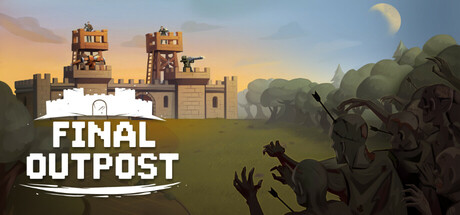
- Core loop involves surviving nightly sieges.
What players like:
Common complaints:
Gameplay feedback:
Performance notes:
Recommendations:
Other player notes:
Similar games
Blend with other games









Review evidence
Why players say this
Review evidence
Why players say this
What players like
Addictive gameplay, rewarding progression: The game provides a compelling and addictive gameplay loop with a satisfying sense of progression. Players are motivated to improve their base and strategies after each run, turning failures into learning opportunities and fostering a desire to see the later stages of the game.
Increasing difficulty, strategic resource management: The game offers a balanced challenge that increases over time, demanding strategic resource management and adaptation. Random elements and evolving meta ensure that each playthrough presents unique challenges and requires players to continuously refine their approach.
Easy to learn, intuitive design: The game is easy to learn due to helpful in-game tutorials and an intuitive design. This allows players to quickly grasp the core mechanics and start enjoying the gameplay without a steep learning curve.
Improved experience over mobile: The PC version is considered a significant improvement over the mobile version, offering a fresher, deeper, and more challenging experience. Players who enjoyed the demo or the mobile version are likely to appreciate the enhanced features and polish of the full PC release.
Simple, appealing UI and graphics: The game features a simple and visually appealing interface that provides an efficient overview of colony status and resources. The graphics are generally well-received, with some reviewers preferring the simplicity over more complex 3D styles.
Common complaints
Tedious, repetitive micromanagement: Repetitive tasks, such as manual worker assignment and resource gathering, become tedious and detract from the overall experience. The day/night cycle exacerbates this issue, requiring constant micromanagement.
Lacks content and depth: The game feels incomplete, with limited content compared to the demo, shallow gameplay, and a lack of depth that doesn't justify the price. Players find themselves wanting more variety and substance.
Unbalanced upgrades: Building upgrades and research lack balance and don't provide clear long-term benefits, hindering strategic planning and progression.
Persistent zombie threat: Zombies remain indefinitely, posing a constant threat and potentially destroying the entire base if even a single one is overlooked.
Lacks modding, sandbox mode: The game lacks modding support and a sandbox mode, limiting customization and replayability.
Gameplay and performance
Core loop: survive nightly sieges: The core gameplay loop revolves around colony management and resource gathering during the day to prepare defenses against increasingly stronger zombie attacks at night. Players must balance resource collection, base building/upgrading, and population management to survive periodic, larger zombie attacks and achieve long-term survival. The game blends city builder and zombie survival elements.
Strategic population and role management: Managing the population is a key aspect of the game. Players must strategically assign villagers to various roles, such as resource gathering during the day and defense at night, while also managing population size to avoid starvation and efficiently utilize available resources. The game also allows players to quickly convert the population into emergency units to fill gaps.
Lacks rogue-like progression elements: The game lacks traditional rogue-like elements, meaning that players do not gain permanent upgrades or advantages after each death. This emphasizes the importance of strategic decision-making and resource management within each playthrough.
Manage limited resources, weather: Players must carefully manage limited resources and adapt to changing weather conditions. This adds a layer of challenge and requires players to make strategic decisions about resource allocation and preparation.
Strategic character role assignment: The game requires players to strategically assign and move characters to optimize their effectiveness. This involves understanding character roles and positioning them effectively to defend the base and gather resources.
Good music and sound: Reviewers praise the music and sound effects for complementing the gameplay. This indicates that the audio design enhances the overall immersive experience and contributes positively to the game's atmosphere.
Runs on low-end PCs: The game is optimized to run on low-end PCs. This makes the game accessible to a wider audience, including players who may not have access to high-end gaming hardware.
Recommendations
Highly recommended strategy game: The game is generally well-received, especially for fans of strategy, base-building, and tower defense genres. Many reviewers recommend trying the demo to see if the core gameplay loop of resource management, defense, and expansion appeals to you. Reviewers express excitement about investing time in the game and exploring future updates.
Lacks quality-of-life features: Some reviewers do not recommend the game due to missing quality-of-life features, such as an auto-switch for day/night staff allocation. One reviewer refunded the game due to the lack of improvement in the staff allocation system, indicating that this is a significant issue for some players.
Start on easy difficulty: The game is noted to be challenging, and it is recommended that new players start on the easy difficulty. One reviewer suggests playing the "Classic (Permadeath)" mode for the first playthrough, as the game is interesting when you are wiped out and have to start over.
Replayability depends on updates: The reviewer expresses concern about the game's long-term replayability without workshop support or major updates. They predict a short lifespan for the game if these features are not added, limiting the game's appeal after the initial playthrough.
Caution advised before buying: This point is too vague to be useful. It provides no specific information about the game's strengths or weaknesses and does not contribute to a constructive review. This may be a sign of review bombing.
Other review notes
Small indie development team: The game was developed by a small team, starting as a passion project between two friends. This context provides insight into the game's origins and potential limitations or strengths stemming from its indie development background.
Review biased towards domestic game: The reviewer admits bias due to the game being a domestic product. This statement undermines the objectivity and constructiveness of the review, indicating potential review bombing.