- Great Soundtrack and Music
- Unique Tower Defense Roguelike Hybrid
- Excellent Art and Aesthetic
- Repetitive and boring gameplay
- Card pool bloat and dilution
- Low replayability
Emotions
Archetypes
What players like:
Common complaints:
Gameplay feedback:
Performance notes:
Recommendations:
Other player notes:
Similar games
Blend with other games



Review evidence
Why players say this
Review evidence
Why players say this
Steam review verdict
A unique tower-defense roguelike hybrid with excellent art, great soundtrack and music, but repetitive, boring combat, bloated card pool dilution, and low replayability hold it back.
What players like
Great Soundtrack and Music: Clusters 3, 4, 14, and 17 collectively emphasize the exceptional quality of the game's music and soundtrack. Many describe it as a highlight, with a large selection spanning multiple genres that enhances immersion.
Unique Tower Defense Roguelike Hybrid: Clusters 1, 12, and 30 highlight the game's distinctive fusion of tower defense and deck-building roguelike mechanics as a standout feature. This creative blend is frequently praised as the main reason players enjoy the game.
Excellent Art and Aesthetic: Clusters 6, 15, 19, 25, 26, and 31 highlight the game's strong visual appeal, including art style, aesthetics, and overall stylish presentation. The visuals are frequently praised alongside the music.
Lots of Cards and Build Variety: Clusters 11 and 29 point out the wide variety of cards and upgrades available, allowing for diverse builds. The progression system that unlocks more cards over time is also appreciated.
Good Value and Worth Playing: Clusters 10 and 21 indicate that players consider the game worth its price and highly recommend it. Many feel it offers excellent value for money.
Common complaints
Repetitive and boring gameplay: Many players find the gameplay loop repetitive and boring, especially after the first few hours. This is a recurring complaint across multiple clusters, with terms like 'boring quickly' and 'repetitive' frequently mentioned.
Card pool bloat and dilution: Unlocking more cards bloats the deck and dilutes the pool, making it harder to get desired cards and win. A large portion of cards are considered useless, especially in the endgame.
Low replayability: Players report low replay value, citing a lack of reasons to replay after completion and insufficient roguelike depth. The game becomes redundant after a few playthroughs.
Endless mode balance issues: Endless mode suffers from poor difficulty scaling, often becoming too easy or too hard depending on luck, and lacks speed settings. It can feel like a lottery where survival depends on getting the right cards early.
Lack of depth and variety: The gameplay lacks depth and variety, with successful builds being too similar and not enough strategic options. This leads to a shallow and unengaging experience.
Gameplay and performance
Tower Defense and Deckbuilding Hybrid: The game is a fusion of tower defense and deckbuilding roguelike mechanics, where players use cards to build towers, upgrade them, and defend against waves of enemies. This hybrid nature is the most frequently mentioned aspect across many clusters.
Unlockable Cards and Characters: New cards and characters are unlocked through progression, completing challenges, or purchasing in shops. This system provides long-term goals and variety.
Card Upgrades and Merging: Players can upgrade individual cards, merge two cards of the same rarity to obtain a higher rarity card, or sacrifice cards for better ones. This core progression system is detailed in multiple clusters.
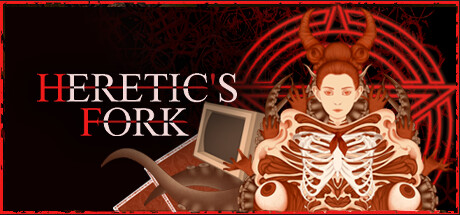
Hellish Theme and Defending Tower: Set in a hellish environment, players defend a tower against swarms of sinners, often playing as a hell official. This thematic setting is consistently highlighted in reviews.
Varied Damage Types and Effects: The game includes multiple damage types (holy, unholy, hellfire) and card effects that modify damage or attack speed. This adds depth to combat and deck synergies.
Endless mode crashes frequently: Many players report that endless mode consistently crashes after extended play sessions. This issue appears across multiple reports and often results in lost progress.
Performance issues and lag: The game suffers from poor optimization, causing lag, especially during larger waves and with certain upgrades. Some players experience sluggish gameplay even on modern PCs.
General crashes during gameplay: Players experience crashes frequently, including during runs and at various points, leading to frustration and loss of progress. Crashes are sometimes linked to powerful builds.
Framerate and freezing problems: Updates have introduced crippling framerates and freezing issues. Some players also report screen flickering in certain scenes.
Game crashes computer: In severe cases, the game crashes the entire computer, not just the application. This indicates a critical stability issue.
Recommendations
Recommended for Specific Audiences: Many reviewers recommend the game only for certain groups, such as fans of auto-battlers, bullet heavens, or those who enjoy unusual indie games. It appeals to niche tastes.
Not Recommended Overall: Several reviewers give a clear negative recommendation, citing various issues such as poor balance, crashes, or lack of enjoyment. Some explicitly advise against buying.
Best Value on Sale: Many reviewers suggest waiting for a discount, as the game is considered worth it mainly at a reduced price. A few even recommend buying only on sale.
Skip Unless Curious: Some reviewers advise skipping the game unless it's on a deep sale or you're specifically intrigued by the concept. They consider it mediocre or not worth full attention.
Worth Full Price: A number of reviewers consider the game worth the full asking price, finding it valuable and enjoyable without needing a discount. Some even call it a must-have.
Buying context
Community fair range: $5.00 - $10.00.
Game completion: 25.4h.
Session length: 0.8h.
Endgame: 2.0h.
Heretic's Fork is often addictive and easy to get into early, with meta-progression and synergies driving quick engagement. That early fun fades for many players, who report repetition, bloated card pools, RNG dependence, and passive or narrow build choices after the opening phase.
Friction: Tutorial and card interactions are poorly explained, with inconsistent card wording and tiny markers.; Excessive clicks to merge cards and slow shop animations slow the loop.; No card sorting system and unlocked cards bloat the pool, diluting useful choices.; Runs, maps, enemies, and waves are repetitive, with long waiting or AFK time.; High difficulties demand specific tower/card combinations and rely heavily on RNG.; Passive tower-focused play limits active strategies and decision space..
Unlock drivers: Learning the ropes and understanding card mechanics.; Meta-progression unlocks new cards, towers, powers, and characters.; New cards motivate trying new builds in future runs.; Character-specific perks make runs feel different.; Card synergies evolve weapons into powerful screen-clearing effects.; Challenges and achievements provide goals between runs..
Player profiles
Casual Roguelite Deckbuilder: Short casual runs focused on unlocking cards and characters while trying simple builds across tower defense and survivors-like combat. Motivation: Enjoying accessible deckbuilding, card unlocks, and light hybrid runs. Stance: sale.
Passive Progression Player: Low-attention play with passive auto-battles, occasional card picks, and meta-progression grinding. Motivation: Relaxing with low-effort progression and watching auto-battles while unlocking meta upgrades. Stance: buy.
Completionist Achievement Hunter: Achievement-focused runs, repeated grinding, and optimizing around specific achievement requirements. Motivation: Completing all achievements and fully 100%ing the game. Stance: sale.
Platform notes
Steam Deck: The game is playable on Steam Deck and some users clearly enjoy its turn-based pacing on the handheld, but the experience carries substantial friction. The most impactful issue is very small, hard-to-read text on the small screen, with users noting you need good eyesight to play. There is no native controller support, forcing input workarounds or making the game a 'no-go on Deck'. Additionally, users report crashes that wipe out hours of progress because there is no autosave or progress protection. Together these factors place the experience in the high-friction/broken range rather than a seamless green-checkmark state.
Other review notes
Vampire Survivors Comparison: Multiple reviewers compare the game to Vampire Survivors, noting similarities in gameplay and structure. Cluster 1 and 13 highlight this connection, with some describing it as a Survivors-style game rather than tower defense.
High-Quality Dark Synthwave Soundtrack: The soundtrack features dark synthwave, goa, and hard rock/metal, with over 100 tracks mentioned. Many reviewers praise the music as central to the enjoyment.
Hundreds of Unique Cards: The game features a large collection of cards, with mentions of over 200, around 280, and nearly 300 unique cards. This abundance of cards is frequently praised by reviewers.
Slay the Spire Comparison: Reviewers compare the game to Slay the Spire, though some note it is not the next Slay the Spire. This comparison is often made alongside Vampire Survivors.
Indie Game Status: The game is described as an indie title, with some calling it a standout indie title and others noting it is lesser-known. This categorization is common among reviewers.