- Positive overall reception
- Excellent roguelite autobattler
- Educational bug facts
- Unit and item balance problems
- Balance issues and difficulty spikes
- Low replayability and variety
Emotions
Archetypes
What players like:
Common complaints:
Gameplay feedback:
Performance notes:
Recommendations:
Other player notes:
Similar games
Blend with other games





Review evidence
Why players say this
Review evidence
Why players say this
Steam review verdict
An excellent roguelite autobattler with fun bug facts, though balance problems, difficulty spikes, and low replayability hold it back.
What players like
Positive overall reception: Many reviewers describe the game as fun, well-made, and worth the money. It is widely praised as an enjoyable experience with a solid foundation.
Excellent roguelite autobattler: Reviewers frequently call it one of the best roguelite auto-battlers, praising its addictive mix of roguelite and autobattler mechanics. The concept is considered fun, thoughtful, and well-executed.
Educational bug facts: The game includes an in-game encyclopedia with real insect facts, photos, and lore blurbs for each unit. Players enjoy learning about the real-life inspirations behind the characters.
Great character and art design: The character designs are highly praised as interesting, cool, and well-designed. The art style is often described as amazing, cute, and appealing.
Early access impressions positive: Despite being in early access, the game feels well-balanced, rich, and polished. Reviewers consider it worth playing and a great value even in its current state.
Common complaints
Unit and item balance problems: Many units and items are considered useless or overpowered, leading to a narrow meta. Some items actively harm the player, and upgrades feel insignificant.
Balance issues and difficulty spikes: Balancing problems are widespread, especially at higher Blight difficulties where the game becomes unfair or frustrating. Many specific units and mechanics are cited as overpowered or underpowered.
Low replayability and variety: The game offers limited replay value due to repetitive runs, few synergies, and lack of build diversity. Many compare it unfavorably to other roguelikes like Slay the Spire.
Difficulty scaling and progression issues: The difficulty curve is steep and often unfair, with abrupt spikes at higher Blight levels. Progression feels blocked by RNG and lack of viable builds.
Lack of content volume: Many reviewers feel the game lacks sufficient content, with a small number of hours to see everything. This is a recurring complaint across multiple clusters.
Gameplay and performance
Roguelite autobattler core gameplay: The game is consistently described as a roguelike auto-battler, blending auto-battler combat with roguelite progression. Combat plays out automatically after players position their units. This core loop is the most frequently mentioned aspect across reviews.
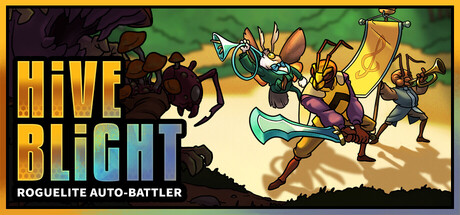
Bug and fungus theme: Characters and enemies are modeled after real-life insects, arthropods, and fungi. This unique theme is a defining feature that sets the game apart. Reviewers frequently note the creative inspiration.
Blight difficulty levels: The game features a difficulty progression called Blight, with levels ranging from 0 to at least 5. Higher blight levels offer increasingly challenging experiences. This system is frequently mentioned as a key feature.
Clan-based strategic selection: At the start of each run, players choose two of three available clans (one primary and one secondary), similar to Monster Train. Each clan has distinct traits and playstyles, influencing recruitable units and synergies.
Comparison to Slay the Spire: Many reviewers compare the game's structure and progression to Slay the Spire, but with auto-battler mechanics instead of deck-building. The map pathing, boss fights, and upgrade systems are similar. This comparison helps set expectations.
Need for optimization: Reviewers explicitly state that the game needs more performance optimization. This suggests widespread recognition of technical shortcomings.
Extreme choppiness and lag: Multiple reports describe the game as extremely choppy or experiencing severe lag issues. These performance problems significantly impact gameplay smoothness.
Performance issues cause refund: One player experienced poor performance on a 4k laptop and requested a refund. The game's optimization is not sufficient for high-resolution displays on some systems.
Lag with units on field: The game starts lagging when there are some units on the field. This suggests that performance degrades as the number of active entities increases.
Game fails to close properly: Players report that the game often does not close properly for no apparent reason. This can lead to frustration and potential system instability.
Recommendations
Recommended for Roguelike Fans: Many reviewers suggest the game to fans of roguelikes, auto-battlers, and team-building games. They highlight the solid gameplay loop and synergy mechanics.
Highly Recommended Overall: General recommendations are overwhelmingly positive, with many reviewers giving high praise and strong endorsements.
Worth the Price: Reviewers frequently state the game is worth buying at its current price point, even in early access. Some recommend waiting for a sale or more updates.
Early Access Concerns: Some players are hesitant to recommend the game in its current early access state, citing a need for more polish and content.
Promising but Needs Polish: Reviewers see potential but suggest waiting for further updates and polish before purchasing.
Buying context
Community fair range: $10.00 - $15.00.
Game completion: 10.0h.
Session length: 8.0h.
Endgame: 15.0h.
The game is widely described as immediately addictive and easy to get into. Early tutorial confusion and a steep learning curve are recurring friction points, while some players report declining enjoyment at higher ascension levels or after completion.
Friction: Confusing tutorial instructions and unclear quest objectives.; Steep learning curve.; High luck dependence and difficulty walls at higher Blight or ascension levels.; Higher difficulties restrict viable factions and synergies..
Unlock drivers: Ignoring the tutorial and continuing anyway allows play to proceed.; Unlocking cards and upgrades over runs is expected to ease the challenge.; Reaching full card unlock and beating the highest difficulty strongly improved one reviewer's recommendation.; Exploration between encounters breaks up repetitive battle sequences..
Player profiles
Genre-Veteran Auto-Battler Strategist: Drafts and combines two clans, optimizes unit synergies, climbs the map repeatedly, and pursues highest-difficulty completion. Motivation: Mastering synergistic clan builds and comparing the game favorably to established roguelike auto-battlers. Stance: buy.
Casual Roguelike Newcomer: Reads unit descriptions carefully, plays low-blight casual runs, and progresses at a comfortable pace. Motivation: Enjoying an accessible, relaxed entry into roguelike auto-battlers without needing deep genre knowledge. Stance: buy.
Bug-Theme Collector: Builds insect teams around favorite clans and units, appreciates the art and theme, and enjoys tactical battles as part of the collection experience. Motivation: Collecting and bonding with charming insect characters while enjoying a bug-focused fantasy. Stance: buy.
Platform notes
Steam Deck: The filtered feedback contains limited but pointed Steam Deck evidence. The most serious signal is a report that controller input is recognized and displayed but does not actually function, which blocks the primary input method on a handheld. Two English reviews further state the game is only 'potentially playable' with no official Steam Deck Verified status or established compatibility guarantee. The remaining reviews praise the game's asymmetric combat and progression loop but note it is still unfinished, which frames the technical issues as early-access instability. No evidence of Proton Experimental toggling, launcher navigation, or anti-cheat errors appears, but the confirmed input failure and unverified compatibility together push the experience into the tinkering-to-broken range.
Linux and Proton: The filtered reviews contain only Steam Deck compatibility-status commentary. They describe the game as potentially playable but not officially Verified and lacking a firm compatibility guarantee. No concrete Linux, Proton, SteamOS, Wine, anti-cheat, DRM, launch, crash, or performance blockers are mentioned. Linux/Proton friction therefore appears minimal or unverified rather than problematic.
Extra review signals
External guides: The filtered reviews are uniformly positive about the in-game encyclopedia, which provides real-world insect context and unit lore. There is no evidence of external wiki dependency for farming, inventory management, learning game systems, or navigation, so the Wiki Tax is absent or minimal. Under the strict scoring hierarchy, no Tier 1, Tier 2, or Tier 3 keywords are present.
Other review notes
Early Access Development Status: Many reviewers note the game is currently in Early Access and still under active development. Some mention substantial playable content and a polished feel despite the ongoing development.
Planned Future Content: Developers have announced plans to add more free content through future updates. Reviewers express anticipation for these updates and the game's ongoing evolution.
Current Clan Count: Only three clans are currently playable, but more are planned. Reviewers mention that two additional clans are already announced for future updates.
Slay the Spire Comparison: Reviewers frequently compare the game to Slay the Spire, particularly its build creation and run-based progression. Some highlight the autobattler twist rather than traditional deck-building.
Monster Train Similarities: The game is often compared to Monster Train for its clan system, where players choose two clans per run. Some also note inspiration from Monster Train combined with autobattler gameplay.