- Captivating atmosphere and visuals
- Ingenious and satisfying puzzles
- Excellent value and accessibility
- Inconsistent puzzle difficulty and design
- Short game length and low replayability
- Frustrating controls and UI
Emotions
What players like:
Common complaints:
Gameplay feedback:
Performance notes:
Recommendations:
Other player notes:
Similar games
Blend with other games




Review evidence
Why players say this
Review evidence
Why players say this
What players like
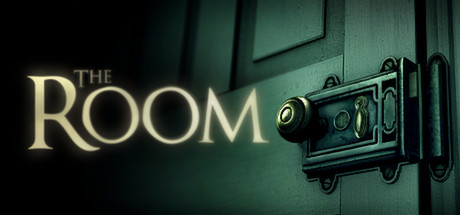
Captivating Atmosphere & Visuals: Players consistently praise the game's stunning graphics, intricate art style, and immersive atmosphere. The detailed environments, eerie lighting, and high-quality sound design create a mysterious and engaging experience that draws players in.
Ingenious & Satisfying Puzzles: The core gameplay revolves around well-designed, logical, and challenging puzzles that provide a strong sense of accomplishment upon solving. Players appreciate the tactile nature of interacting with the mechanical puzzle boxes and the balanced difficulty that avoids frustration.
Excellent Value & Accessibility: Many players highlight the game's exceptional value, especially when purchased on sale, noting its high quality for a low price. Its intuitive mechanics and simple controls make it easy for newcomers to the genre to pick up and enjoy.
Strong Series Foundation: Players frequently praise the game as an excellent introduction to 'The Room' series, often leading them to purchase sequels. The franchise is highly regarded for its consistent quality, unique puzzle design, and captivating atmosphere across all installments.
Engaging, Concise Experience: The game offers a highly engaging experience that makes time fly by, often completed in a few hours. Its refined, short length is seen as a positive, providing a satisfying experience without overstaying its welcome and encouraging replayability.
Common complaints
Inconsistent Puzzle Difficulty & Design: Players found the puzzles to be highly inconsistent, ranging from overly simple 'button-seeking' to frustratingly convoluted or illogical. Many felt the puzzles lacked genuine challenge or a satisfying 'aha!' moment, often relying on hidden interactables rather than clever design. This inconsistency led to both boredom and frustration.
Short Game Length & Low Replayability: A significant number of players felt the game was too short, often completing it in just a few hours. This brevity, combined with a lack of replay value (as puzzle solutions are known after one playthrough), led to disappointment and questions about the game's overall value, especially at its price point.
Frustrating Controls & UI: Players frequently reported issues with the game's controls and user interface, particularly on PC. Problems included clunky camera movement, imprecise interactions, difficulty with zooming, and a general feeling that the controls were not well-adapted from a mobile platform, leading to frustration and accidental actions.
Technical Issues: Bugs and Crashes: Players reported numerous technical problems, including frequent game crashes, freezing, unplayable states, and specific bugs preventing puzzle completion or requiring chapter restarts. Issues were particularly noted when alt-tabbing or using dual monitors.
Unhelpful or Overly Explicit Hint System: The hint system received mixed but generally negative feedback. Some players found hints to be useless, too vague, or incomprehensible due to language barriers, while others felt they were too explicit, spoiling puzzles. The inability to turn off hints and their frequent appearance also detracted from the experience.
Gameplay and performance
Moderate Puzzle Difficulty: Puzzles are generally considered to be of medium difficulty, requiring logical thinking and attentiveness rather than being overly complex or simple. The difficulty often progresses, with some puzzles being more challenging than others, but most are solvable without external guides.
Core Puzzle Box Gameplay: The game is primarily a 3D point-and-click puzzle game, often described as an 'escape room' in reverse or a 'puzzle box' experience. Players manipulate intricate mechanical objects, open nested boxes, and solve riddles to progress, with a strong emphasis on tactile interaction and observation.
Intuitive Mouse Controls: The game features simple and intuitive controls, primarily relying on mouse-only point-and-click, drag, and rotate mechanics. This straightforward control scheme makes the game accessible and easy to pick up for most players.
First in a Series: This game is the inaugural title in 'The Room' series, laying the groundwork for subsequent installments. It introduces core mechanics and a foundational narrative that continues in later games, often feeling like an introductory chapter.
Monocle/Lens Mechanic: A key gameplay mechanic involves using a special lens or monocle to reveal hidden clues, symbols, and mechanisms that are otherwise invisible. This tool is essential for solving many puzzles and adds a unique layer to observation.
Accessible PC System Requirements: Many players appreciate that the game runs well on a wide range of PC hardware, including mid-range and low-end systems. This makes the game accessible to a broader audience, though some minor lag or freezes were noted by a few users.
Steam Deck Compatibility: The game generally runs well on the Steam Deck, though some users reported needing minor technical adjustments to achieve flawless performance.
Windowed Mode for Specific Issues: Playing in windowed mode can resolve specific control issues, achievement problems, and a particular interaction with a spherical box on Windows 10 systems.
Effective Autosave Feature: The game's autosave feature functions effectively, with at least one instance of it saving progress immediately after a crash, preventing significant loss of player progress.
4K Resolution Support: The game engine performs well when running at 4K resolution, indicating good optimization for higher display settings.
Recommendations
Highly Recommended for Puzzle Fans: The game is overwhelmingly recommended, especially for players who enjoy puzzles, riddles, escape rooms, and logic challenges. Many reviewers suggest it's a must-play for fans of the genre and a great introduction for newcomers.
Enjoyable Short, Casual Experience: The game is recommended for those seeking a short, casual experience to pass the time or relax. It's seen as a good option for a single evening's play, offering a focused mental challenge without being overly demanding.
Worth Buying, Especially on Sale: Reviewers frequently recommend purchasing the game, often emphasizing its value, especially when bought during a sale. Many consider it a steal at discounted prices, making it an accessible and worthwhile investment.
Encourages Playing the Full Series: A significant number of players express eagerness to play, or have already purchased, the sequels. Many recommend buying the entire series or bundle, highlighting that the games improve with each installment and offer a complete story.
Positive Game Ratings: The game generally receives high ratings from players, with many giving it scores ranging from 7/10 to 10/10. This indicates a strong overall positive reception for the game's quality and enjoyment.
Other review notes
Mobile Game Origins: The game originated on mobile platforms (iOS/Android) in 2012 before being ported to PC in 2014. Many players have a nostalgic connection to its mobile version, and some feel it plays better on mobile.
Genre Expectations Misaligned: Some players initially expected a horror game due to its marketing or aesthetic, but found it to be a puzzle game instead. While generally considered 'okay' or 'alright,' this initial genre confusion sometimes led to mixed feelings.
Community Localizations Needed: The game lacks official localization for several languages, such as Japanese, Chinese, and Russian. Players often rely on third-party mods or patches to play in their native language, though some manage with limited English.
Miscellaneous Positive Experiences: Players reported various positive, albeit less common, experiences such as improving English skills, getting hooked despite being a shooter player, or finding it a good value for money. This indicates a generally positive reception beyond core gameplay.