- Improved over predecessor
- Excellent Lovecraftian horror
- Enjoyable and fun gameplay
- Stunning graphics and atmosphere
- Combat feels underwhelming and stiff
- Performance and polish issues
Emotions
Archetypes
Hardware
What players like:
Common complaints:
Gameplay feedback:
Performance notes:
Recommendations:
Other player notes:
Similar games
Blend with other games




Review evidence
Why players say this
Review evidence
Why players say this
Steam review verdict
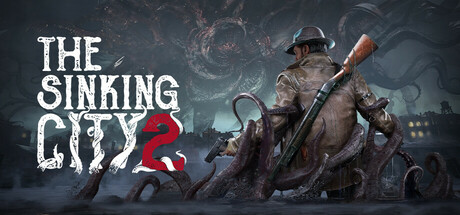
Improved over its predecessor with excellent Lovecraftian horror, enjoyable gameplay, and stunning atmosphere, though combat feels underwhelming and stiff with performance issues.
What players like
Improved over predecessor: Players consistently state that this game is a major improvement over the first title, citing better graphics, combat, and overall refinement. The sequel fixes many issues and advances the series significantly.
Excellent Lovecraftian horror: The game is praised for its faithful representation of Lovecraftian themes, delivering atmospheric cosmic horror and survival mechanics. Reviewers consider it among the best Lovecraft-inspired horror games available.
Enjoyable and fun gameplay: General sentiment is that the game is fun, solid, and highly enjoyable, with engaging action and memorable experiences. Players recommend it for its overall entertainment value.
Stunning graphics: Visuals are widely praised as gorgeous, detailed, and mind-blowing, often surpassing even remastered versions of previous titles. The graphical fidelity is a standout feature.
Atmospheric and immersive: The game's atmosphere is superb, with strong visual and audio design that enhances the horror experience. Players feel fully immersed in the Lovecraftian world.
Common complaints
Combat feels underwhelming and stiff: Multiple clusters highlight that combat is a weak point, with complaints about stiffness, jankiness, and frustration. The combat system lacks polish and feels unresponsive, detracting from the overall experience.
Performance and polish issues: The game suffers from performance problems and a general lack of technical polish. This includes crashes, low FPS for distant enemies, and stiff animations that break immersion.
Ammo and resources too scarce: Players frequently run out of ammunition and other resources, especially early in the game. This scarcity creates frustration and limits player agency, making encounters more difficult than intended.
Deviation from first game disappointing: Fans of the original game feel that the sequel lost the unique elements that made the first game shine. The gameplay changes and lack of investigative focus were particularly disappointing.
Too many enemies in encounters: Players report that some areas have an excessive number of enemies, making encounters overwhelming. This is especially problematic in late-game sections.
Gameplay and performance
Survival horror with Resident Evil influence: The game is widely described as a classic survival horror title, heavily inspired by Resident Evil and Silent Hill, featuring limited inventory, backtracking, and resource management. This is the most dominant theme across the feedback.
Lovecraftian horror elements present: Many players note the game's strong Lovecraftian flavor, including eldritch lore, cosmic horror themes, and a unique setting. This is often combined with Resident Evil-style gameplay, creating a distinct horror experience.
Resource management and scarce ammo: Players emphasize the importance of conserving ammunition and managing limited resources, which adds tension and strategic depth to encounters. This is a core survival horror mechanic that is frequently mentioned.
Combat improved over predecessor: The sequel's combat mechanics are considered better than the first game, with more action-oriented gameplay and a focus on combat. This shift is noted as a positive change by many players.
More linear than first game: The game is more linear than its predecessor, moving away from open-world exploration to a more streamlined, corridor-based experience. This is a notable change that affects the overall pacing and structure.
Performance is largely positive: Many players report smooth, stable framerates and good optimization across various hardware configurations, including high-end and mid-range systems. Specific examples include stable 60-120 FPS on high settings and no crashes or stutters.
Optimization needs improvement: A subset of players feel optimization could be better, citing poor performance requiring upscalers, occasional stuttering, and some areas with severe frame drops. These are not universal but persist for some.
Game runs well on high-end systems: High-end PCs, such as those with RTX 3080, 4070, or 5080, run the game smoothly at high settings with stable frame rates, often exceeding 100 FPS. This indicates good scalability for powerful hardware.
No major bugs encountered: Many players report encountering no major bugs or glitches during their playthrough, especially in early game areas. The game appears stable for a large portion of the player base.
Crashes on various platforms: Crashes are reported on PC, Linux, and PlayStation, with some occurring frequently or shortly after startup. Specific issues include crashes on Linux (resolved with a Proton version) and multiple crashes in the first chapter.
Recommendations
Recommended for survival horror fans: Many reviews recommend the game to fans of survival horror, specifically citing Resident Evil, Silent Hill, and similar franchises. This is the most common recommendation across clusters.
Recommended for Lovecraft fans: A large number of reviews highlight the game's appeal to fans of H.P. Lovecraft, cosmic horror, and the Cthulhu mythos. This is a strong and distinct recommendation theme.
Strong recommendation overall: A number of reviews give a clear thumbs up, calling it a 'must-buy' or 'highly recommended' without specifying a particular audience. This shows general approval of the game's quality.
Tepid recommendation for genre fans: Several reviews give a lukewarm recommendation, stating it is worth playing only if you enjoy the genre, but without strong enthusiasm. This indicates a moderate but not exceptional experience.
Recommended to all players: Some reviews recommend the game to a broad audience, stating that anyone should try it or that it is a must-have. This indicates the game has broad appeal beyond niche genres.
Buying context
Community fair range: $15.00 - $25.00.
Game completion: 10.0h.
Story completion: 10.0h.
The game initially hooks players with fast pacing and engaging survival horror, but many report that the mid-to-late game becomes tedious, punishing, or technically broken, causing a sharp drop in enjoyment.
Player profiles
Survival Horror Enthusiast: Methodical exploration, resource conservation, engaging in combat when necessary, solving puzzles. Motivation: To enjoy a well-executed survival horror experience with Lovecraftian atmosphere. Stance: buy.
Lovecraftian Mythos Devotee: Attentive exploration, reading documents, enjoying environmental storytelling, engaging with lore. Motivation: To explore a rich Lovecraftian world and uncover its mysteries. Stance: buy.
Disillusioned Original Fan: Investigative exploration, deduction, narrative focus, minimal combat. Motivation: To find a game that continues the original's investigative style. Stance: no buy.
Platform notes
The game performs well across all VRAM tiers, with only minor issues like occasional stutter or animation glitches that do not significantly impact playability.
Windows 12-15GB VRAM: positive. Mostly runs well with occasional stutter in cutscenes or specific levels, but the majority of players have a positive experience.
Windows 8-11GB VRAM: positive. Performance is great with only minor animation glitches at distance; all sampled players recommend.
Windows 16GB+ VRAM: positive. Runs smoothly with few audio bugs; performance is generally fine.
Steam Deck: The game exhibits native Linux crashes requiring custom Proton (GEProton) to boot, lacks essential upscaling (FSR/DLAA), and suffers from performance drops and glitches on lower-end hardware. While DualSense support is excellent, the overall experience on Steam Deck demands tinkering and yields suboptimal performance.
Linux and Proton: A single Linux user reports that the game crashes on startup unless Proton GE is used, and that performance is 10-15% lower than on Windows, leading to a negative recommendation. The game is playable after tweaks but has notable performance friction.
Other review notes
Compared to first game: Reviewers frequently compare the sequel to the first game, with mixed opinions. Some see it as a major improvement, while others note a loss of unique features.
Frequent Resident Evil comparisons: Many reviewers compare the game to Resident Evil, noting similarities in gameplay, style, and mechanics. Some see it as a clone, while others appreciate the resemblance.
Developer Frogwares praised: The Ukrainian studio Frogwares is praised for developing the game under adverse conditions, including war. Reviewers express support and admiration for their work.
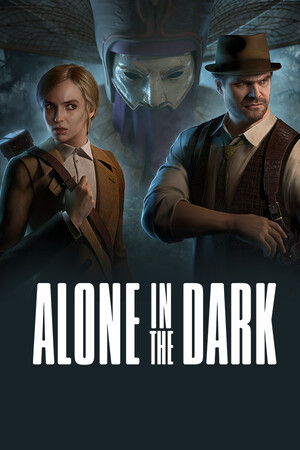
Compared to other horror games: The game is compared to The Evil Within, Dead Space, Alan Wake, and Silent Hill, indicating its place in the survival horror genre. Some comparisons are favorable, others not.
Lovecraftian setting and lore: The game is set in Lovecraft's Arkham city and features cosmic horror elements. Reviewers rank it among top Lovecraftian games and note its homage to the universe.