- Superior sequel to original
- Compelling narrative and story
- Stunning artwork and visuals
- Deep and strategic combat
- Poor Chinese localization quality
- Numerous persistent bugs
Emotions
Archetypes
What players like:
Common complaints:
Gameplay feedback:
Performance notes:
Recommendations:
Other player notes:
Similar games
Blend with other games 88%The Banner Saga
 87%The Banner Saga 3
 84%The Legend of Heroes: Trails in the Sky SC
 83%Trails in the Sky 2nd Chapter
 81%Dark Deity 2
 80%Dragon Age: Origins - Ultimate Edition
 80%VED
 80%Fuga: Melodies of Steel 2
 80%Legends of Eisenwald
 79%The Legend of Heroes: Trails of Cold Steel
 79%Icewind Dale: Enhanced Edition
 79%The Legend of Heroes: Kuro no Kiseki
Review evidence
Why players say this
Review evidence
Why players say this
Steam review verdict
An excellent sequel with a compelling story, stunning art, and deep strategic combat that is sadly held back by poor Chinese localization and numerous persistent bugs.
What players like
Superior sequel to original: The game is widely praised as a worthy continuation that improves on nearly everything from the first game while retaining its strengths. Many reviewers consider it better than or equal to the original.
Compelling narrative and story: The story is consistently described as great, well-written, and memorable. It engages players with strong storytelling that builds on the first game.
Stunning artwork and visuals: The game features gorgeous, beautifully drawn art that is frequently highlighted as exceptional. Graphics are often described as beautiful and aesthetically pleasing.
Deep and strategic combat: The combat system is praised for its depth, tactical challenge, and rewarding nature. It becomes richer as players learn its intricacies.
Engaging and fun gameplay: The gameplay is widely regarded as fun, solid, and well-designed with interesting mechanics. It offers an enjoyable experience overall.
Common complaints
Worse than first game: Multiple players feel the sequel is inferior to the original in combat balance, story quality, innovation, and overall epic feel, calling it a minor step down.
Poor Chinese localization quality: The Chinese translation is widely criticized as machine-translated, full of errors, awkward phrasing, missing characters, and an overall poor font, making the text hard to understand.
Numerous persistent bugs: The game is riddled with bugs, including many that were present in the first game and remain unfixed years after release, with some crashes reported.
Story ends on cliffhanger: The narrative concludes abruptly with unresolved plot threads, clearly setting up a third game rather than providing a satisfying self-contained ending.
Formation bug blocks unit placement: A bug prevents rearranging units before battle, causing players to lose their first turn and making combat start unfairly.
Gameplay and performance
Turn-based tactical combat: Combat is a turn-based tactical system on a grid, comparable to XCOM or chess, with party, item, and ability customization. Positioning and field effects drive the strategy.
Choice-driven branching narrative: Players make dialogue and event choices that branch the story and carry permanent consequences for characters and future games. This choice-and-consequence structure is the central narrative pillar.
Save import carries choices: Saves from the first game can be imported to carry over characters, items, clansmen, supplies, renown, and prior story decisions. These imported choices shape the current playthrough.
Caravan management gameplay: Players lead a caravan, managing supplies, morale, renown, and numbers as the story advances. Clansmen can gather supplies and be trained into fighters.
Familiar but expanded mechanics: Core combat remains largely unchanged from the first game, but mechanics, upgrades, and unit strength are improved and expanded. The experience feels familiar yet deeper.
Frequent crashes on PC: Multiple players report the game crashing repeatedly, including several crashes in one evening and crashes after winning battles. The issue has reportedly persisted since release without a fix.
Freezes on character screens: Players report freezing on the character development screen and crashes on character selection. The hero selection screen also shows performance problems such as a CPU leak.
Runs well on low-end systems: Several players report the game runs perfectly on older non-gaming systems, low-end hardware, and a Mac laptop with weak Intel integrated graphics. This shows the game can be stable on modest setups.
Loading screen crashes and freezes: The game has a high crash rate during loading screens, and some loading screens become unresponsive and require reloading. These issues block players from entering or progressing through the game.
Unit movement bug before combat: Characters sometimes cannot be moved before combat, occurring six to seven times and requiring a full restart. A related bug also prevents choosing a board position at the start of battle, fixed by restarting.
Recommendations
Requires playing first game: Numerous reviewers strongly recommend playing the first game in the series before this one, often calling it essential to understand the story and choices. Many state that without prior experience, new players will be lost or miss important context.
Great for returning players: Fans of the first game consistently say that this sequel delivers more of what they loved and is an easy recommendation. The game is almost mandatory for those who enjoyed the original.
Worth buying on sale: Many reviewers suggest waiting for a discount, as the game offers good value especially when discounted. Some recommend buying all three parts together during a sale to save money.
Appeals to turn-based RPG fans: Reviewers highlight that the game is highly recommended for enthusiasts of turn-based and tactical RPGs. Some even say it can win over players who typically avoid the genre.
Strong overall recommendation: A significant number of reviews give the game a perfect score or a strong recommendation without caveats.
Buying context
Community fair range: $5.00 - $10.00.
Game completion: 13.0h.
Story completion: 13.0h.
Session length: 3.0h.
Endgame: 27.5h.
The Banner Saga 2 is most strongly described as becoming fun after a slow, tutorial-heavy opening, with tactical variety and progression improving the experience later. Some players are engaged immediately by story and art, while a minority never gets past pacing and combat complaints.
Friction: Slow, combat-free opening; Repeated tutorial messages for basic mechanics; Long tutorial section; Poorly explained core mechanics and UI trial and error; Tedious marching, travel, and dialogue sections; Save-import bug can break the initial tutorial.
Player profiles
Story-Driven Choice Role-Player: Role-plays decisions, imports saves, accepts outcomes, and replays for alternate story arcs. Motivation: Experience a branching, consequence-heavy story with characters and choices carried across games. Stance: buy.
Turn-Based Tactics Optimizer: Analyzes turn order, enemy abilities, and difficulty; enjoys survival and challenge modes and tactical optimization. Motivation: Master tactical combat and challenging encounters. Stance: buy.
Achievement Completionist Replayer: Plans multiple playthroughs, follows achievement requirements, and grinds survival or challenge content. Motivation: Complete all achievements and fully master the game's routes and modes. Stance: buy.
Platform notes
Steam Deck: The Banner Saga titles are reported as playable on Steam Deck and Linux through Proton, with several users completing them smoothly. However, frequent crashes on Steam Deck, Linux, and PC are a dominant technical barrier; native Linux support is absent and save transfer can require manual file handling or PC cloud workarounds. Controller support is mixed. Applying the scoring rules, recurrent crashes place friction in the broken range.
Linux and Proton: The Linux/Proton evidence is mostly functional: users report smooth play and working Proton compatibility, with at least one recommendation. Linux-specific friction is limited to a manual save-file copy workaround and an isolated crash report, alongside repeated disappointment about native Linux support. This fits minor-to-moderate Linux friction rather than a broken or unplayable state.
Extra review signals
Monetization: The reviews focus on upfront price, short length, episodic splitting, and DLC pricing. No review provides direct evidence of in-game purchases, real-money gacha, pay-to-win mechanics, paid convenience items, loot boxes, battle passes, or confusing currency systems. Under the audit rules, base-price and traditional DLC complaints cannot by themselves raise the monetization score above 20.
External guides: The review set primarily shows players relying on walkthroughs and guides to understand choice consequences, combat behavior, and training systems. No explicit Tier 1 farming, drop-rate, or loot-table dependency appears, and no explicit Tier 2 inventory, safe-to-sell, blueprint, or crafting-requirement dependency appears. Localization patch failures and unreadable translations are present but secondary. Under the strict priority algorithm, the Tier 3 instructional-data evidence triggers a score of 50.
Other review notes
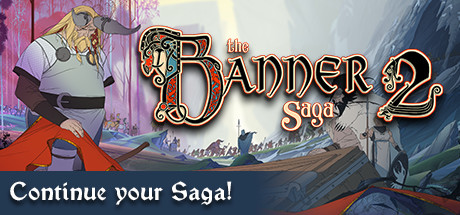
Direct sequel to first game: The game is a direct continuation of the first installment, with the story picking up where the original left off and returning characters and consequences carrying over.
Favorable comparisons to first game: Reviewers compare the game favorably to the first Banner Saga, with some finding it better than the original while noting similarities in combat, atmosphere, and music.
Middle part of trilogy: This is the second entry in a three-game saga, structured as the middle chapter that sets up the third installment and ends on a cliffhanger.
Improves on predecessor but similar: The game is very similar to the first installment mechanically, with few graphical or UI changes, but fixes major weaknesses and improves on most aspects, though the story is slightly weaker.
Save import from first game: Players can import their save file from the first game to continue with the same choices, carrying over characters, levels, items, and resources.