- Excellent memorable soundtrack
- Solid and enjoyable combat
- Stunning graphics for its time
- Camera control issues and bugs
- Fixed camera hinders exploration
- Dated and problematic mechanics
Emotions
Archetypes
Hardware
What players like:
Common complaints:
Gameplay feedback:
Performance notes:
Recommendations:
Other player notes:
Similar games
Blend with other games 87%Castlevania: Lords of Shadow 2
 84%Garshasp: The Monster Slayer
 84%Marlow Briggs and the Mask of Death
 84%Blades of Time
 83%Soulstice
 83%Darksiders Warmastered Edition
 83%Bayonetta
 83%Resonance: A Plague Tale Legacy
 83%Echoes of the End
 83%Bloodstained: Ritual of the Night
 82%Castlevania: Belmont's Curse
 82%Darksiders II Deathinitive Edition
Review evidence
Why players say this
Review evidence
Why players say this
Steam review verdict
A memorable soundtrack, solid combat and stunning graphics for its time are undermined by buggy camera controls, a fixed camera that hinders exploration and dated, problematic mechanics.
What players like
Excellent memorable soundtrack: Players consistently praise the soundtrack as excellent, memorable, and one of the best in the franchise, with high-quality music that stands out on its own.
Solid and enjoyable combat: Combat is often described as solid, responsive, and satisfying, with depth that rewards learning and mastery, though some note it has minor issues.
Stunning graphics for its time: Graphics are widely described as amazing for their era, with impressive visuals and art style that still hold up well even years after release.
Fun and engaging gameplay overall: Many players find the game genuinely fun, enjoyable, and addictive, with well-made mechanics that keep them engaged from start to finish.
Engaging story of Gabriel Belmont: The story, centered on Gabriel Belmont, is considered interesting and well-written, with a tragic dimension and unexpected twists that keep players engaged.
Common complaints
Camera control issues and bugs: The camera is sluggish, awkward, and sometimes buggy, with blind angles and arbitrary positioning. It is unreliable, and automatic camera movements can betray players.
Fixed camera hinders exploration and combat: The fixed camera makes it difficult to explore secrets, causes sudden perspective shifts, and obstructs combat, leading to missed attacks and hidden items. Players find navigation confusing and some areas remain unseen.
Camera frustrates platforming, causes deaths: Platforming sections are imprecise and frustrating due to the fixed camera, often resulting in repeated deaths. The camera and controls make these sections dangerous, especially in DLC chapters.
Dated and problematic mechanics: Game mechanics are old, disturbing, and have aged poorly, sometimes failing or becoming annoying. They are seriously problematic and dated.
Repetitive combat and low enemy variety: Combat becomes repetitive quickly, relying on light and heavy attacks against similar enemies. Enemy variety is low, making encounters monotonous.
Gameplay and performance
God of War style combat: Many players note the combat and gameplay are heavily inspired by classic God of War games, with similar hack-and-slash mechanics and camera style. Cluster 1 and Cluster 5 both highlight this comparison, and Cluster 22 also mentions hack-and-slash gameplay.
Boss fights a major feature: Boss battles, including colossal titan fights, are frequently mentioned as a key part of the game. Cluster 2 and Cluster 15 both emphasize boss fights, with Cluster 15 specifically comparing them to Shadow of the Colossus.
Puzzles and exploration: Puzzles of varying difficulty and exploration segments are present throughout the game. Clusters 4, 10, and 21 all mention puzzles as a significant component.
Combo system: Combat features a combo system with unlockable moves and strategic variety. Clusters 8, 20, and 22 all mention combos as a core mechanic.
Hack-and-slash action adventure: The game is a hack-and-slash action-adventure with combo-based combat, often compared to God of War or Dante's Inferno. Cluster 5 and Cluster 22 both emphasize this genre.
Frequent graphical bugs and glitches: A significant number of players encounter graphical bugs that can make the game unplayable or prevent visualizing game areas. Visual glitches also affect cutscenes and gameplay, with texture bugs being a recurring issue.
Runs well on low-end PCs: Multiple reviews confirm the game performs smoothly even on older or budget hardware, with low system requirements and minimal resource consumption. Examples include an i3 3770 with an RX 550 and a GT 1030.
Excellent Steam Deck performance: Players consistently report that the game runs flawlessly on the Steam Deck. However, one user experienced a complete lack of audio on the device.
Windowed mode workaround for bugs: Several users report that switching from fullscreen to windowed mode and back resolves rendering bugs or crashes. Some must do this every chapter, and for others, windowed mode acts as a safe mode with limited settings.
Poor PC optimization and port quality: Multiple reviews criticize the PC port as poorly optimized, with some calling it horribly optimized or just bad. Hitbox errors and attack delay issues further indicate porting problems.
Recommendations
Buy on sale: Many reviewers recommend purchasing the game specifically during a sale, often emphasizing it as a great value at a discount.
Castlevania expectations vary: Opinions are split: some Castlevania fans enjoy it as an alternate take, while others warn it does not deliver a true Castlevania experience.
Use a controller: Multiple reviewers strongly advise playing with a controller instead of keyboard and mouse for a better experience.
For hack-and-slash fans: The game is highly recommended for enthusiasts of the hack-and-slash genre, with frequent comparisons to classic titles.
For God of War fans: Reviewers frequently recommend the game to fans of the old God of War series, noting similar gameplay and atmosphere.
Buying context
Community fair range: $8.00 - $15.00.
Game completion: 22.0h.
Story completion: 18.0h.
Endgame: 2.0h.
The game often starts slowly with tutorial interruptions, fixed-camera friction, and repetitive early combat, but multiple reports say it becomes fun after Chapter 3 as the story and unlocked abilities open up.
Friction: Slow, boring opening chapters; Long tutorial with constant cutscenes and QTEs; Fixed camera and awkward controls; Repetitive combat and limited enemy variety; Too many puzzles interrupt pacing; Key abilities and relics unlocked late.
Unlock drivers: Story becomes more interesting after Chapter 3; Unlocking more upgrades and abilities improves gameplay; Access to relics such as the Dark Gauntlet enriches combat; Later levels become more varied and creative; New combat tools make the learning curve feel natural; Boss fights and set pieces add excitement.
Player profiles
Classic Castlevania Purist: Compares the reboot to older Castlevania titles and resists its 3D hack-and-slash reinvention. Motivation: Wants the series to preserve its classic 2D, Metroidvania, and lore-continuity identity. Stance: no buy.
Hack-and-Slash Action Fan: Plays for fluid combos, dodging and parrying, platforming, and puzzle breaks while comparing the game to God of War and Darksiders. Motivation: Seeks satisfying combo combat, boss fights, and spectacle in a 3D action-adventure. Stance: buy.
Story-Driven Castlevania Newcomer: Plays through the campaign for narrative and atmosphere, often on casual or normal difficulty with some puzzle and combat. Motivation: Wants an engaging dark fantasy story, lore, and cinematic presentation without prior series knowledge. Stance: buy.
Platform notes
The provided Windows cohort reports positive performance, with reviewers recommending the game and citing strong 4K results.
Windows <8GB VRAM: positive. Reviewers recommend the game and report strong 4K performance, with GPU usage staying below 60% on an RTX 3070.
Steam Deck: Steam Deck reports are mixed. Some users complete the game smoothly and praise the handheld experience, but the audit found high-impact blockers: launch or new-game failures tied to Steam Cloud saves, complete audio loss for one Deck user, and controller recognition plus mandatory analog-QTE requirements. Low-contrast 800p visuals, fixed-camera controls, QTE friction, and fullscreen/cutscene issues add further friction. Because a launch or new-game path can fail outright, the friction score sits in the Broken range despite positive Deck reports.
Linux and Proton: Explicit Linux/Proton reports are mostly positive: Steam Play runs flawlessly, Proton 7.0-6 is playable, and one user reports no Linux-caused problems. The only negative is an isolated, ambiguous new-game report plus a wish for a native build. DXVK and windowed-launch advice was not clearly framed as Linux/Proton and was excluded from the compatibility score.
Extra review signals
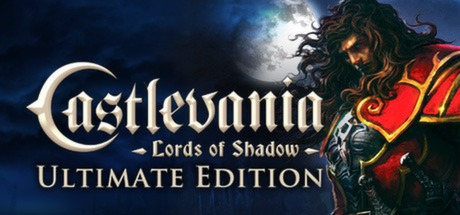
Monetization: The reviewed game is Castlevania: Lords of Shadow Ultimate Edition, with feedback centered on its included Reverie and Resurrection DLC chapters. Reviews discuss DLC as paid expansion content and sometimes complain that it is short, required for story closure, or uses cheaper storyboard cutscenes. There is no direct evidence of a real-money in-game shop, paid gacha, loot boxes, battle pass, paid boosts, currency obfuscation, or pay-to-win mechanics. The monetization model therefore remains in the fair/pure range, with only traditional DLC concerns.
External guides: The reviews center on Castlevania: Lords of Shadow requiring external walkthroughs and guides for puzzles, hidden upgrades, obscure mechanics, and boss gimmicks. There is no meaningful evidence of farming, drop-rate, loot-table, inventory, crafting, or valuation-data complaints as the primary issue. Some navigation and technical complaints appear, but the dominant barrier is instructional data dependency, matching TIER 3: The Student.
Other review notes
Frequent God of War comparisons: Many reviewers compare the game to the God of War series, especially the classic titles, and note similarities in combat, puzzles, and overall style. The game is often described as a hack-and-slash inspired by God of War.
Reboot of Castlevania series: The game is widely described as a reboot or reimagining of the Castlevania franchise, starting a new storyline. It is noted to be developed by MercurySteam and is not directly tied to the original series.
DLC includes additional boss: Several reviewers mention that the game has DLC content featuring an extra boss, often considered one of the hardest in the genre. Some versions include the DLC, such as the Ultimate Edition with Reverie and Resurrection packs.
Compared to Shadow of the Colossus: Reviewers frequently compare the game's boss battles and large-scale moments to Shadow of the Colossus. The game is also described as a mix of God of War and Shadow of the Colossus.
Originally released in 2010: The game is a port of a title originally released for consoles in 2010. This context is often brought up when discussing graphics and performance.