- Engaging puzzles and horror elements
- Stunning art and visual presentation
- Exceptional story and character development
- High replayability and exploration
- Puzzles can be confusing and hinder progression
- Story becomes disjointed and unresolved
Emotions
What players like:
Common complaints:
Gameplay feedback:
Performance notes:
Recommendations:
Other player notes:
Similar games
Blend with other games 90%Project Kat - Paper Lily Prologue
 87%Yuppie Psycho: Executive Edition
 86%MiSide
 86%Little Goody Two Shoes
 85%Lumina Veil
 85%Bye Sweet Carole
 85%Ib
85%Ib 84%Amanda the Adventurer
 84%Cycle of Corruption
 84%PARANORMASIGHT: The Seven Mysteries of Honjo
 84%No, I'm not a Human
 84%The Last Door: Season 2 - Collector's Edition
Review evidence
Why players say this
Review evidence
Why players say this
What players like
Engaging Puzzles & Horror: The game is highly lauded for its well-designed and interesting puzzles, which offer multiple solutions and are often challenging but fair. The horror elements are effectively implemented, creating suspense and an eerie atmosphere without relying heavily on jump scares, making it accessible even for non-horror fans.
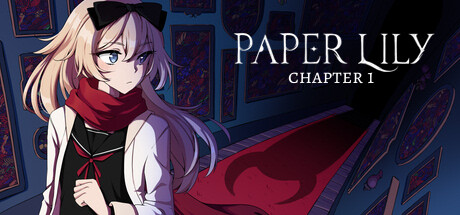
Stunning Art & Visuals: Players consistently praise the game's exquisite and unique art style, which blends pixel art with anime-like elements and detailed illustrations. The visuals are described as beautiful, atmospheric, and a significant highlight, showcasing immense care and passion from the developers.
Exceptional Story & Characters: The narrative is consistently described as captivating, rich, and emotionally impactful, with a non-linear plot and intriguing mysteries. Players also highlight the well-written, memorable, and endearing characters, particularly the protagonist Lacie, whose journey and interactions resonate deeply.
High Replayability & Exploration: The game offers significant replay value due to its numerous choices, multiple endings (including interesting 'bad' endings), and abundant hidden secrets and easter eggs. This encourages thorough exploration and experimentation, rewarding curious players with new discoveries and lore.
Immersive Atmosphere & Soundtrack: The game excels in creating a deeply immersive and unique atmosphere, often described as cozy-creepy or dreamlike. This ambiance is greatly enhanced by a phenomenal soundtrack that perfectly fits each scene, guiding emotions and intensifying the overall experience.
Common complaints
Confusing Puzzles & Progression: Players frequently found puzzles to be overly difficult, unintuitive, and often required external guides to solve. This led to frustration, getting stuck, and a general lack of clear direction on what to do next or how to progress the story.
Disjointed & Unresolved Story: The plot was often perceived as confusing, disjointed, and lacking clear connections, especially towards the end. Many felt the endings were anticlimactic, repetitive, or didn't provide satisfying resolution, with some optional content feeling pointless.
Lack of Horror Impact: Despite being marketed with horror elements, many players felt the game failed to deliver a consistently scary experience. Horror moments often fell flat or were undermined, leading to a mixed perception of its effectiveness.
Unsatisfying Achievement System: Achieving 100% completion and unlocking all achievements was described as difficult, repetitive, and often impossible without a guide. Specific requirements for achievements were obscure, and some players reported issues with Steam achievements not unlocking.
Inconvenient Save System: The game's save system was a significant source of frustration, with too few save points and no option for direct saving. This led to lost progress, repetitive gameplay for achievement hunting, and issues with exploring alternative endings.
Gameplay and performance
Psychological horror puzzle adventure: The game is primarily a psychological horror adventure with strong puzzle elements, often compared to titles like Undertale or Omori. It blends exploration, decision-making, and light combat/dodging mechanics within an occult-fantasy setting.
Rich branching narrative and endings: The game offers extensive replayability through numerous branching paths, multiple endings (including 12-13 'dead ends' and one 'true ending'), and alternative solutions to puzzles. This encourages players to explore different choices and actions.
Variable game length and completion: While a single playthrough to the true ending can be completed in 3-7 hours, achieving 100% completion, including all endings and achievements, can extend playtime to 7-13 hours. Many players found themselves replaying to discover all content.
Puzzles range from simple to challenging: The game features a wide range of puzzles, some being straightforward and logical, while others are quite challenging and require significant thought. Optional puzzles often lead to secrets or achievements.
First chapter offers substantial content: The current release is Chapter 1, which provides a significant amount of content (4-6 hours for 100% completion). Players are looking forward to future chapters, which are expected to expand on the story and gameplay.
Mixed PC performance: Player feedback on PC performance is inconsistent. While some players report smooth gameplay even on low-spec machines, others experience high temperatures and frame drops, requiring resolution adjustments.
Small game size: Players appreciate the game's small installation footprint, noting it takes up very little storage space, which is seen as a positive 'old-fashioned' characteristic.
Bug-free experience: Multiple players reported a completely bug-free experience, indicating a high level of polish in the game's stability.
Incomplete settings menu: The game includes a settings menu, but players found it to be lacking in comprehensive options, suggesting it is not fully developed.
Recommendations
Highly Recommended Game: Players overwhelmingly recommend the game, often giving it perfect or near-perfect scores. Many express strong enjoyment and consider it a must-play, especially given its free-to-play status, with some even suggesting it's worth paying for.
Eagerly Awaiting Sequel: There is immense anticipation for Chapter 2 and future installments. Players are excited to see the story continue, with many expressing willingness to pay for subsequent chapters and hoping for a swift release.
Appeals to Specific Genres: The game is highly recommended for fans of RPG Maker horror, psychological horror, story-rich games, and puzzle-adventure genres. It also appeals to players who enjoy titles like Omori, Undertale, and Ib.
Play Project Kat First: A significant number of players advise playing 'Project Kat,' the prologue, before starting this game. This is often recommended for story continuity, to appreciate developer progress, or because save data can carry over.
Desire for Enhanced Horror: A few players hope future chapters will feature more thrilling chase sequences and lean further into the horror elements, suggesting a desire for increased intensity in the genre aspects.
Other review notes
Strong Desire to Support Developers: Many players are impressed by the game's quality, especially given it's free, and are actively purchasing supporter packs or expressing a desire to pay for future content to help fund the developers.
Connection to Project Kat Prologue: Players who enjoyed 'Project Kat' (the prologue) were eagerly awaiting this game and are curious about the narrative connections or references between the two titles, despite some initial perceived disconnects.
Lacie's Character Intrigue: Players are deeply interested in Lacie's character, her backstory, and her future role in the game. There's a strong desire to see her return in Chapter 2, potentially interacting with other characters.
Desire for Language Localizations: Players are requesting official translations into languages like Spanish and Italian, with some even offering to assist with translation efforts, indicating a desire for broader accessibility.
Admiration for Small Development Team: Players are highly impressed that such a high-quality game was created by a small two-person team, often using the Godot engine, highlighting their appreciation for the developers' efforts.