- Excellent DLC, highly recommended
- Ocean worlds and planet variety
- Maritime Trading Houses add depth
- No playable naval units
- DLC lacks sufficient content
- Maritime Trade House mechanics tedious
Emotions
Archetypes
What players like:
Common complaints:
Gameplay feedback:
Performance notes:
Recommendations:
Other player notes:
Similar games
Blend with other games 81%ENDLESS™ Legend - Tempest
 79%HUMANKIND™ - Cultures of Oceania Pack
 78%Crimson Desert Enhanced: Charting the Unknown
 78%Stellaris: Aquatics Species Pack
 77%X4: Tides of Avarice
 76%Mount & Blade II: Bannerlord - War Sails
 76%Mount & Blade II: Bannerlord Digital Companion
 75%Stellaris: Federations
 74%Stellaris: First Contact Story Pack
 74%Soulmask: Shifting Sands
 73%Trailmakers: High Seas Expansion
 73%ENDLESS™ Space 2 - Dark Matter
Review evidence
Why players say this
Review evidence
Why players say this
Steam review verdict
An excellent, recommended DLC with varied ocean worlds and deeper Maritime Trading Houses, though it lacks playable naval units and enough content, and the trade-house mechanics feel tedious.
What players like
Excellent DLC, highly recommended: The DLC is enthusiastically recommended as a solid and fun expansion that adds significant life to an already great game, with some calling it one of the best DLCs ever.
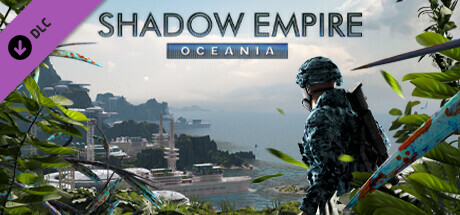
Ocean worlds and planet variety: New water-focused planet types, including ocean-covered Earth-like worlds, are well-received for adding variety and changing strategic approaches.
Maritime Trading Houses add depth: The new Maritime Trading Houses mechanic is praised for adding a fresh layer of strategic depth and unique gameplay dimensions uncommon in 4X games.
Adds many new strategic possibilities: The DLC expands an already enormous game with numerous new options, mechanics, and strategic opportunities that enhance replayability.
Innovative naval system without fleets: The abstract naval interactions via trade houses are praised as an original solution that avoids micromanaging a navy while successfully enabling ocean gameplay.
Common complaints
No playable naval units: Players repeatedly complain that they cannot build or control ships, aircraft carriers, or any naval units, despite the DLC's ocean theme. This absence is seen as a major omission.
DLC lacks sufficient content: Many reviewers feel the DLC adds very little to the game, calling it bland and a step down from the base game. Some describe it as a rip-off with almost no content for the price.
Maritime Trade House mechanics tedious: The MTH system is described as opaque, cumbersome, and not fun, forcing players to buy contracts and manage stocks instead of directly controlling naval activities. It feels like a spreadsheet simulator rather than a game.
Logistics and supply issues: Supply chains to remote islands are problematic, requiring contracts that can expire and leave colonies stranded. Ports without MTH ownership do not function, making logistics frustrating.
Stock market and auction mechanics disliked: The gacha-style auctions and stock market for MTH shares are seen as illogical, economically nonsensical, and a pain to use. They detract from the post-apocalyptic survival theme.
Gameplay and performance
New water-rich planet types added: The DLC introduces new planet classes and map generation options that create Earth-like worlds with oceans separating landmasses, continents, and archipelagos. This increases planet variety and makes water a central terrain feature.
Maritime Trading Houses central to gameplay: The DLC introduces Maritime Trading Houses (MTHs), an NPC faction that controls seaborne trade, transport, and naval logistics. MTHs appear on most maps with water and are the primary means for crossing oceans, exploring, and invading.
Ocean transport via MTH contracts: Naval transport is handled through MTH transport contract stratagem cards, allowing units and logistics to cross oceans for a credit cost. Contracts are required to supply units on other islands and to colonize distant lands.
Stock market and MTH shares: Players can buy shares in individual MTHs via a stock market system, influencing trade houses by spending cards and political power. This can lead to destroying, diminishing, building up, or splitting shipping companies.
Adds strategic depth and decisions: The DLC adds a layer of turn-by-turn decision-making, new stratagems, and complexity on top of the base game. It integrates oceans into existing systems and enhances mid-to-late game content.
DLC crashes and corrupt saves: Players report frequent crashes when the DLC is enabled, along with save file corruption. This is a serious stability issue affecting core progression.
Windowed mode resolution issues: Windowed mode reportedly forces resolution changes to work properly. This creates friction for players who prefer running the game in a window.
Recommendations
Support developer primarily: Many reviewers frame the purchase as a way to support the developer rather than for the content itself. They recommend buying mainly to fund continued development.
Avoid DLC currently: A notable group advises against buying the DLC in its current state, calling it a rip-off with little content. Some suggest keeping it disabled and playing the core game instead.
For base game fans: The DLC is recommended for players who already enjoy the base game, especially hardcore fans. It is seen as an easy sell for existing Shadow Empire players.
Naval warfare disappoints: Reviewers express disappointment with the naval warfare direction, especially the inability to build ships. Some recommend waiting until buildable naval units are added.
Not for newcomers: Reviewers warn that the DLC is not suitable for those without substantial base game experience. New players are advised to gain experience first.
Buying context
Community fair range: $30.00 - $40.00.
Reviews point to a steep learning curve, poor UI, and tedious ocean/MTH mechanics creating early friction, with enjoyment arriving once players understand the systems. DLC value is often described as concentrated in mid-to-late game and strongest for existing Shadow Empire fans.
Friction: Steep learning curve; Poor UI; Convoluted ocean and Maritime Trading House mechanics; Tedious water implementation; No player-run naval system; Disappointment with naval gameplay.
Unlock drivers: Getting past the learning curve; Understanding systems well enough to min/max the empire.
Player profiles
Hardcore Shadow Empire Supporter: Long-form single- and multiplayer campaigns using established base-game systems. Motivation: Continue supporting the developer and get more Shadow Empire content. Stance: buy.
Strategic Systems Planner: Turn-based planning with attention to logistics, map generation, and long-term strategic tradeoffs. Motivation: Strategic depth and new decision layers from the ocean and MTH systems. Stance: buy.
Naval Warfare Skeptic: 4X empire management with a focus on late-game armies, ships, and coastal conflict. Motivation: Meaningful naval warfare and substantial new content. Stance: no buy.
Extra review signals
Monetization: The reviews focus on the paid Oceania expansion for Shadow Empire. Complaints are mainly about DLC depth and price-to-content value, while positive reviews argue that it adds real content rather than cut base-game mechanics. There is no evidence of real-money gacha, loot boxes, cash-shop currency, paid boosters, battle passes, FOMO pressure, or pay-to-win systems. Mentions of other developers' supporter bundles and paid reviewers are not evidence of this game's monetization.
Other review notes
Future naval units possible: The developer has indicated that naval units may be added in the future if commercially viable, and the official roadmap lists them as a potential addition. This gives hope to players interested in naval warfare.
Low DLC price point: The DLC is priced comparably to a couple of cups of coffee, making it an affordable addition for players. This low cost may offset concerns about limited content.
Limited naval simulation interest: Few games offer an in-depth nautical experience, but some reviewers doubt that full naval warfare is feasible due to coding limitations. Others do not want real navies as they are hard to implement.
Beta tester perspective shared: The reviewer played Oceania as a beta tester across two long games and is credited for minor SFX work, providing insider insight. This adds credibility to their feedback.
Solo developer effort praised: The base game was developed almost single-handedly by one person, which is seen as an impressive achievement. This dedication is often highlighted by reviewers.