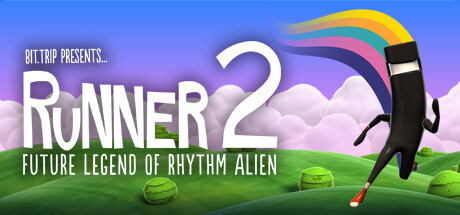
BIT.TRIP Presents... Runner2: Future Legend of Rhythm Alien Review Summary
- Beautiful and improved graphics
- Multiple difficulty options available
- Better than its predecessor
- Highly repetitive twitch gameplay
- Significant difficulty imbalance causing frustration
- Repetitive level design and visuals
Emotions
Archetypes
What players like:
Common complaints:
Gameplay feedback:
Performance notes:
Recommendations:
Other player notes:
Similar games
Blend with other games





Review evidence
Why players say this
Review evidence
Why players say this
Steam review verdict
Improved visuals and multiple difficulty options make it better than its predecessor, but repetitive twitch gameplay, uneven difficulty, and samey levels bring frustration.
What players like
Beautiful graphics: The game features colorful, vibrant visuals and a pleasant art style. Many players find the graphics satisfying and visually impressive.
Multiple difficulty options: The game offers three difficulty levels and optional checkpoints, making it accessible for players of all skill levels. Easy mode is great for learning, while Normal and Hard challenge experienced players.
Better than predecessor: Reviewers consistently note that this game is significantly improved over the previous installment in almost every aspect, including graphics and gameplay. Many consider it a superior sequel.
Amazing soundtrack: The soundtrack is widely praised as incredible and a masterpiece. It enhances the overall experience and is a standout feature.
Great level design: Levels are well-thought-out and flow nicely, with a fair and fun platforming experience. The design is refined and enhances the overall gameplay.
Common complaints
Repetitive Twitch Gameplay: The gameplay is shallow and repetitive, relying heavily on twitch reflexes, which some find mind-numbing.
Difficulty Imbalance and Frustration: The game is often punishing on hard difficulty, with instant deaths and uneven difficulty curves. Some find it too easy on lower difficulties, while others find it infuriatingly unfair.
Repetitive Level Design and Visuals: Many players feel the levels are too similar, with repetitive backgrounds and enemies, leading to a lack of variety. The visual clutter and blending backgrounds in later worlds further harm the experience.
Excessive Replay and Completion Tedium: Players must replay levels on all difficulties and achieve Perfect+ runs on 120 levels for full completion, which is time-consuming and tedious. The requirement to replay easier difficulties adds to the frustration.
Frustrating Bullseye Minigame: The bullseye minigame at the end of each level has a very small margin for success, and missing it forces a full level restart, which is especially painful when aiming for Perfect+ ratings.
Gameplay and performance
Multiple difficulty levels: The game offers three difficulty settings—easy, medium, and hard—that add obstacles and challenge rather than altering level layouts. Each of the 100 levels can be played on all three difficulties.
Rhythm-based platformer gameplay: It blends precision platforming with rhythm game elements, where music and timing are integral to the experience. Players must time their actions to the beat while navigating side-scrolling levels.
Auto-runner side-scrolling format: The character runs automatically to the right, and the player times button presses to jump, slide, and perform other actions. This fast-paced side-scrolling runner design keeps the gameplay flowing.
Five distinct worlds: The game is divided into five worlds, each containing roughly 20-25 levels with varied environments, totaling around 100-125 levels. This structure provides clear progression and visual variety.
Varied player actions: Players can jump, slide, kick, block, duck, dance, and use springs to overcome obstacles. These actions are tied to the rhythm and require precise timing.
Visual blur and eye strain: Players report fuzzy, blurry visuals on modern monitors that cause headaches and eye strain, both generally and specifically during fast running sequences. The effect is persistent despite attempts to adjust settings.
Poor PC optimization: The PC port is criticized for being unoptimized, with low system requirements yet poor performance. Players feel the port does not deliver a smooth experience.
Framerate capped at 60fps: The game does not offer framerate options above 60fps, limiting performance on capable hardware. This constraint may contribute to the perceived blur and motion issues.
Recommendations
Worth the price: Several clusters indicate the game is worth the full retail price, with some saying it's a no-brainer at sale price. Cluster 1 and Cluster 5 both reflect strong value-for-money sentiment.
Gamepad strongly recommended: Multiple reviewers state that a gamepad is necessary or highly recommended, and playing with a keyboard is discouraged. Cluster 6 and Cluster 9 both emphasize this hardware requirement.
Must-play for rhythm fans: Fans of rhythm games and tightly-tuned platformers consistently call this a standout or must-play title. Cluster 3 and Cluster 48 highlight its excellence within the genre.
Recommended for platformer fans: Reviewers recommend buying if you enjoy platformers and slightly challenging games, and advise against it otherwise. Cluster 2 captures this conditional recommendation.
Highly recommended overall: Many reviewers give an unqualified recommendation, calling it absolutely recommended or a must-have. Cluster 4 and Cluster 10 both express strong positive sentiment.
Buying context
Community fair range: $9.99 - $19.99.
Game completion: 5.5h.
Endgame: 20.5h.
Runner2 is predominantly reported as fun and addictive from the start, with immediate rhythm-platforming joy; a subset needs the rhythm to click or the music to develop, and repetitive levels/controls are common friction points.
Friction: gameplay sometimes repetitive; keyboard control very weird; Dancing mechanic: I don't even know how this mechanic could make it in the game.; levels are very repetitive and samey, and there are a LOT of them; playing on easy is so boring; i hate world 4.
Unlock drivers: once it clicks in your brain, you're left with a zen-like connection between music and puzzles; The music starts off kind of easy to ignore, but gets better as you progress.; As your performance improves, the song builds in complexity; difficulty scales so perfectly as you go along; Boss stages are LOADS more forgiving, as they have checkpoints after every round; early levels teach rhythm and timing through generous spacing and forgiving layouts.
Player profiles
Casual & Newcomer Relaxation Seeker: Short casual bursts on easy or medium difficulty, enjoying the art and music without chasing perfection. Motivation: Relaxing, low-pressure fun and a visually pleasant pick-me-up after demanding games. Stance: buy.
Rhythm Game Enthusiast: Chaining jumps, dodges and collectibles to maintain rhythm and build satisfying musical combos. Motivation: Experiencing music as gameplay, where movement and combos compose the soundtrack. Stance: buy.
Completionist Achievement Hunter: Methodical replaying of stages to collect every item and hit Perfect+ for completion goals. Motivation: Achieving 100% completion by unlocking all cosmetics, rewards and achievements. Stance: sale.
Platform notes
Steam Deck: The audited reviews center on an auto-running platformer and are overwhelmingly positive about its control scheme and gamepad compatibility, with explicit confirmation of Xbox 360 controller support. Reviewers also praise unlockable character skins, achievements, and trading cards as working features. No review mentions Proton Experimental, external EA/Ubisoft-style launchers, anti-cheat errors, unreadable UI, crashes, or battery drain. The only friction signal is a precision-aiming mechanic that one player overcame with a physical paper overlay, but this is not tied to any Steam Deck-specific limitation. Overall the evidence points to a native, out-of-the-box experience.
Other review notes
Polished Sequel to Runner: Many reviewers consider this game a more complete and polished version of the original BIT.TRIP RUNNER, with improved visuals and overall quality. It is widely recognized as a direct sequel that refines the core mechanics.
Extensive Level Content: The game features over 100 levels spread across five worlds, with three difficulty settings and additional retro-style stages. This substantial content provides long playtime and high replay value.
Improved Graphics and Art Style: Graphics are significantly better than the first part, with a shift from pixel art to hand-drawn 2.5D visuals. Backgrounds are more beautiful and soft, though some find them monotonous.
Unlockable Characters and Costumes: Players can unlock multiple playable characters and costumes, including retro-themed skins and a character pack DLC. This adds customization and collection incentives.
Completion Time and Difficulty: Achievement difficulty is moderate, around 3/10 to 7/10, with completion times varying from 4-5 hours for a casual playthrough to 40+ hours for full completion. Some achievements are missable and difficulty affects them.