- Sequel massively improved gameplay
- Superior boss fights
- Great music and sound
- Metal Gear 1 feels dated and clunky
- Excessive backtracking plagues both games
- Frame pacing and performance issues
Emotions
Archetypes
Hardware
What players like:
Common complaints:
Gameplay feedback:
Performance notes:
Recommendations:
Other player notes:
Similar games
Blend with other games 76%Spy Drops
 76%METAL GEAR SOLID - Master Collection Version
 75%METAL GEAR SOLID 3: Snake Eater - Master Collection Version
 75%METAL GEAR SOLID 2: Sons of Liberty - Master Collection Version
 73%METAL GEAR SOLID 4: Guns of the Patriots - Master Collection Version
 72%METAL GEAR SOLID V: THE PHANTOM PAIN
 69%Intravenous 2
 68%METAL GEAR SOLID: Peace Walker - Master Collection Version
 68%PowerSlave Exhumed
 67%Deus Ex: Human Revolution - Director's Cut
 67%Chaser
 67%Return to Castle Wolfenstein
Review evidence
Why players say this
Review evidence
Why players say this
Steam review verdict
This sequel hugely improves gameplay, boss fights, music, and sound, but Metal Gear 1 feels clunky and both games suffer from backtracking, frame pacing, and performance issues.
What players like
Sequel massively improved gameplay: Metal Gear 2 is described across many clusters as a major upgrade over the original, with better mechanics, level design, controls, and overall polish. Reviewers repeatedly note it is far more enjoyable and technically advanced than Metal Gear 1.
Superior boss fights: Boss battles in Metal Gear 2 are frequently highlighted as more innovative, varied, and well-designed than in the original. They are fun without being cheap or frustrating, and stand out more from each other.
Great music and sound: The soundtrack and sound design of Metal Gear 2 are widely praised as excellent and a major improvement over the first game. Multiple reviewers call out the high-quality music and its contribution to the experience.
Improved visuals and presentation: Metal Gear 2 is noted for significantly better graphics, color depth, and sprite work compared to the original. The visual upgrade is often cited as a key reason the sequel feels more polished and appealing.
Improved story and characters: Metal Gear 2 features a deeper narrative, more complex characters, and more communication and contacts. The story is praised for emotional moments, plot twists, and a more involved presentation compared to the simpler first game.
Common complaints
Metal Gear 1 feels dated and clunky: The original Metal Gear has aged poorly, with mechanics and controls that feel primitive and rough. Many players find it a trial-and-error experience with frustrating design choices.
Excessive backtracking plagues both games: Backtracking is a major complaint, especially in Metal Gear 2, where players must repeatedly traverse areas. This tedious mechanic often feels like a burden and disrespects the player's time.
Controls and difficulty are frustrating: Players frequently mention clunky controls that take time to get used to, leading to frequent deaths. The overall difficulty, especially for modern gamers, adds to the frustration.
Enemy respawning adds annoyance: Enemies respawn on every screen change, which makes backtracking even more tedious and can become boring. This classic mechanic is often cited as a source of frustration.
First game is particularly rough: Metal Gear 1 is often described as the weaker entry, with many considering it garbage or extremely frustrating. Its primitive design and lack of polish make it hard to enjoy.
Gameplay and performance
Metal Gear 2 Introduces Key Stealth Mechanics: Metal Gear 2 introduces crawling, crouching, noise mechanics, and a radar system that allows players to see adjacent rooms and enemies. These mechanics make stealth work by requiring players to stay out of lines of sight and avoid noisy surfaces.
Keycard System for Door Access: The games feature a keycard system where players must collect and use various cards to open doors. In Metal Gear 1, players must cycle through up to seven different cards, while Metal Gear 2 introduces a master card that combines multiple cards.
Backtracking Is a Core Element: Many reviews mention that backtracking is a significant and required element of the games, often tied to item-based progression and keycard systems. This design choice is common in both Metal Gear and Metal Gear 2.
Metal Gear 2 Influences Metal Gear Solid: Metal Gear 2 has ideas, set pieces, and gameplay that are surprisingly similar to Metal Gear Solid 1, and its elements are foundational to the MGS series. Many of its stealth mechanics were improved upon in later games.
Metal Gear 1 Establishes Series Staples: Metal Gear 1 includes many features and mechanics that became staples of the series, such as backtracking, combat with bullets, and an angled view. It also features gimmicks that return in later installments.
Frame pacing and performance issues: Wonky or terrible framepacing is frequently mentioned, along with frame rate drops in Metal Gear 2 after extended play. Higher frame rates can also cause problems.
Game fails to launch or crashes immediately: Multiple reports describe the game closing right after pressing start or opening a white window then closing. Some users also experience crashes on launch or a black screen without audio.
Resolution locked to 720p: Many players report that all games are forced to 720p output instead of the promised 1080p. This limitation is seen as a significant downgrade.
Input lag and unresponsive controls: Players report horrendous input lag, with almost a full second delay between button presses and on-screen actions. Some describe the games as slow and unresponsive.
Fullscreen mode causes speed-up bug: Several users experience the game running at 3x speed when in fullscreen mode due to a speed-up bug. This can be temporarily fixed by restarting or using borderless mode.
Recommendations
Metal Gear 2 over first game: When choosing between the two, reviewers overwhelmingly recommend playing Metal Gear 2 over the first Metal Gear. It is often described as the real standout of the duo and the one to prioritize if limited on time.
Worth playing Metal Gear 2: Metal Gear 2: Solid Snake is consistently highlighted as the standout of the original two titles, with many reviewers calling it a must-play for series fans and stealth enthusiasts. It is praised for its characters, story details relevant to later Solid games, and improved playability over its predecessor.
Use a guide: A large number of reviewers strongly recommend having a guide or maps on hand for the original Metal Gear games, with some even saying not to play without one. Guides are advised to avoid frustration, especially for Metal Gear 1, and playing on Easy difficulty is also suggested.
Only if curious or completionist: The first Metal Gear is often described as only worth playing out of curiosity or for completionists, not for pure enjoyment. Metal Gear 2 is sometimes recommended only for those interested in the series' origins or with nostalgia.
Recommended for retro enthusiasts: These games are highly recommended for players who enjoy retro games and are not bothered by dated graphics or limited gameplay. Those with an interest in old-school design and stealth mechanics will find them especially rewarding.
Buying context
Community fair range: $5.00 - $10.00.
Game completion: 8.0h.
Story completion: 8.0h.
Players who appreciate retro stealth design report enjoying Metal Gear and Metal Gear 2 from the outset, despite dated controls and backtracking. However, some modern players find the cryptic progression so frustrating that it never clicks.
Friction: Dated controls and pacing; Cryptic, obtuse progression requiring trial and error; No tutorial or clear onboarding; Tedious backtracking and enemy alerts; Technical issues at Master Collection launch (crashes, hangs, speed, 720p lock); Repetitive music and tedious card swapping.
Unlock drivers: Patches resolving technical issues; Improved hints system with Codec calls; Better instructions for progression; Using a walkthrough or guide when stuck.
Player profiles
Hardcore Franchise Archivist: Plays both entries or at least MG2, watches plot videos, hunts achievements, and compares mechanics and lore to later Metal Gear Solid games. Motivation: To trace Metal Gear's roots, canon, and Kojima history and to complete the franchise collection or achievements. Stance: buy.
Retro Old-School Enthusiast: Tolerates dated graphics and cryptic systems, plays through original difficulty or old-school style, and values vintage challenge and mechanics. Motivation: To enjoy classic 8/16-bit stealth gameplay and relive or discover old-school design. Stance: buy.
Cautious First-Time Franchise Initiate: Uses guides and easy mode, learns stealth basics slowly, and may skip or research Metal Gear 1 before moving to the sequel. Motivation: To enter the Metal Gear franchise and experience the story and origins before MGS1 without excessive frustration. Stance: sale.
Platform notes
The returned cohort shows a positive performance signal: the only included report is recommended and no non-recommended reports are present.
Windows <8GB VRAM: positive. The single included review is recommended, indicating the game is playable on this configuration with no performance issues noted in the snippet.
Steam Deck: The Metal Gear Solid Master Collection launches and runs on the Steam Deck, with one user reporting flawless operation, but the experience carries consistent friction. Users flag unacceptable input latency across titles, unstable emulation frame rates (roughly 30FPS and even feeling like 15FPS in the MSX games), FSR-based upscaling that is slightly blurrier than native, and the absence of cloud saves, which risks progress loss when uninstalling. The package is characterized as an emulator wrapped in a launcher without adaptation such as save states or resolution control. No crashes, anti-cheat errors, or Proton Experimental toggling were reported, so the game is playable but not seamless.
Linux and Proton: The available SteamOS review is largely positive: the game launches and plays on a Legion Go S running SteamOS. The only Linux-specific concern is that resolutions above 720p use AMD FSR upscaling, which appears slightly blurrier than native rendering. There is no evidence of launch failures, Proton tweaks, anti-cheat blockers, DRM issues, or instability. Overall Linux/SteamOS friction is low, with a minor graphical quirk.
Extra review signals
External guides: The dominant theme is external data dependency for instructional progression: reviewers repeatedly state that guides or walkthroughs are required to find mandatory items, solve cryptic puzzles, navigate open-ended sections, and avoid heavy backtracking. No evidence supports farming, drop-rate, loot-table, inventory, crafting, or blueprint concerns. A secondary complaint concerns fullscreen and alt-tab behavior. Under the strict priority, Tier 3 applies, yielding a score of 50.
Other review notes
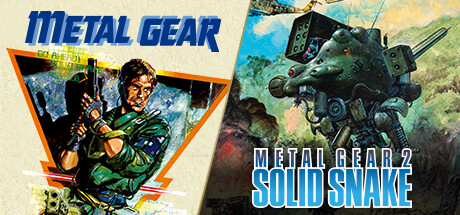
Two-game bundle with extras: The package primarily contains two games, Metal Gear and Metal Gear 2, and sometimes includes additional content like a launcher, strategy guides, and achievements. Some versions also bundle MGS1 or other titles for a higher price.
Dated but classic gameplay: The games are quite old, with controls and pacing that feel dated, but they still deserve a playthrough for their historical significance. Metal Gear 1 is from 1987 and Metal Gear 2 from 1990.
Historical importance of games: The games are considered the birth of the stealth genre, pioneering the mechanics that later defined the Metal Gear Solid series. They are a piece of gaming history and the starting point of the entire franchise.
Original MSX and NES versions: The collection includes both the original MSX and NES versions of the games, or is based on the MSX2 platform. These versions are from the late 1980s and early 1990s.
Metal Gear 2 story details: Metal Gear 2 is set in Zanzibar Land in 1999 and heavily references the first game's story. It feels like a 2D version of Metal Gear Solid and was created by Kojima in 1990.