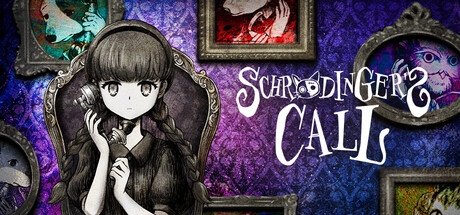
- Outstanding sound and visuals
- Exceptional art and music
- Compelling and touching story
- Clichéd and predictable plot
- Excessive repetition in dialogue
- Final chapter long and tedious
Emotions
Archetypes
Hardware
What players like:
Common complaints:
Gameplay feedback:
Performance notes:
Recommendations:
Other player notes:
Similar games
Blend with other games 86%The House in Fata Morgana
 86%NOeSIS01_诉说谎言记忆物语
 86%Your Turn To Die -Death Game By Majority-
 85%Tales from Toyotoki: Arrival of the Witch (The witch of the Ihanashi)
 85%Leap of Faith
 85%Last Stop
 85%Until Then
 85%NOeSIS02_羽化
 85%Along the Edge
 84%MAMIYA
 84%CORPSE FACTORY
 84%Umineko When They Cry - Answer Arcs
Review evidence
Why players say this
Review evidence
Why players say this
Steam review verdict
Exceptional art, music, sound and visuals plus a touching story are undermined by a cliched, predictable plot, repetitive dialogue and a long, tedious final chapter.
What players like
Outstanding Sound and Visuals: Reviewers consistently praise the game's sound design, music, and visual presentation as top-tier. The audiovisual experience is described as cinematic, immersive, and emotionally effective.
Exceptional Art and Music: The art style and soundtrack are frequently highlighted as exceptionally beautiful and complementary. Many reviewers consider them a core strength of the game.
Exceptional Soundtrack: The music is consistently described as amazing, memorable, and a standout feature. Reviewers often mention the soundtrack as one of the best aspects.
Compelling and Touching Story: The narrative is widely praised as well-written, touching, and emotionally resonant. Many players found the story deeply moving and memorable.
Excellent Presentation: The overall presentation, including visuals, sound, and direction, is frequently described as stunning and high quality. It significantly enhances the experience.
Common complaints
Clichéd and predictable plot: Many players find the overall plot cliché, average, and easy to predict from early chapters. The story lacks novelty and surprises, making it feel stale and unengaging.
Excessive repetition in story and dialogue: The narrative and dialogue repeat information, scenes, and conversations many times, especially in the second half. This repetition dampens emotional impact and makes the experience feel like a broken record.
Final chapter overly long and tedious: The final chapter is widely criticized for being draggy, repetitive, and filled with recycled assets. Many feel it is disconnected from earlier story and causes irritation.
Weak and formulaic early chapters: The first few chapters are often described as formulaic, bland, and slow, with low information density. This makes the beginning feel dull and less compelling than later parts.
Choices lack meaningful impact: Players report that choices do not significantly alter the story, with the game forcing correct options and following a strictly linear path. This makes decisions feel inconsequential and gameplay poor.
Gameplay and performance
Visual novel genre: The game is repeatedly described as a visual novel, often with a linear or kinetic structure. Many reviews emphasize its story-driven, reading-focused nature with limited interactivity.
Chapter-based episodic structure: The game is divided into chapters or episodes, often with a consistent number such as five chapters. This structure is frequently mentioned as a defining feature.
Choices do not affect story: Although choices are presented, they largely do not alter the story's direction, and the narrative remains linear. Many players note that choices only affect dialogue or lead back to the main path.
Phone calls as core mechanic: Players interact with characters primarily through phone calls, often to collect clues or communicate with souls. This unique mechanic is central to the gameplay and narrative.
Story-driven adventure game: It is described as a story-driven experience, sometimes as an adventure game or novel adventure game. The narrative is the primary focus.
Launch blocking bug reported: Players reported a launch-time bug that prevented them from entering the game. This was a significant accessibility issue at release.
Numerous bugs and logic issues: Reviewers noted many bugs and logic problems throughout the game. These issues detracted from the overall experience.
Memory leak in chapter 3: A memory leak was specifically reported in chapter 3. This can cause performance degradation or crashes if not addressed.
Game freeze required forced exit: One player experienced a freeze that forced them to end the task. However, the rest of the game ran fine, suggesting an isolated incident.
Video compression artifacts noticed: Some videos exhibited compression artifacts, reducing visual quality. This is a minor but noticeable issue.
Recommendations
Try the free demo first: Many reviewers strongly recommend playing the free demo, often covering Chapter 1, before deciding to buy. If the demo hooks you, purchasing the full game is considered worthwhile.
Highly recommended overall: A large number of reviewers give the game a strong recommendation, describing it as worth playing despite minor flaws. Many say they are glad they played it and consider it a must-have.
Ideal for visual novel fans: The game is especially recommended for fans of visual novels and story-driven experiences. Those who appreciate deep, emotional narratives will find it a great pick.
Play with headphones recommended: Reviewers consistently suggest using headphones or earphones at moderate volume to fully appreciate the music and immersion. Some also recommend a controller with vibration for an even better experience.
Emotional impact is extremely strong: Reviewers highlight the powerful emotional impact of the story, recommending it to those who enjoy emotional and meaningful games. The narrative is described as touching and memorable.
Buying context
Community fair range: $14.99 - $17.99.
Game completion: 10.0h.
Story completion: 10.0h.
Session length: 3.0h.
Endgame: 4.5h.
Schrodinger's Call often begins slowly with tutorial and repetitive-dialogue friction, but players report that pushing past the opening yields an emotionally rewarding experience.
Friction: Slow opening for genre newcomers; Unbearable tutorial and early timeline section; Repetitive dialogue that some players skip; Excessive button clicks; Replaying the same scenes before the plot advances; Dementia-care first half with little momentum.
Player profiles
Emotional Catharsis Seeker: Reads slowly and immerses fully, often with headphones, savoring each episode's emotional beats rather than rushing the plot. Motivation: To experience a deep emotional release and feel personally moved by each character's story of grief, loneliness, and redemption. Stance: buy.
Visual Novel Genre Veteran: Engages closely with the notebook keyword-investigation mechanics and constantly cross-references the work against other narrative games. Motivation: To see a visual novel operating at full capacity and to benchmark it against beloved genre favorites. Stance: buy.
Cinematic Spectacle Admirer: Focuses on audiovisual staging and music, treating the game like a film-like experience even when the script is thin. Motivation: To soak in the stylish hand-drawn art, animated transitions, and soundtrack that carry the storytelling. Stance: buy.
Platform notes
Across the provided cohorts, the <8GB VRAM Windows group mostly reports playable performance, while the 12-15GB VRAM group shows mixed results with freezes and unresponsive moments alongside positive performance ratings.
Windows <8GB VRAM: positive. Reports indicate stable ~60 FPS on 8GB VRAM Windows systems, with an isolated Chapter 3 memory leak and refund.
Windows 12-15GB VRAM: mixed. Several recommended reviews report freezes or unresponsive behavior, including a reproducible Chapter 3-to-4 freeze, while others rate performance 8/10 and still recommend it.
Steam Deck: The audit finds the game is generally compatible with Steam Deck, with one reviewer explicitly praising the Steam Deck OLED visual experience and others praising controller vibration, headphone support, and audio presentation. There is no evidence of external launcher issues, Proton Experimental toggling, unreadable small text, or battery drain concerns. However, reviews cite cutscene bugs, screen blackouts, violent shaking, and an endgame progression blocker that required restarting and controller-input workarounds. This adds moderate friction but does not indicate a fundamentally broken Steam Deck experience.
Other review notes
Free demo available: Multiple reviewers highlight that a free demo is available, covering the entire first chapter. The demo is slightly under three hours long and allows players to try before purchasing.
Short playtime around 8 hours: The game can be completed in approximately 8 hours, with some variation from 5 to 10 hours depending on pace. Many consider it a short experience.
Soundtrack references physicists: The soundtrack track names are combined with subtitles referencing famous physicists such as Planck, Rutherford, Bohr, and many others. This shows attention to detail and thematic care.
Demo progress carries over: Players can carry over their save data from the demo to the full game, starting from chapter 2. This seamless transition is appreciated by reviewers.
No voice-over: The game lacks full voice acting; dialogue is not fully voiced, only muffled or unclear speech is present. This is noted by some reviewers.