- Highly positive player reception
- Improves upon first game
- Fun and enjoyable gameplay
- Beloved open world design
- Impressive graphics and visuals
- Linux and Steam Deck issues
Emotions
Archetypes
Hardware
What players like:
Common complaints:
Gameplay feedback:
Performance notes:
Recommendations:
Other player notes:
Similar games
Blend with other games 81%RuneScape: Dragonwilds
 80%Diablo II: Resurrected – Infernal Edition
 80%Crashlands 2
 80%DEATH STRANDING 2: ON THE BEACH
 80%Minecraft Dungeons
 79%The Blood of Dawnwalker
 79%Wild Woods
 79%The Elder Scrolls IV: Oblivion Remastered
 79%DYSPLACED
 79%Grounded 2
 78%Baldur's Gate: Dark Alliance II
 78%Moonlighter 2: The Endless Vault
Review evidence
Why players say this
Review evidence
Why players say this
Steam review verdict
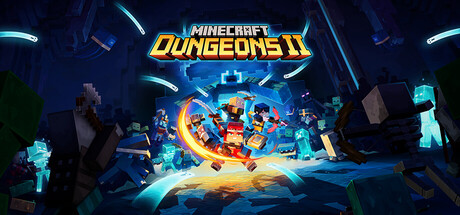
Highly praised and improved sequel with fun gameplay, a beloved open world, and impressive visuals, though Linux and Steam Deck issues hold it back.
What players like
Highly Positive Player Reception: A large number of reviews expressed strong enthusiasm and satisfaction with the game. Many described it as fun, well-made, and a masterpiece.
Improvement Over First Game: Many reviewers noted that this game is better than its predecessor in almost every way. Improvements include movement, combat, soundtrack, upgrading, and overall mechanics.
Fun Gameplay Experience: Reviewers frequently described the gameplay as engaging and entertaining. It appeals to both solo and multiplayer experiences.
Beloved Open World: The open world design received widespread praise for being refreshing, fun, and providing freedom. It is seen as a major step up from the previous level-based system.
Impressive Graphics: The visual quality was highlighted as beautiful and excellent. Graphics are bright, pleasant, and contribute to the game's appeal.
Common complaints
Linux Compatibility Problems: The game fails to run on Linux, even with compatibility layers like Proton, due to dependencies on Microsoft Gaming Services. Users report crashes, launch failures, and the need for third-party fixes.
Missing WASD Movement Support: Many players report that the game lacks WASD movement controls, forcing mouse-only or controller input. This makes the game feel clunky or nearly unplayable for those without a controller.
Microsoft Account Login Issues: Users frequently encounter problems linking or logging into their Microsoft accounts, including errors, disconnections, and inability to connect. This prevents access to online features and causes frustration.
Steam Deck Incompatibility: The game does not run on Steam Deck at launch, often requiring mods or workarounds. Many users report it is unplayable on the device without significant effort.
Worse Than Previous Games: Many players feel the game is a step backward from its predecessors, lacking polish, depth, and fun. It is often described as a downgrade or less replayable.
Gameplay and performance
Open-world design praised: Players highlight the shift from separate mission/level maps to a fully explorable open world. Regions can be revisited, and dungeons and side quests are scattered throughout the map.
Multiplayer and co-op support: The game offers online and local co-op with friends, including 4-player support and remote play. Matchmaking with random players is also available.
Jumping and jump attacks: A new jump mechanic has been added and is integrated into combat as jump attacks. Many reviewers mention jumping as a notable new feature.
Separate online/offline characters: Characters are locked to either online or offline mode and cannot be used across both. This forces players to create separate characters for each mode.
Online queue system: Entering online play requires going through a queue, even for single-player online sessions. This queue system is a recurring point of feedback.
Frequent crashes and instability: Players experience frequent crashes on launch or during gameplay, with some reporting crashes every few minutes. This makes the game unplayable for many.
Good optimization and performance: Many users report the game runs smoothly on ultra settings, even on older hardware, with high FPS and no stutters. Performance is generally praised.
Cutscenes locked to low FPS: Many players report cutscenes running at 20-30 fps regardless of hardware, with some seeing as low as 10 fps and stutters. This is a widespread issue that affects the viewing experience.
Game fails to launch or load: Some players cannot start the game or get stuck on loading screens, making it impossible to play. This issue appears across different systems.
Lag and input delay: Noticeable lag occurs throughout the game, including offline mode, and input delay is reported during online play. This impacts responsiveness and gameplay.
Recommendations
Controller strongly recommended: Multiple reviewers emphasize that a controller is necessary or vastly superior for comfortable play. Mouse and keyboard users are often advised against buying.
Mixed current recommendation status: Some reviewers cannot recommend the game in its current state, while others give a positive recommendation. This reflects a split in overall sentiment.
Wait for bug fixes before buying: Many reviewers advise against purchasing until current bugs and issues are resolved. They suggest waiting for day 0 or day 1 patches before committing.
Fans of first game will enjoy: Reviewers note that those who liked the original game will likely love this sequel even more. It appeals strongly to existing fans.
Steam Deck and Linux issues: The game does not work properly on Steam Deck or Linux, leading to refunds and negative reviews. Reviewers warn not to buy if intending to play on those platforms.
Buying context
Community fair range: $20.00 - $30.00.
Game completion: 22.5h.
Story completion: 10.0h.
Session length: 1.5h.
Early fetch quests and technical/multiplayer friction can delay enjoyment, but the game reportedly picks up once players reach Howling Woods. Some players find combat and co-op fun immediately, while others report a late-game drop after the initial playthrough.
Friction: First hour is almost all fetch quests and fails to captivate; Early game gear system does not feel good; Login, account linking, and joining games fail or queue; Separate online and offline characters create a forced choice; Multiplayer lag, rubber banding, input delay, and disconnects; Control scheme lacks WASD/accessibility and tutorial explanations.
Unlock drivers: Reaching Howling Woods; Playing solo instead of online multiplayer.
Player profiles
Co-op-First Dungeon Crawler: Team-focused hack-and-slash runs, local co-op, online co-op, and occasional solo play between group sessions. Motivation: Playing dungeon runs with friends or family in shared local or online sessions. Stance: sale.
Loot-Grinding ARPG Veteran: Efficient grinding, build experimentation, stat comparison, and deep mechanical analysis of combat and loot systems. Motivation: Chasing loot upgrades, optimizing builds, and testing endgame item-power progression. Stance: deep sale.
PC Controls and Platform Purist: Keyboard-and-mouse or Steam Deck play, with strong expectations for native WASD support and Linux compatibility. Motivation: Playing with standard PC controls and on supported operating systems without workarounds. Stance: no buy.
Platform notes
Across the selected Windows hardware cohorts, performance is inconsistent: lower-VRAM and 8-11 GB VRAM groups show frequent crashes, stuttering, and low cutscene frame rates, while some 12-15 GB and 16 GB+ VRAM systems report smooth high-FPS play alongside stability and Linux/Proton issues. The strongest recurring complaints are crashes, freezes, 24-30 FPS cutscenes, and poor optimization on lower-end hardware.
Windows <8GB VRAM / <16GB RAM: mixed. Reports are split: some players get smooth 120-144 FPS at medium/high settings, while others report crashes, freezes, sub-30 FPS, and UE5 instability.
Windows 12-15GB VRAM / 16-31GB RAM: mixed. Several users report high FPS and smooth performance on max/Ultra settings, but others cite UE5 crashes, stuttering, poor 4K image quality, and 24 FPS cutscenes.
Windows 8-11GB VRAM: negative. Performance problems dominate, with frequent crashes, stuttering, login failures, blurry/low-resolution rendering, and cutscenes stuck around 15-24 FPS despite some smooth 120 FPS reports.
Steam Deck: Steam Deck and Linux feedback is overwhelmingly dominated by a launch-level failure: Minecraft Dungeons II hard-requires Microsoft Xbox Gaming Services, which is not implemented in Proton, so the game simply will not start for Deck users. The only known path is community workarounds involving a custom GDK-Proton build, DLL replacement (XCurl.dll), file patching and certificate injection, and even then account linking fails and save data is at risk. Beyond the Linux blocker, users report frequent crashes (including during cutscenes and dungeons), inability to launch in Steam Offline Mode (Error 0020), missing WASD support with uncomfortable keyboard mapping, and blurry upscaling with 24fps-locked cutscenes. Users who do get in describe fun, smooth gameplay, confirming the friction is platform-driven rather than design-driven. Per the scoring rubric, the dominant symptom is 'the game simply won't launch' combined with frequent crashes, placing this deep in the Broken band.
Linux and Proton: Linux/SteamOS feedback is dominated by launch failure caused by the game's dependency on Microsoft Xbox/Gaming Services, which standard Proton Experimental and GE-Proton cannot satisfy (the needed API is unimplemented). Users consistently report that getting in requires a custom GDK Proton build, manual DLL/file patching, and certificate modifications, and even then account linking often fails with errors and crashes persist. Several reviewers emphasize this is a regression from Minecraft Dungeons 1, which ran on Linux and Steam Deck. At the same time, multiple users confirm that community fixes let them reach gameplay, so Linux support is rough and workaround-heavy rather than completely non-functional.
Extra review signals
Monetization: The reviewed title (a Minecraft Dungeons sequel) monetizes through a paid base game plus separate paid DLC mission packs and cosmetic DLC, with users frequently describing this as a 'cash grab' and criticizing the $50 base price, deluxe edition, and preorder value. There is no evidence of an in-game cash shop, real-money gacha, loot boxes, currency obfuscation, boosters, or pay-to-win mechanics; one review even notes the battle pass was removed. The complaints center on DLC-gated content and upfront pricing, both of which the scoring rules cap at the fair/low band.
Other review notes
Better than first game: Players compare this game favorably to its predecessor and the first Minecraft Dungeons, considering it better, harder, and a huge improvement. Many cite additions like the open world as major enhancements.
No native Linux support: The game lacks official Linux support and is not advertised to work on Linux, causing many negative reviews. It is a product-level issue that prevents Linux users from playing.
Requires Microsoft Gaming Services: Unlike the first game, this title requires Microsoft Gaming Services, the Xbox app, and a Microsoft account to run. This dependency contributes to incompatibility on Linux.
Windows-only, not Steam Deck: The game requires a Windows device and is not available on Linux or Steam Deck. It appears designed to not launch without Windows, as listed on the Steam page.
Microsoft account linking issues: Some players had trouble linking their Microsoft account to the game. The game uses a Microsoft account linking process, which has caused problems for many.