- Dungeon crawling remains enjoyable
- Automapper is helpful
- Great trilogy collection
- Game-breaking bugs and softlocks
- Poor combat and balance
- Dated graphics and sound
Emotions
Archetypes
What players like:
Common complaints:
Gameplay feedback:
Performance notes:
Recommendations:
Other player notes:
Similar games
Blend with other games 78%Icewind Dale: Enhanced Edition
 76%Baldur's Gate: Enhanced Edition
 76%The Elder Scrolls: Arena
 75%Grimoire : Heralds of the Winged Exemplar (V2)
 74%Neverwinter Nights: Enhanced Edition
 74%Dungeon Siege
 74%Avernum 4: Greed and Glory
 74%Baldur's Gate II: Enhanced Edition
 74%Baldur's Gate: Dark Alliance II
 74%Etrian Odyssey III HD
 73%Siege of Avalon: Anthology
 73%Dungeons of Blood and Dream
Review evidence
Why players say this
Review evidence
Why players say this
Steam review verdict
Enjoyable dungeon crawling, a handy automapper, and a great trilogy collection are undermined by game-breaking bugs, softlocks, poor combat balance, and dated graphics and sound.
What players like
Dungeon crawling remains enjoyable: Players find exploring dungeons fun and challenging, with the pleasure of discovery. The core dungeon-crawling loop is consistently praised across clusters.
Automapper is helpful: The automapper is a helpful feature that aids navigation and includes guide functionality. Players appreciate this convenience.
Great trilogy collection: Having all three games in one pack is a great way to play the trilogy. The convenience and value are highly appreciated.
Masterpiece quality: The game is widely regarded as a masterpiece and an amazing experience. This strong praise reflects its high quality.
Persistent character progression across trilogy: Characters created in the first game can be carried through the entire trilogy, creating a sense of long-term investment. This feature enhances the overall experience.
Common complaints
Game-breaking bugs and softlocks: Numerous bugs cause softlocks or prevent game completion, including a system error in Eye of the Beholder 2's Azure Tower, missing key items, save/load errors, and one-way passages triggering before obtaining necessary items. These issues require frequent saving and can make the game unfinishable.
Poor combat and balance: Combat is tiresome and unbalanced, with finicky ranged systems, awkward evasion, and enemy poison/stun effects that can overwhelm early. The difficulty is highly dependent on party composition, and some enemies are disproportionately powerful.
Dated graphics and sound: Graphics and sound are extremely outdated, with simple sprites, limited animations, and minimalist environments. The visuals are from 1990 and unlikely to meet modern players' standards, with sound effects minimal and music lacking except in the intro.
Obtuse and confusing design: The game features sadistically confusing labyrinth-like design with hidden walls, minimal hints, and repetitive corridors. Navigation is difficult without an in-game map, requiring manual mapping and note-taking, and the difficulty curve is all over the place.
Clunky and outdated controls: Controls are not modernized enough and feel clunky, requiring awkward numpad and mouse combinations that can cause physical strain. The game feels slow and janky, especially without nostalgia.
Gameplay and performance
Dungeon crawler genre: The game is consistently described as a classic, old-school first-person dungeon crawler with grid-based movement and tile-based exploration. This core genre identity is the most frequently mentioned aspect across reviews.
Automap feature available: Many reviews mention an automap function, which is considered a quality-of-life improvement over the original games that lacked in-game maps. Some versions include an auto-mapper tool or mod.
AD&D ruleset used: The game is based on Advanced Dungeons & Dragons rules, specifically the 2nd Edition. This includes character classes, races, spells, and mechanics like THAC0.
Character progression carries over: Players can import their characters and equipment between the three games in the series, allowing for continuous progression. This save import functionality is a notable feature.
Puzzles are central: Puzzles are a major gameplay element, often requiring players to solve them to progress deeper into dungeons. Reviews note that puzzles can be challenging without hints and sometimes lead to further puzzles.
Save loading fails after restart: Saves do not load after a complete computer restart in Eye of the Beholder I and II. However, Eye of the Beholder III loaded saves correctly after restart.
Runs well on modern PCs: The game works on modern PCs without any problem. It runs smoothly and is compatible with current hardware.
Extremely low frame rate: The game runs at about 1 frame rate. This makes any interaction nearly impossible.
Unable to save game: Players cannot save their game progress. This issue prevents continuing sessions.
Clicking difficulty: Players struggle to click on anything due to responsiveness issues. The game becomes unplayable when clicks do not register.
Recommendations
Niche classic dungeon crawler appeal: The collection is consistently recommended for players who enjoy classic CRPGs, old-school RPGs, and grid-based dungeon crawlers, especially fans of Forgotten Realms and early 90s first-person maze games. Many reviewers note it is best suited to those with nostalgia or an interest in genre history.
Nostalgia drives enjoyment: Several reviews emphasize that players who experienced these games back in the day will get the most out of the collection, while those without nostalgia may not enjoy them as much. Some directly state that if you have not played it before, you likely will not like it.
Eye of the Beholder highlights: The first Eye of the Beholder is frequently singled out as worth the price alone, with some recommending starting with the second game as the best of the trilogy. Others suggest playing all three, though opinions vary on the third.
Historical value for CRPG fans: Reviewers recommend the collection for those interested in the history of computer role-playing games, calling it a museum trip or an outstanding example of classic design. It is often suggested as a way to experience the foundation of the genre.
Buy on sale, not full price: Several reviews advise waiting for a discount or buying only on sale, with some stating it is not worth full price. A few note it is cheap enough to not wait, but the general sentiment favors a sale purchase.
Buying context
Community fair range: $8.99 - $12.99.
Session length: 5.0h.
Players report early friction from confusing, repetitive dungeon navigation and an old-fashioned design that demands patience, but the game's depth, atmosphere, and progression can make the effort worthwhile. No review provides a precise timing cue.
Friction: Confusing, repetitive dungeon navigation with circular turns; Need to track a compass and leave breadcrumb-like notes; Hidden wall buttons and manual sketching when lost; Old-fashioned design requiring patience and adjustment.
Unlock drivers: Depth and atmosphere that justify the effort; Sense of progression; Excellent balance between storytelling, dungeon design, and character progression; Character progression as a core strength.
Player profiles
Nostalgic Old-School Veteran: Plays party-based Gold Box and Eye of the Beholder-style crawls with original controls and dated interfaces. Motivation: Reliving early PC role-playing memories and the challenge of classic dungeon crawls. Stance: buy.
Classic Dungeon Crawl Enthusiast: Plays the series in order, imports the same team, and focuses on classic dungeon exploration. Motivation: Exploring a respected old-school dungeon-crawl trilogy and continuing a party across entries. Stance: buy.
Manual Mapping Puzzle Purist: Uses grid-paper mapping, accepts cryptic trial-and-error puzzles, and may use mapping mods only as an alternative. Motivation: Solving devious dungeon puzzles and mastering complex maps through hands-on exploration. Stance: buy.
Platform notes
Steam Deck: The audit finds moderate Steam Deck friction. The game is playable and enjoyable once configured, but users must contend with an officially unsupported status, manual setup steps, a separate map app, DOSBox adjustments, and a minor map display bug. No launch failures, crashes, unreadable UI, or mandatory Proton Experimental or touchscreen launcher workflows are reported. The score places it in the Tinkering Required range.
Linux and Proton: Linux desktop play appears viable with DOSBox configuration adjustments, and at least one user reports it works on both Windows and Linux. Steam Deck is less smooth: reviews repeatedly mention unofficial support, setup hoops, anti-cheat/middleware skipping, and a separate map app that complicates setup. Evidence points to a tinkering-required Linux/Steam Deck experience rather than a fully broken one.
Other review notes
Includes All-Seeing Eye Automap: The bundle comes with the All-Seeing Eye automap program, which enhances quality of life by automatically mapping dungeons. It is highly praised for making the games more accessible and comfortable to play.
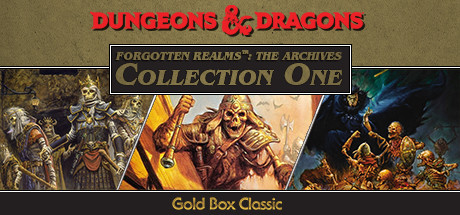
Full Eye of the Beholder Trilogy: The collection includes all three classic Eye of the Beholder games: the original, The Legend of Darkmoon, and Assault on Myth Drannor. This provides a complete package for fans of the series.
Contains Manuals and Cluebooks: The collection includes original manuals and cluebooks, often in PDF format, providing helpful documentation and solutions. Some versions also come with adventure guides.
Dated Graphics and Technology: The games show their age with outdated graphics and a noticeable technological gap compared to modern titles. Attempts to adapt to modern monitors have had mixed success.
Original Versions from 1991-1993: These are the original AD&D Eye of the Beholder games from the early 1990s, developed by Westwood and published by SSI. They are DOS-based and emulated.