- Highly fun and enjoyable
- Deep and complex survival mechanics
- Unique card-survival fusion
- Poor and clunky UI
- No Steam Workshop support
- Late game becomes tedious
Emotions
Archetypes
What players like:
Common complaints:
Gameplay feedback:
Performance notes:
Recommendations:
Other player notes:
Similar games
Blend with other games





Review evidence
Why players say this
Review evidence
Why players say this
Steam review verdict
Fun and deep card-survival fusion with complex mechanics, but clunky UI, no Steam Workshop support, and tedious late game hold it back.
What players like
Highly fun and enjoyable: Many players find the game very fun, engaging, and addictive. Clusters 1, 7, and 20 repeatedly praise the game's enjoyment.
Deep and complex survival mechanics: The game is praised for its deep, detailed, and realistic survival systems, often described as a masterpiece of the genre. Clusters 2, 6, and 15 highlight the complexity and realism.
Unique card-survival fusion: The combination of survival and card game genres is seen as innovative and fun. Clusters 4 and 10 highlight this unique blend as a major strength.
Addictive gameplay loop: Players frequently mention the game's addictive nature, with time passing unnoticed. Clusters 9 and 16 emphasize the compelling, time-consuming gameplay.
Extensive character customization: The game offers multiple characters and deep customization with traits and attributes. Cluster 3 details the options for creating custom characters.
Common complaints
Poor and clunky UI: Players consistently criticize the user interface as ugly, uncomfortable, and lacking polish. Some find it fiddly and requiring a steep adjustment period.
No Steam Workshop support: Many players request Steam Workshop integration for easier modding. Without it, mods must be installed manually, which is inconvenient.
Late game becomes tedious: The game reportedly becomes boring and grindy after a certain point. Tedium sets in quickly for some players.
Lack of tutorial and guidance: Players complain that there is little to no tutorial, forcing them to figure out mechanics themselves. Some places and mechanics are not explained at all.
Expensive for what it offers: Reviewers feel the game is overpriced at its current price point. Some consider it a turn-off.
Gameplay and performance
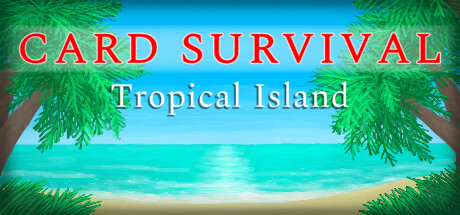
Card-based survival hybrid: The game uniquely blends survival and card game genres, using cards to represent items, actions, and environments. This hybrid is a defining feature.
Core survival gameplay: The game is fundamentally a survival game with deep, complex mechanics and no hand-holding. Players must manage many survival parameters on a deserted island.
Multiple playable characters: The game offers several pre-designed characters with unique traits, goals, and mechanics, such as the Hunter, Farmer, Tourist, and Mermaid. Players can also create custom characters.
Crafting and building systems: Exploration, crafting, and base building are key gameplay elements. Crafting is often done by combining cards to create tools and structures.
Resource management mechanics: Survival involves managing hunger, thirst, shelter, fire, and other needs. Detailed stats like hydration and illness must be monitored.
Late-game lag from many items: Multiple reviewers report lag that intensifies in the late game, especially when many items or cards are present. The performance drop is tied to accumulated in-game objects and scene loading.
Runs on low-end hardware: Several users confirm the game runs well on low-end notebooks, potato PCs, and the Steam Deck. This suggests good optimization for modest hardware despite late-game issues.
Scene loading stutter with items: Stuttering occurs when entering scenes in the mid-to-late game, particularly when many items are stored or present. One reviewer notes this was fixed in an update.
Card rearrangement animation lag: Rearranging cards in a scene causes lag due to repeated animation activation. This is a specific performance issue tied to card interactions.
Honey notification lag: Accumulated honey notifications can cause about a minute of lag. This is a niche but notable performance bug.
Recommendations
Strong recommendation for survival fans: A large number of reviewers recommend the game to anyone who enjoys survival games, often describing it as a must-try or one of the best in the genre. The message is consistent across many clusters: survival enthusiasts should not miss it.
Worth the price: Multiple reviewers state the game is worth the money, even at full price, citing the amount of content and enjoyment derived. A few suggest waiting for a sale if full price is a concern.
Card and survival hybrid appeals: Reviewers highlight that the card-based survival format is engaging and recommend it to fans of both card games and survival games. Some note that even those hesitant about card games should try the demo.
Not for everyone: Reviewers caution that the game may not suit all players, particularly those who dislike high difficulty, repeated failures, or the card-based interface. It is recommended to check if the game's style matches your preferences.
Try the demo first: Several reviewers advise trying the free demo before purchasing to see if the game suits your taste. This is especially recommended for those unsure about the card-based gameplay or the challenging survival mechanics.
Buying context
Community fair range: $15.00 - $20.00.
Game completion: 20.0h.
Session length: 2.5h.
Endgame: 117.0h.
The game is repeatedly described as addictive once players push through a tutorial-light, steep early learning curve; the clearest timing cue places the turn at roughly 30 minutes to an hour. Some players enjoy early discovery immediately, and others report later tedium, so the onset is mixed.
Reported time to anchor: 45m.
Friction: No real tutorial and difficult initial understanding; Steep learning curve and unintuitive mechanics; First few hours of exploration can feel torturous; Frequent early deaths before learning optimized routes; Early resource searches drain energy, food, and water; Need for external guides or wiki help for some players.
Player profiles
Hardcore Survival Micromanager: Micromanages needs, resources, crafting chains, and hardcore runs. Motivation: Mastery through realistic, punishing survival systems. Stance: buy.
Cozy Base-Building Strategist: Builds and farms at a slow pace, avoids combat, plans with cards and time. Motivation: Relaxation and creative base-building without combat pressure. Stance: buy.
Trial-and-Error Newcomer: Learns by trial and error, restarts often, and uses the notebook or guide. Motivation: Learning the island through discovery and repeated attempts. Stance: buy.
Platform notes
Steam Deck: Steam Deck feedback is mostly positive: users report the game runs well, touchscreen interactions are useful, and trackpad/remap support works. A translated review states it is not perfectly adapted to Deck, and another questions Deck-only value; community layouts are recommended for a better experience. There is no evidence of mandatory Proton changes, external launchers, anti-cheat failures, crashes, or unreadable UI. Friction is therefore light but not fully seamless.
Linux and Proton: The available feedback is positive about Steam Deck runability, with no reported Linux/Proton launch, stability, performance, anti-cheat, or tweak issues. The remaining comment concerns macOS and cloud saves, which is outside the Linux compatibility scope and does not contribute to Linux friction.
Extra review signals
Monetization: The reviews discuss upfront price, DLC pricing, perceived value, and content volume. One review explicitly states that content is not locked behind a paywall, microtransaction marketplace, or DLC and presents the challenge as skill-based. No review provides direct evidence of real-money gacha, loot boxes, paid power, paid convenience, currency obfuscation, or an in-game cash shop. A speculative 'EA cash grab' remark is not evidence that this game sells microtransactions.
External guides: The reviews show a strong external-guide burden: players report a steep learning curve, poorly explained hidden mechanics, and incomplete in-game encyclopedia entries. Although learning-mechanics friction is the most frequent theme, explicit complaints about blueprint and recipe lookup trigger Tier 2 under the strict scoring hierarchy. The audit therefore scores 75.
Other review notes
Mobile versions available: The game is available on iPhone, iPad, and Android, allowing playing on the go. The mobile version is a premium game with no microtransactions.
Active developer updates: The developers are actively updating the game with new content and bug fixes at a good pace. They are also working on a new game and are expected to continue adding more content.
Free demo and mobile trial: A free demo exists, including a mobile version that lets players try before buying. The demo specifically allows playing three in-game days and is called 'The First Days'.
Localization issues reported: Some players report that the game lacks localization in certain languages, such as Russian and Chinese. However, Japanese localization is available, though some parts are questionable.
Mod support extends gameplay: The game supports MODs, and many community mods are available that can extend the game's lifespan to hundreds of hours. Mods are seen as a way to add substantial replayability.