- Highly praised overall game
- Umbral mechanic is unique highlight
- Seamless co-op enhances experience
- Enemy variety is lacking
- Persistent bugs and glitches
- Co-op mode is broken
Emotions
Archetypes
Hardware
What players like:
Common complaints:
Gameplay feedback:
Performance notes:
Recommendations:
Other player notes:
Similar games
Blend with other games


Review evidence
Why players say this
Review evidence
Why players say this
Steam review verdict
A praised co-op action RPG with a standout Umbral mechanic, though the seamless co-op is undermined by frequent bugs and a broken multiplayer mode, and enemy variety disappoints.
What players like
Overall game is highly praised: Players consistently describe the game as fun, beautiful, and enjoyable, with solid performance and good value. Many reviewers noted the game exceeded expectations and provides a satisfying experience overall.
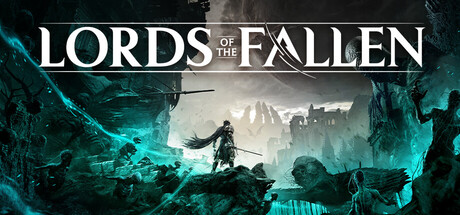
Umbral mechanic is unique highlight: The Umbral mechanic, which layers a parallel world onto the normal realm, is widely considered an excellent and unique feature. It adds depth to exploration, combat, and atmosphere, and is often cited as the game's defining innovation.
Seamless co-op enhances experience: The game features a seamless co-op mode, allowing players to enjoy the entire campaign together with shared progress, often requiring only one copy. Co-op is frequently lauded as a major highlight, making the game significantly more fun when played with friends.
Beautiful graphics and visuals: Reviewers praise the game's graphics as stunning, top-class, and visually appealing, with a dark and mysterious world. The art direction and visual effects are consistently highlighted as a standout quality.
Excellent Soulslike successor: Players consider the game a worthy successor to Dark Souls and a strong contender in the Soulslike genre. It is often compared favorably to FromSoftware titles, with some calling it the best non-FromSoftware soulslike.
Common complaints
Enemy variety is lacking: The game repeats the same few enemies from start to finish, including in the Umbral realm, leading to monotony. Bosses are also frequently reused as normal enemies, reducing their impact.
Persistent bugs and glitches: The game remains buggy even after years of patches, with frequent glitches, jank, and technical issues. Some players report the game being almost impossible to play due to bugs.
Co-op mode is broken: Co-op gameplay is plagued by constant bugs, crashes, disconnects, instability, and quest-breaking issues. Many players find co-op nearly unplayable, and some experience progress loss.
Confusing map and levels: The map design is maze-like and lacks clear guidance, causing players to get lost easily. Areas look too similar, and navigation is particularly confusing when seeking secrets.
Excessive enemy density: The game overwhelms players with too many enemies, especially in certain areas and in the Umbral realm, making navigation stressful and combat unfair. This leads to frustrating difficulty spikes.
Gameplay and performance
Seamless co-op with shared progression: Players highlight the game's cooperative mode, which supports shared progression from start to finish, including a Friend's Pass allowing one friend to join without owning the game. The co-op is described as seamless and playable through the entire campaign.
Umbral realm dual-world mechanic: A central feature is the Umbral realm, an alternate world accessed via a lantern, which introduces unique gameplay by shifting between two overlapping worlds. This mechanic affects exploration, puzzles, and enemy encounters, and is frequently mentioned as a defining element.
Soulslike combat and difficulty: The game is consistently compared to Dark Souls and Elden Ring, featuring a soulslike combat system with parry, dodge, and healing mechanics. The difficulty is considered souls-level but generally easier than hardcore souls games, making it beginner-friendly.
Difficulty settings and modifiers: The game offers multiple difficulty options, including a Veteran mode and various game modifiers like random loot and enemy density. These allow for customizable playthroughs and cater to different skill levels.
Lantern mechanic for world shifting: The lantern is the primary tool for entering the Umbral realm, providing a way to view and interact with the parallel world. It is used for exploration, finding secrets, and solving puzzles, and is integral to the game's dual-world design.
Frequent crashes and freezes: Numerous reviews mention crashes and freezes occurring regularly, sometimes multiple times per session. Crashes happen regardless of hardware, including high-end and lower-spec systems.
Poor optimization affects gameplay: Many players report that the game is poorly optimized, with performance issues impacting overall playability. Optimization problems were especially notable at launch but persist for some users.
Mixed performance on high-end PCs: Even players with high-end PCs report poor performance in specific areas, indicating optimization gaps. The game's performance can be inconsistent, with terrible stutter or lag despite strong hardware.
Launch performance issues resolved: Some players acknowledge that the game had severe performance issues at launch but believe developers have since optimized it. Over time, improvements have made the game run more smoothly, even on older hardware.
Co-op instability and crashes: Several players note that co-op mode is unstable, with crashes and lags occurring especially after extended play. The host is particularly vulnerable to crashes during later game stages.
Recommendations
Recommended for Souls fans: Many reviews recommend the game specifically to fans of Dark Souls, Elden Ring, and Bloodborne, praising it as a well-made souls-like experience.
Strong overall recommendation: Multiple reviews give a clear positive recommendation, stating the game is worth playing and highly recommended.
Buy on sale: Several reviews advise purchasing the game during a sale, noting it may not be worth full price but is a good deal when discounted.
Best soulslike outside FromSoftware: Some reviewers consider it one of the best non-FromSoftware soulslikes, making it a perfect entry point into the genre.
Co-op gameplay praised: Playing with friends is highly recommended, with several reviews highlighting the co-op experience as a major positive.
Buying context
Community fair range: $20.00 - $30.00.
Game completion: 50.0h.
Story completion: 30.0h.
Session length: 6.0h.
Endgame: 30.0h.
The game is enjoyable from the start, particularly in co-op, but becomes repetitive and tiresome after the first several hours due to enemy reuse and pacing issues, causing a drop in fun.
Friction: clunky controls; bad default keybinds; stuttering; confusing navigation; co-op connection issues.
Player profiles
Co-op Companion: Primarily co-op, often with a friend, using the friend pass; may play on any difficulty. Motivation: Playing through the game with friends and sharing the experience. Stance: sale.
Souls Purist: Solo, often on veteran mode, focusing on build optimization and boss fights. Motivation: Seeking a challenging and authentic soulslike experience comparable to FromSoftware titles. Stance: no buy.
Genre Newcomer: Solo or co-op, on normal difficulty, exploring at their own pace. Motivation: Exploring the soulslike genre in an accessible and less punishing way. Stance: buy.
Platform notes
Performance is inconsistent across hardware tiers: lower-VRAM systems often suffer from poor optimization and crashes, while even high-end systems report stuttering and stability issues. Overall, the game's optimization remains a point of contention.
Windows 12-15GB VRAM: negative. Frequent crashes, stuttering, and optimization complaints dominate, though some users report high FPS on high-end systems.
Windows 8-11GB VRAM: mixed. Mixed reports: some users achieve stable high FPS, while others face stuttering, crashes, and optimization problems.
Windows <8GB VRAM / <16GB RAM: negative. Performance is widely criticized as poorly optimized, with many users experiencing crashes, stuttering, and frame drops even on lower settings.
Steam Deck: The game is marked as Steam Deck Verified but user feedback indicates significant technical barriers: anti-cheat prevents launch for many, performance is poor with low FPS and grainy visuals, frequent crashes occur, and users must apply manual tweaks like forcing Proton and adding launch options. The experience is far from seamless and often broken.
Linux and Proton: The Linux/Proton experience for this game is mixed but generally workable with effort. The main hurdles are the kernel-level Easy Anti-Cheat, which forces many users to switch to Proton GE and can cause crashes, and a CPU core count issue that requires a specific launch option. Performance and stability reports vary, with some users experiencing frame drops or crashes while others report flawless gameplay. Overall, the game runs on Linux but requires tinkering and community workarounds to be stable.
Extra review signals
Monetization: The game employs multiple monetization tactics including a pay-to-win class, paid convenience, cosmetic microtransactions, and paywalled upgrades, resulting in a predatory monetization model.
External guides: The dominant user complaint is the game's heavy reliance on external wikis and guides, especially for questlines and NPC progression. Players feel the game provides insufficient in-game direction, forcing them to keep a wiki open at all times. Secondary issues include performance problems like crashes and FPS drops, but the core dependency on external information is the most impactful and frequent theme.
Other review notes
Frequent FromSoftware comparisons: Reviewers consistently compare the game to Dark Souls, Bloodborne, Elden Ring, and Sekiro, noting similarities in difficulty, level design, and gameplay feel. Some find it derivative, while others consider it a worthy alternative.
Improved since launch: Many reviews mention that the game had a rough launch with bugs, but subsequent patches and updates have significantly improved the experience. Players acknowledge the developer's ongoing effort to fix issues and enhance gameplay.
Frequent post-launch updates: The game has received numerous updates, including major versions 2.0 and 2.5, which have added content and fixed problems. Reviewers appreciate the continuous support and free updates.
Good value on sale: Many reviewers purchased the game at a discount and consider it a good value at the sale price. The game is often on deep sale, making it an attractive purchase.
Anticipation for sequel: Several reviews express excitement for a planned sequel, hoping it will improve upon the original. Some reviewers will buy the sequel on day one.