- Engaging hacking and detective gameplay mechanics
- Strong narrative with emotional depth and impact
- Atmospheric soundtrack enhancing immersion
- Tedious and unengaging investigation mechanics
- Poor character development and relationships
- Unsatisfying, rushed, and disjointed ending

Emotions
What players like:
Common complaints:
Gameplay feedback:
Performance notes:
Recommendations:
Other player notes:
Similar games
Blend with other games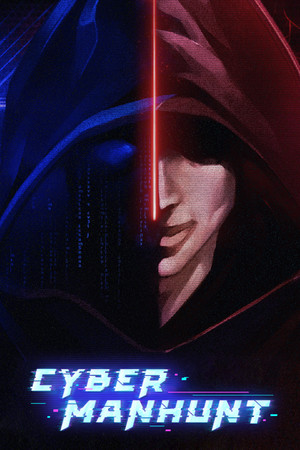 86%Cyber Manhunt
 86%Orwell: Keeping an Eye On You
 85%Kill The Shadow
 85%This Bed We Made
 85%Sherlock Holmes: The Devil's Daughter
 84%Dinocop
 84%Twelve Minutes
 84%Agent A: A puzzle in disguise
 84%Phoenix Wright: Ace Attorney Trilogy
 84%Return of the Obra Dinn
 84%Lacuna – A Sci-Fi Noir Adventure
 84%Danganronpa: Trigger Happy Havoc
Review evidence
Why players say this
Review evidence
Why players say this
What players like
Engaging Hacking & Detective Gameplay: The game excels in its unique blend of hacking mechanics and detective work, with players praising the immersive surveillance, drone control, and puzzle-solving. The split-screen interface and 'God-view' mechanics enhance realism and engagement.
Strong Narrative & Emotional Depth: The story is highly praised for its intricate plot, moral ambiguity, and emotional investment in characters. Players highlight the interconnected storylines, meaningful choices, and surprising twists that create a cinematic experience.
Atmospheric Soundtrack & Audio: The music enhances immersion, with tracks fitting the cyberpunk tone and dynamic shifts (e.g., post-climax excitement). The customizable BGM system and sound effects are frequently highlighted.
Balanced Puzzle Difficulty: Puzzles are engaging and well-integrated into the detective genre, with optional hints and a difficulty curve that avoids frustration. The safe-code and password puzzles are particularly satisfying.
Well-Written Characters & Relationships: Characters are lauded for their depth, diversity (including LGBTQ+ representation), and emotional resonance. Relationships, such as the protagonist’s bond with Jessica or the AI assistant Morris, add humor and utility to the experience.
Common complaints
Tedious and Unengaging Investigation Mechanics: Investigations are described as formulaic, with repetitive tasks like clicking highlighted objects, hacking cameras, or solving illogical puzzles. The lack of depth or tension makes the detective gameplay feel shallow.
Poor Character Development: Characters are frequently described as shallow, unlikable, or poorly written, with underdeveloped arcs and relationships. The protagonist is often criticized for being amoral, inconsistent, or unlikeable, while side characters lack depth or emotional impact.
Lack of Quality-of-Life Features: Players highlight missing features like a pause button, dialogue skip options, manual save/load functionality, and the inability to fast-forward or skip read text. These omissions frustrate replayability and accessibility.
Forced and Unnatural Puzzles: Players consistently criticize the puzzles for feeling arbitrary, unnatural, or overly simplistic. Examples include paper-based ciphers, brute-force mechanics, and puzzles that can be guessed through, reducing immersion and challenge.
Unsatisfying and Rushed Ending: The ending is widely criticized as abrupt, illogical, or emotionally unsatisfying. Players express frustration with forced character deaths, lack of closure, and plot twists that feel out of place or poorly executed.
Gameplay and performance
Narrative-driven choices with consequences: The game features a choice-based narrative with branching paths, moral decisions, and multiple endings. While some choices have limited impact, they shape character relationships and story outcomes, including hidden or alternate endings.
Puzzle variety and difficulty: Puzzles range from logic-based challenges (e.g., 4-digit codes, video analysis) to observational tasks (e.g., matching details in photos). Some puzzles are straightforward, while others require creative deduction, with optional hints available.
Surveillance and stealth mechanics: Players use drones, bug bots, and cameras to surveil areas, distract guards, or infiltrate locations. Top-down stealth elements (e.g., controlling drones to avoid detection) add tactical variety.
Simplified hacking mechanics: Hacking is often reduced to click-based interactions (e.g., ‘click to hack’), lowering the skill ceiling. While accessible, this may feel less immersive for players seeking depth.
Minimal mini-games: Occasional mini-games (e.g., sidescrollers, password puzzles) break up the main gameplay. These are infrequent and typically low-stakes, serving as brief distractions.
Resolution and performance bugs: Game-breaking bugs tied to resolution settings and performance issues like screen tearing (due to lack of vsync) are common. Some players also report freezes or loading delays.
Frequent game crashes: Players report crashes during specific actions, dialogue sequences, or when performing inputs too quickly. Mac systems are particularly affected, with some users experiencing unresponsive states post-crash.
Dialogue and UI glitches: Dialogue sequences suffer from skipped lines, out-of-order interactions, and disappearing notes. Some users report no issues, while others face unresponsive UI post-dialogue.
Platform-specific issues: Mac users experience crashes during dialogue, while Linux users (e.g., Ubuntu 22.04) report stable performance. Buzzing noises on startup are noted by some players.
Achievement and minor bugs: Some players report bugs with achievements, though these are less frequent than crashes or performance issues. A subset of users encountered no bugs at all.
Recommendations
Best value at discounted price: Many reviewers suggest the game is only worth purchasing on sale, as it may not justify full price due to repetitive gameplay or limited replayability. It is ideal for a single playthrough or casual enjoyment.
Target audience: narrative-driven fans: The game is highly recommended for players who enjoy narrative-driven, detective, and cyberpunk-themed games like *Orwell*, *Black Mirror*, and *Do Not Feed the Monkeys*. Fans of visual novels and branching storylines will find it engaging, though it may lack depth for hardcore puzzle solvers.
Lacks depth in puzzles/decision-making: While praised for its story, the game is criticized for oversimplified puzzles and shallow decision-making compared to similar titles like *Orwell* or *Beholder*. This may disappoint fans of complex gameplay.
Bugs and technical frustrations: The game is described as playable but plagued by bugs and missing features, which detract from the overall experience, particularly for Mac users.
Demo recommended before purchase: The prologue or demo is highlighted as a useful litmus test to determine if the game’s style and mechanics align with the player’s preferences. This helps avoid dissatisfaction after full purchase.
Other review notes
Unrealistic setting and slang: Players criticize the game's fictionalized Malta for unrealistic demographics and overuse of slang, particularly profanity like 'b!tch.' While some argue it fits the corrupt world context, others find it excessive or distracting.
Localization and translation critiques: A professional translator critiques the localization quality, while others note the title translation feels overly stylized, potentially losing meaning.
Plot ambiguity and cultural reception: The game's plot is noted for its ambiguities and lack of discussion in certain communities (e.g., Chinese players). Some reviewers compare its structure to 'six degrees of separation' but find key details left unresolved.
Achievements require multiple playthroughs: Unlocking all achievements demands 2-3 playthroughs, which frustrates players. Collectibles are also criticized for being unintuitive, with no prompts for hidden items.
Useless mechanics and irritating audio: The apartment view is deemed useless, and repetitive dog noises are described as annoying. These design choices detract from immersion for some players.