- Captivating and emotionally resonant story.
- Visually stunning and immersive world.
- Excellent and atmospheric soundtrack.
- Clunky controls and camera.
- Uninspired and easy puzzles.
- Slow pace, unskippable cutscenes.
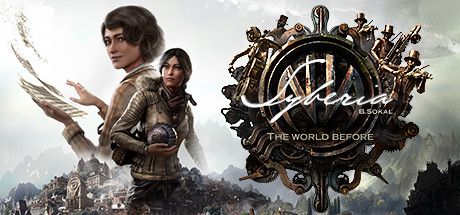
What players like:
Common complaints:
Gameplay feedback:
Performance notes:
Recommendations:
Other player notes:
Similar games
Blend with other games





Review evidence
Why players say this
Review evidence
Why players say this
What players like
Captivating and emotionally resonant story: The game features a captivating, well-written, and emotionally resonant story with engaging characters. Reviewers praise the narrative for its depth, surprises, and ability to evoke strong emotions, often drawing comparisons to film or literature. The story explores themes of love, loss, identity, and war, creating a lasting impression on players.
Visually stunning and immersive world: The game features stunning and detailed graphics, beautiful locations, and impressive art direction, creating a visually appealing and immersive experience. Reviewers frequently describe the visuals as breathtaking, gorgeous, and a significant improvement over previous installments. The attention to detail in the environments and character models enhances the overall atmosphere and encourages exploration.
Excellent and atmospheric soundtrack: The game features an excellent and atmospheric soundtrack that enhances the overall experience. The music complements the visuals and narrative, creating a deeper sense of immersion and emotional connection. Composer Inon Zur's work is frequently highlighted for its quality and impact.
Return to series' roots: This installment is a return to form for the series, with significant improvements in graphics, gameplay, and controls compared to previous entries, particularly Syberia 3. The game successfully recaptures the atmosphere and charm of the original Syberia games, appealing to long-time fans and newcomers alike.
Exploration of Kate Walker's character: The game expands on Kate Walker's character, providing a deeper understanding of her motivations and past. Reviewers appreciate the opportunity to reconnect with Kate and experience her journey, with improved character design and voice acting enhancing her presence in the game.
Common complaints
Clunky controls and camera: Many reviewers found the controls and camera angles clunky, awkward, and unresponsive, leading to frustration and difficulty navigating the environment and interacting with objects. The mouse-click movement system, fixed camera angles, and frequent camera switches were specifically criticized. These issues made puzzle-solving more difficult and detracted from the overall gameplay experience.
Uninspired and easy puzzles: Reviewers frequently mentioned that the puzzles were too easy, simplistic, and uninspired, lacking the challenge and depth expected from the adventure genre. Some puzzles felt like filler, while others were repetitive or relied on trial and error. This lack of engaging puzzles made the gameplay feel tedious and unsatisfying.
Slow pace, unskippable cutscenes: A common complaint was the game's slow pace, with long walking sequences, unskippable cutscenes, and drawn-out dialogues. This made the game feel unnecessarily long and tedious, especially on repeat playthroughs or when trying to complete achievements. The inability to skip these sequences frustrated players and disrupted the game's flow.
Story over gameplay focus: Several reviewers felt that the game prioritized storytelling over gameplay, resulting in a lack of player agency and meaningful interaction. The game felt more like a movie or visual novel than an adventure game, with minimal puzzle-solving and a focus on watching cutscenes and reading dialogues. This shift away from traditional gameplay elements disappointed players seeking a more engaging experience.
Technical and graphical issues: Reviewers noted that the game suffered from various technical issues, including optimization problems, frame rate drops, bugs, and glitches. The graphics and animations were also criticized for being outdated and lacking polish, with poor facial animations and stiff character movements. These technical shortcomings detracted from the overall visual experience and immersion.
Gameplay and performance
Narrative-focused, simple puzzles: The game blends point-and-click adventure mechanics with a strong emphasis on narrative, exploration, and relatively simple puzzles. It incorporates elements of visual novels and interactive movies, drawing comparisons to games like "Life is Strange" and "Heavy Rain". The puzzles are generally manageable and serve to advance the story rather than present significant challenges.
Dual narrative, time-switching mechanic: The game features a dual narrative, switching between two playable characters, Kate Walker in 2005 and Dana Roze in 1937. This time-switching mechanic is integrated into the gameplay and puzzle-solving, enriching the plot and character development as players explore the same locations in different eras.
Puzzles are generally easy: Many reviewers found the puzzles to be relatively easy and straightforward, sometimes requiring simple clicking or observation rather than complex problem-solving. While some puzzles are clever, the overall difficulty is low, making the game accessible to a wider audience but potentially less challenging for experienced adventure game players.
Steampunk setting, mechanical puzzles: The game incorporates steampunk elements, featuring automatons, clockwork mechanisms, and industrial aesthetics. Many puzzles involve operating these mechanical devices, requiring players to manipulate switches, gears, and other components within the game's unique world.
Side quests and hint system: The game includes optional side quests and a hint system to guide players. These features provide additional context to the world and assist players who may find the puzzles challenging, enhancing the overall accessibility of the game.
Inconsistent, unoptimized performance on PC: Many players report inconsistent performance, ranging from smooth gameplay to significant frame rate drops, lag spikes, and overheating, even on recommended or high-end hardware. Some attribute this to optimization issues within the Unity engine, while others note erratic GPU usage. Some users reported that specifying CPU topology helped.
Improved graphics and artistic design: Many reviewers noted improved graphics and optimization compared to previous installments, while others praised the high-quality graphics, music, and overall artistic design. Some found the game visually impressive for a Unity engine title, while others experienced no significant technical issues.
Freezes during cutscenes/stalls: Some players experienced freezes during specific cutscenes or stalls indicated by a frozen loading icon. These issues could interrupt gameplay and detract from the overall experience.
Minor bugs encountered: Several reviewers encountered minor bugs, such as graphics not appearing or characters being unable to interact with objects. These bugs were generally infrequent and did not significantly impact the overall experience.
Flawed NPC character models: Some reviewers noted flawed NPC character models and other modeling issues. These graphical imperfections detracted from the overall visual quality for some players.
Recommendations
Highly recommended adventure game: Many reviewers highly recommend the game, especially to fans of the series and genre. They praise it as a worthy addition, a return to form, and potentially the best installment. Some suggest it could appeal to newcomers as well.
Engaging story and atmosphere: Reviewers highlight the game's engaging story, emotional depth, and beautiful atmosphere as key strengths. Many found the experience memorable, touching, and immersive, outweighing any minor flaws. Some describe it as a cinematic or novel-like experience.
Prior games provide context: Some reviewers recommend playing previous games to better understand the story and characters. Others suggest that while beneficial, prior knowledge isn't essential to enjoy the game. Some suggest newcomers start with earlier installments to appreciate the series' evolution.
Wait for a sale: Some reviewers suggest waiting for a sale before purchasing the game due to its price or perceived value. This indicates that the game may not be worth the full price for some players. This could be due to the length of the game, technical issues, or lack of replayability.
Relaxed, slow-paced experience: The game is recommended for players who enjoy a slow-paced, relaxed experience. It is suitable for those who don't like tension or complex operations. This suggests that the game is more focused on story and atmosphere than challenging gameplay.
Other review notes
Accessible to new players: The game contains references to previous installments, but it is designed to be accessible to newcomers. It includes plot summaries and nostalgic elements for returning players, while not requiring prior knowledge to understand the story.
Tribute to Benoît Sokal: Benoît Sokal, the creator of the Syberia series, passed away during the game's development, and the game is dedicated to his memory. This casts uncertainty on the series' future, though some hope his son will continue the story.
Dual narratives across time: The game tells two interconnected stories across different time periods, following Kate Walker and Dana Roze. These dual narratives explore themes of time, memory, and the impact of historical events, such as World War II, on individual lives.
Open ending hints sequel: The game's ending is open, suggesting the possibility of a sequel and a continuation of Kate Walker's story. Some consider it a conclusion to the series, while others see it as leaving room for future installments.
Steampunk world with automatons: The game's world features a blend of reality and fiction, incorporating steampunk elements, automatons, and the inventions of Hans Voralberg. This creates a unique and intriguing setting that distinguishes the Syberia series.