- Beautiful visuals and immersive presentation
- Top-tier factory building gameplay
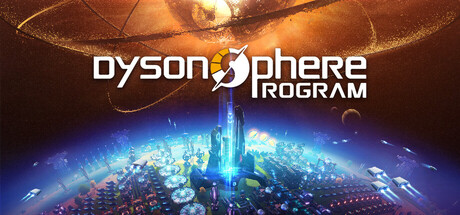
- Dyson Sphere rewarding megastructure goal
- Highly addictive and enjoyable experience
- Prolonged early access development period
- Slow grindy tech tree progression
Emotions
Archetypes
Hardware
What players like:
Common complaints:
Gameplay feedback:
Performance notes:
Recommendations:
Other player notes:
Similar games
Blend with other games






Review evidence
Why players say this
Review evidence
Why players say this
Steam review verdict
Beautiful visuals and top-tier factory building make the rewarding Dyson Sphere goal addictive, though slow, grindy tech progression and a long early access period temper the experience.
What players like
Beautiful graphics and visuals: Visuals are widely praised as beautiful, stellar, and jaw-dropping. Reviewers repeatedly highlight the graphics as a major strength.
Overall positive player sentiment: Reviewers broadly express strong affection for the game, calling it awesome and absolutely fantastic. Most highly recommend it to others.
Top-tier factory builder: Fans of factory builders consider this one of the best in the genre, on par with or better than established titles. It combines the best parts of other great factory games and is highly recommended for genre fans.
Fun and enjoyable gameplay: Players consistently describe the core gameplay as fun, enjoyable, and solid. Many call it extremely fun to play, with some noting it is relaxing.
Dyson Sphere is rewarding goal: Building up to a Dyson sphere is exciting and fascinating, and seeing it take shape is deeply satisfying. It serves as a compelling long-term objective.
Common complaints
Prolonged early access period: The game has remained in early access well past its announced one-year plan, with some noting it has been five years with only minor patch-level updates. This has eroded trust in the development timeline.
Slow and grindy tech tree: Players complain that progressing through the tech tree is time-consuming and feels like a boring grind, with many basic features locked behind long research times. This creates a slow and tedious early-to-mid game experience.
No native multiplayer mode: Multiple players report that the game lacks any built-in multiplayer or co-op functionality, and some note there are no plans to add it. This absence also makes single-player feel lonely and repetitive.
Lack of cloud saves: The absence of cloud save support means players cannot easily switch between devices, risking lost progress and forcing manual save transfers. This is a significant inconvenience for multi-device users.
Clunky and unintuitive interface: Reviewers frequently describe the UI as awkward, clunky, and unfriendly, with controls that are hard to learn. The interface design detracts from the overall experience.
Gameplay and performance
Dyson sphere megastructure goal: A central endgame objective is constructing Dyson swarms and spheres around stars using solar sails and structural components. Players describe this as the ultimate goal of the game.
Space factory building genre: The game is a factory-building game set in space, combining automation with space exploration and technology progression. It is often compared to Factorio but with a planetary and interstellar scope.
Interplanetary travel and exploration: Players can manually fly between planets and stars, escaping gravity and landing on gas giants and rocky worlds. Interstellar travel unlocks access to rare resources and new systems.
Interstellar logistics network automation: Players build interplanetary and interstellar logistics systems with stations, transport ships, drones, and trade routes to automate resource movement across star systems. Optimizing these routes is a core activity.
Production line automation core: The game is fundamentally an automation game where players gather resources and build conveyor-based production lines with sorters and manufacturing stations. Managing and optimizing production chains is the main loop.
Good optimization for large factories: Optimization is frequently praised, allowing huge factories and Dyson spheres to run well even on mid-range or older hardware. Several reviewers highlight that performance remains stable at crazy factory scales.
Late-game performance degrades significantly: As factories and planets fill up, frame rate and logic update speed drop sharply, sometimes feeling like slow motion. This issue appears even on high-end hardware.
Strong overall stability and smoothness: Many reviewers report the game runs without crashes, bugs, or save corruption, even during long sessions. Stability is consistently praised, with only occasional stutters or rare crashes noted.
Crashes and freezes on some systems: A subset of players experience crashes on launch, freezes on the Unity loading screen, or random black screens. These issues can make the game unplayable for affected users.
Multithreading update improves performance: Recent multithreading optimizations have greatly improved performance, preventing the late-game slowdown that some reviewers previously experienced. CPU utilization across threads is now more effective.
Recommendations
Must-play for automation fans: A large number of reviewers strongly recommend the game to anyone who enjoys automation games, calling it a must-play and one of the best in the genre. This is the most frequent and emphatic recommendation theme.
Ideal for Factorio and Satisfactory fans: Reviewers repeatedly state that players who enjoyed Factorio, Satisfactory, or similar factory builders will love this game. It is often described as a different take on the Factorio-style automation experience.
Great entry point for factory genre: Many reviews highlight the game as an excellent first factory game and a strong introduction for newcomers to the genre. It is recommended for anyone who likes factory games and wants an accessible start.
Overall highly recommended by reviewers: A general sentiment of strong recommendation is expressed across multiple clusters, with reviewers saying the game is absolutely recommended, very recommended, and worth playing. This reflects broad satisfaction.
Worth the price and purchase: Reviewers frequently mention that the game is worth buying, worth the price, and worth every penny. Some simply say buy it, indicating strong value for money.
Buying context
Community fair range: $15.00 - $20.00.
Game completion: 100.0h.
Session length: 7.0h.
Endgame: 500.0h.
Dyson Sphere Program often starts with a steep, tutorial-light and belt-heavy learning phase, but many players report it clicks after they get through the first few hours and learn logistics or blueprints. Some players find the early game immediately forgiving or never get past the friction.
Reported time to anchor: 3h.
Friction: Front-loaded learning curve that punishes sloppy thinking; Inadequate or confusing tutorial; some players give up before understanding it; Early-game UI and controls feel unintuitive or work against the player; Spaghetti conveyor belts, canceled belt clicks, and lack-item warnings interrupt building flow; Early-game power generation for space flight can leave players stuck until fuel rods; Early game can feel like a slog, especially with landfill and a waterlogged start.
Player profiles
Automation Optimizer: Builds and redesigns large multi-planet factories, uses blueprints and mods, and chases efficiency and scale. Motivation: Optimizing production chains, scaling logistics, and achieving large engineering goals. Stance: buy.
Curious Factory Newcomer: Learns with guides, builds simple or messy factories, and progresses gradually. Motivation: Learning an accessible automation game and exploring sci-fi research at their own pace. Stance: buy.
Chill Sci-Fi Dreamer: Plays casually for long sessions, enjoys space vistas and megastructure construction without rush. Motivation: Relaxing escapism and the aesthetic wonder of building cosmic megastructures. Stance: buy.
Platform notes
Across the largest Windows cohorts, performance is generally positive: the game is praised for optimization and runs acceptably on low-end hardware. The main exception is a mixed cohort around <8GB VRAM / 16-31GB RAM, where freezes and black screens appear alongside positive reports, with recurring caveats about CPU load and late-game frame drops.
Windows <8GB VRAM / <16GB RAM: positive. Mostly positive; low-end systems can run the game, but users report CPU-heavy load and frame drops at high late-game production.
Windows <8GB VRAM / 16-31GB RAM: mixed. Mixed; several users report smooth performance and strong optimization, while others cite freezes, black screens, and optimization problems.
Windows 8-11GB VRAM: positive. Mostly positive; performance is often smooth with high FPS in sparse areas and playable dense scenes, though a few users report system freezes.
Steam Deck: The review set shows a mixed but strongly negative Steam Deck picture: users report unreadable text and broken UI scaling, no controller support, frequent crashes and launch/black-screen failures, and severe performance drops. Cloud saves are absent and Proton/Wayland compatibility adds friction. Positive Deck and Linux reports exist, but the dominant technical issues meet the criteria for a broken experience.
Linux and Proton: Linux evidence is mixed. Several users report Linux-specific problems including mid-play freezes, slideshow-level performance that resists tinkering, and a middle-mouse input quirk under Proton Experimental on Wayland. However, at least one user reports the game runs well on Linux with no issues, and another tested it on Linux. The result is a workable but inconsistent Linux/Proton experience with meaningful friction for some users rather than a broken platform.
Extra review signals
Monetization: The reviews consistently describe Dyson Sphere Program as a one-time purchase with no in-game purchases and no paid DLC required. Several users praise free large updates, while a few ask for paid DLC or joke about adding gacha top-ups; these are wishes for future monetization, not evidence of existing monetization. One review references industry DLC practices in other games, which is outside this game's monetization. No evidence supports pay-to-win, paid gacha, loot boxes, a cash shop, or aggressive FOMO.
External guides: The feedback is dominated by external wiki dependency: players keep dsp-wiki.com open, Google mechanics, and use blueprints, spreadsheets, and production-chain planning to play normally. No review explicitly cites farming, drop rates, loot tables, or repeatable resource grinding, so Tier 1 does not apply. The highest matching strict category is Tier 2 because blueprint, spreadsheet, recipe, and crafting-planning signals are present.
Other review notes
Stands with top factory games: Reviewers frequently compare the game to Factorio, Satisfactory, and Dyson Sphere Program, often placing it alongside them as one of the leading factory-building titles. Many say it scratches the same automation itch or is even preferred over those games.
Early Access but feels complete: The game is still in Early Access after roughly five years, but many reviewers say it feels polished and complete, sometimes more so than fully released games. Development is described as slow but active and ongoing.
Streamlined and less punishing than Factorio: Compared to Factorio, the game is described as more streamlined, faster, simpler in some areas, and less punishing or stressful. Reviewers appreciate that it retains complexity without the exhausting urgency of Factorio.
Hundreds of hours of playtime: A single playthrough can take dozens to hundreds of hours, and the game offers extremely long playtime. Reviewers highlight the large time investment required and the many hours of gameplay available.
Mixed comparisons to Factorio and Satisfactory: Some reviewers say the game combines the worst parts of Factorio and Satisfactory or is only a little like Factorio and not at all like Satisfactory, while others say it clicked for them in a way those games did not. Opinions vary widely on how similar it truly is.