- Fun and engaging gameplay
- Developer actively updates game
- Historically accurate gameplay
- AI behavior is inconsistent
- Tanks get stuck on terrain
- Game has jank and bugs
Emotions
Archetypes
Hardware
What players like:
Common complaints:
Gameplay feedback:
Performance notes:
Recommendations:
Other player notes:
Similar games
Blend with other games 87%Men of War: Assault Squad 2
 87%Easy Red
 86%Total Tank Simulator
 86%Rising Front
 86%Enlisted
 86%Call to Arms - Gates of Hell: Ostfront
 85%Steel Division 2
 85%Panzer War : Definitive Edition
 85%Panzer Knights
 85%Steel Fury: Kharkov 1942
 85%Men of War II
 84%Red Orchestra 2: Heroes of Stalingrad with Rising Storm
Review evidence
Why players say this
Review evidence
Why players say this
Steam review verdict
Fun, historically accurate gameplay with active updates, but inconsistent AI, tanks getting stuck on terrain, and general jank and bugs hold it back.
What players like
Game is fun and engaging: Players consistently describe the game as fun, addictive, and engaging, with many noting it is easy to pick up and play. The gameplay is praised as amazing and enjoyable, making it a great experience for passing time.
Developer actively updates game: The developer is consistently praised for diligently updating the game, adding new content, and fixing bugs. This ongoing support keeps the game fresh and shows a strong commitment to the player base.
Historically accurate gameplay: Players highlight the game's historical accuracy, including detailed weapons, vehicles, and battle recreations. This focus on authenticity allows players to learn history while enjoying the game, which is a major positive.
Wide variety of vehicles: The game features a large selection of vehicles, including tanks, planes, transports, and more, across various countries. This diversity adds depth and replayability, with many players enjoying the different options available.
No pay-to-win mechanics: The game has no pay-to-win or pay-to-fun mechanics, with no microtransactions or battle pass. This fair pricing model is highly appreciated, as it maintains balance and a friendly experience for all players.
Common complaints
AI behavior is inconsistent: AI allies and enemies often behave erratically, making poor decisions, failing to react appropriately, and sometimes ignoring obvious threats. This inconsistency undermines tactical gameplay and player trust in the AI.
Tanks get stuck on terrain: Tanks frequently become permanently stuck on small rocks, tree stumps, tents, and other minor obstacles, rendering them inoperable. This is a widespread and frustrating issue that severely hampers gameplay.
Game has jank and bugs: The game suffers from various minor bugs, janky animations, and general lack of polish, which can interrupt gameplay and contribute to a rough feel. These issues are widespread but not always game-breaking.
Graphics are dated: Many players note that the graphics are not up to modern standards, appearing cheap, dated, or lacking in polish. While not game-breaking, this detracts from the overall visual experience.
Maps are unbalanced: Several maps are considered heavily unbalanced, often giving one side a significant advantage, especially in multiplayer or when defending. This leads to frustrating and one-sided matches.
Gameplay and performance
WW2 sandbox shooter: The game is consistently described as a World War II shooter with sandbox elements, offering a semi-realistic, arcade-like experience reminiscent of 2000s FPS games. It features a variety of campaigns and missions across different fronts.
Single-player and offline modes: Players highlight the availability of a single-player campaign and offline play, often with bots, making the game suitable for solo play. This is a key feature for those who prefer not to engage in multiplayer.
AI-controlled infantry and vehicles: The game features AI-controlled soldiers, tanks, and anti-aircraft units, simulating large-scale battles. This AI-driven combat is a core element, providing dynamic and immersive battlefield experiences.
Large-scale battles: The game delivers massive battles with many bots and multiplayer support up to 10v10, creating a large-scale battlefield experience akin to Battlefield. This scale is a defining feature for many players.
Realistic simulation elements: The game offers a realistic simulation of the battlefield, with faithful weapon realism, sound effects, and tweakable realism settings. It strikes a balance between arcade and simulation, appealing to a wide range of players.
Excellent optimization on low-end hardware: Multiple reviewers highlight that the game runs smoothly on low-spec PCs, integrated graphics, and even outdated systems. Specific mentions include running on a GTX 1050 Ti, AMD Ryzen 3200g without a GPU, and a Huawei computer at 60 FPS.
Runs well on Mac and Linux: Users report smooth performance on MacBook Pro, Mac mini M1, and Linux with high graphics settings. This indicates broad platform compatibility and good optimization across operating systems.
Occasional performance issues: Some users experience stuttering on HDDs, frame drops, and occasional crashes. These issues are less frequent but indicate areas for improvement in stability and storage optimization.
Recommendations
Recommended for WWII enthusiasts: Many reviewers specifically recommend the game to fans of World War II, citing its historical setting and appeal. This is the most common recommendation theme across clusters.
Worth the price: Reviewers frequently state the game is worth its cost, even at full price, and offers good value. This is a strong positive signal for purchase decisions.
Buying context
Community fair range: $5.00 - $10.00.
Game completion: 100.0h.
Story completion: 60.0h.
Session length: 0.8h.
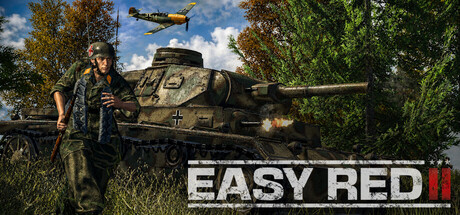
Easy Red 2 has a steep initial learning curve that frustrates for the first few hours, but once the controls and mechanics click, it becomes satisfying and addictive. However, repetitive AI and mission design can lead to boredom after 10-30 minutes, and playing with friends significantly improves the experience.
Reported time to anchor: 2h 30m.
Friction: steep learning curve; many mechanics and controls to learn; repetitive AI behavior; repetitive mission design; unwinnable missions on certain sides; playing alone can get repetitive.
Player profiles
Solo PvE Casual: Solo or co-op with bots, adjusting difficulty settings, using mods, playing at own pace. Motivation: Relaxed, accessible WWII combat without competitive pressure. Stance: buy.
WWII History Enthusiast: Exploring campaigns, appreciating details, using historical loadouts, playing solo or co-op. Motivation: Historical immersion and coverage of obscure WWII battles. Stance: sale.
Competitive Multiplayer Veteran: Prefers PvP, analyzes mechanics, may try solo but finds it lacking. Motivation: Seeking competitive PvP, but disappointed by casual focus. Stance: no buy.
Platform notes
Across all hardware cohorts, the game generally runs well, with most users reporting smooth performance. A notable minority on mid-range VRAM (12-15GB) report crashes and optimization issues, but overall the game is positively received.
Windows <8GB VRAM / <16GB RAM: positive. Most users report smooth performance even on low-end hardware, with only a few isolated crash and low-FPS reports.
Windows <8GB VRAM / 16-31GB RAM: positive. Overwhelmingly positive performance reports, with stable FPS and no major issues mentioned.
Windows 12-15GB VRAM: positive. Mostly positive, but a notable minority report consistent crashes and poor optimization on higher-end systems.
Steam Deck: Easy Red 2 runs well on Steam Deck for many users, with positive reports of performance and battery life. However, significant control issues and stability problems (crashes) are reported, and some users must tweak Proton settings to achieve a stable experience. The game is playable but not seamless out of the box.
Linux and Proton: The game demonstrates strong Linux compatibility through both a native port and Proton. Most users report flawless or smooth performance with no tinkering. A minority encounter minor issues such as native version crashes, shadow glitches, or optimization lags, but these are easily resolved with Proton GE or are non-blocking. Overall, Linux support is solid with only minor tweaks needed.
Extra review signals
Monetization: The user reviews consistently describe the game as a one-time purchase with optional paid DLC campaigns. There is no evidence of microtransactions, pay-to-win, loot boxes, or other predatory monetization. The DLC is considered fairly priced and adds substantial content. The game is praised for being a non-predatory alternative to free-to-play shooters.
Other review notes
DLCs enhance the experience: Many reviewers note that the game has substantial DLCs that add significant content and are worth the price. The DLCs are seen as necessary for the full experience but are not excessive.
Comparable to Battlefield 1942: The game is frequently compared to Battlefield 1942, often described as a modernized or superior version. Reviewers appreciate the nostalgic feel and improved mechanics.
Cheap indie game: The game is a budget-friendly indie title that offers great value for its price. Reviewers note that it outclasses many AAA titles despite its low cost.
Active modding community: The game has a large and active modding community, with a generous modding policy and support for custom content. This extends the game's longevity and replayability.