- Hardcore brain-teasing puzzle challenge
- Standout Zachtronics title with optimization
- Confusing chemistry mechanics frustrate players
- Weak or nonexistent story
- Inferior to previous Zachtronics games
- Molecule synthesis puzzle game
Emotions
Archetypes
What players like:
Common complaints:
Gameplay feedback:
Performance notes:
Recommendations:
Other player notes:
Similar games
Blend with other games




Review evidence
Why players say this
Review evidence
Why players say this
Steam review verdict
This hardcore molecule-synthesis puzzler offers standout optimization, but confusing chemistry, a weak story, and lesser polish make it inferior to other Zachtronics games.
What players like
Hardcore brain-teasing puzzle challenge: Players praise the game for its difficult, brain-breaking puzzles that require deep thought and appeal to hardcore puzzle enthusiasts. The challenge is consistently highlighted as a core strength.
Standout Zachtronics title: Many players consider this one of the best Zachtronics games, noting it fills the void and is fun with high polish. It is especially recommended for those with experience in other Zachtronics titles.
Satisfying solution optimization loop: Optimizing solutions is highly engaging, with time flying by as players refine their designs. The process is fun and rewarding, adding depth to the puzzle experience.
Accessible entry to Zachtronics: This is one of the more mechanically accessible Zachtronics games, easy to start with no dozens of pages of manual. It is fairly accessible for those who haven't played Zachtronics games before.
Familiar mechanics, Opus Magnum style: The game plays similarly to Opus Magnum with sliding atoms and is comparable to SpaceChem. It feels like a hybrid of SpaceChem and Opus Magnum, leaning more toward the latter.
Common complaints
Confusing chemistry mechanics: The game's chemistry rules are often unclear, unpredictable, and sometimes scientifically inaccurate, leading to frustration. Specific issues include bond priority, isomerism, and chirality errors.
Weak or nonexistent story: Many reviewers criticize the story as poor, minimal, or completely absent, not adding to the experience. It is a common complaint that the narrative is underdeveloped and unsatisfying.
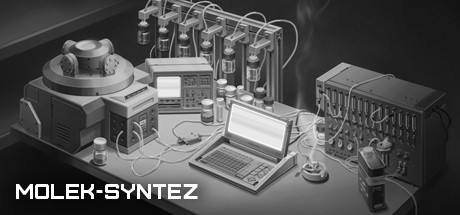
Minimalist presentation and graphics: The game's aesthetic is extremely minimalist, often described as barebones, drab, and lacking the visual appeal of previous Zachtronics games like Opus Magnum. Some find it hard on the eyes.
Inferior to previous Zachtronics games: Reviewers frequently compare it unfavorably to Opus Magnum, SpaceChem, and others, stating it is worse, derivative, or a step back in mechanics, story, and aesthetics.
Lack of polish and depth: Compared to previous Zachtronics titles, this game feels less polished, shorter, and not up to the studio's usual standards. Many find it a step back in quality and depth.
Gameplay and performance
Molecule synthesis puzzle game: The core gameplay involves solving puzzles by constructing molecules, using real chemistry synthesis mechanics. Players place precursors and assemble compounds in a puzzle format based on organic chemistry.
Solitaire minigame included: The game includes a solitaire minigame, often a variant or twist on traditional solitaire. This minigame is a built-in feature and sometimes has associated achievements.
Solution optimization focus: Puzzles have solutions that can be optimized, with players aiming for more efficient solutions. Optimization is optional, allowing simpler solutions to complete puzzles, but leaderboards track efficiency metrics.
Zachtronics style puzzle game: The game is a Zachtronics puzzle game, sharing characteristics with titles like Opus Magnum and SpaceChem. It involves placing and manipulating inputs to create specified outputs, often with programmable mechanics.
Similar to Opus Magnum: The game features a minimalist puzzle system with a symbol instruction system similar to Opus Magnum. It uses a limited puzzle field and alchemy-style mechanics reminiscent of Opus Magnum.
Light and stable performance: Players report that the game runs smoothly and is lightweight on system resources. This positive feedback highlights good optimization.
Recommendations
Play Opus Magnum instead: Many reviewers recommend playing Opus Magnum instead of this game, especially for those new to Zachtronics. Opus Magnum is seen as a better entry point with a more polished experience.
Good puzzle game overall: Despite reservations, many acknowledge that it is a good puzzle game. It offers a solid puzzle experience for fans of the genre.
Zachtronics fans will enjoy: Multiple clusters indicate that fans of Zachtronics games are likely to enjoy this game. They recommend it to those familiar with the developer's style.
Try other Zachtronics first: Reviewers often recommend trying other Zachtronics games before this one. Games like SpaceChem, TIS-100, or Shenzhen I/O are suggested as alternatives.
Challenging hardcore puzzles: The game is recommended for players who enjoy difficult, brain-teasing puzzles. It offers a hardcore puzzle experience that challenges the mind.
Buying context
Game completion: 15.0h.
Story completion: 10.0h.
Session length: 2.0h.
Endgame: 5.0h.
Molek-Syntez generally does not reach a fun state for reporting players; a lack of tutorial forces trial-and-error, and early puzzles feel tedious while later play becomes repetitive, with enjoyment mainly contingent on prior Zachtronics experience.
Friction: No in-depth tutorial or manual, leaving rules and hidden order of operations to be discovered by trial-and-error; Early puzzles feel unchallenging and tedious to complete; Puzzle construction becomes repetitive as molecules grow more complex; Difficulty ramps up sharply toward the final levels; Out-of-place solitaire minigame and its grindy achievement.
Unlock drivers: Prior experience with Zachtronics titles makes the mechanics familiar and the gameplay addictive enough.
Player profiles
Zachtronics Veteran Devotee: Plays every Zachtronics release, evaluates mechanics against earlier titles, and recommends mainly to fans who have already exhausted the catalog. Motivation: To keep up with Zachtronics' puzzle formula and compare each new entry against the developer's back catalog. Stance: deep sale.
Optimization-Focused Puzzle Engineer: Treats puzzles like programming problems, iterates on inefficient first solutions, and chases score-metric improvements. Motivation: To solve brain-bending puzzles and continually improve solutions for better efficiency scores. Stance: buy.
Cautious Newcomer / Casual Puzzle Player: Plays the main story at a relaxed pace, avoids bonus and leaderboard content, and benefits from clear tutorials or a gentler entry point. Motivation: To enjoy accessible puzzle solving and finish the main campaign without the pressure of hardcore optimization or competition. Stance: no buy.
Other review notes
Frequent Opus Magnum comparisons: Many reviewers compare the game to Opus Magnum, often unfavorably, citing it as a less polished or shallower version. Some describe it as a crossover between Opus Magnum and SpaceChem.
Typical Zachtronics formula: Reviewers note that the game follows the standard Zachtronics puzzle formula and shares similarities with other titles like SpaceChem and TIS-100. It is often described as a Zachtronics game with the usual quality.
Less content and depth: Compared to other Zachtronics games, this title is seen as more barebones, with less story, shorter length, and worse graphics and sound. Some reviewers consider it the least enjoyable in the lineup.
Chemistry theme with real molecules: The game involves synthesizing real organic molecules, though the process is fictional. Some reviewers note inaccuracies in isomerism but appreciate the chemical accuracy.
Cross between TIS-100 and Opus Magnum: Reviewers frequently describe the game as a blend of TIS-100's minimalist style and Opus Magnum's puzzle mechanics, with some noting it also incorporates elements from SpaceChem.