- Engaging, fun assembly line puzzles
- Authentic Zachtronics experience
- Puzzles lack challenge and depth
- Insufficient game content and length
- Falls short of previous titles
- Frustrating, luck-based mini-games
Emotions
What players like:
Common complaints:
Gameplay feedback:
Performance notes:
Recommendations:
Other player notes:
Similar games
Blend with other games


Review evidence
Why players say this
Review evidence
Why players say this
What players like
Engaging and Fun Puzzles: Players consistently praise the game's puzzles as fun, interesting, and innovative. The design allows for a satisfying challenge curve, making it enjoyable for both new and experienced puzzle solvers.
Authentic Zachtronics Experience: The game is recognized as a high-quality 'Zachtronics-like' title, retaining the core feel and challenge of previous Zachtronics games while being more approachable for newcomers. It successfully captures the essence of the genre.
Charming Story and Characters: The story, dialogue, and characters are highlighted as a major strength, being charming, well-written, and humorous. The voice acting also contributes positively to the overall narrative experience.
Deep Optimization and Replayability: The game's simple core mechanics offer significant depth for optimization, encouraging players to refine their solutions for efficiency. This aspect provides strong replayability and a sense of accomplishment.
High Quality and Satisfying: The game meets or exceeds player expectations for polish, quality, and overall satisfaction. It effectively 'scratches the itch' for fans of this specific genre of automation and puzzle games.
Common complaints
Puzzles lack challenge and depth: A significant portion of the feedback indicates that the game's puzzles are too simple, lack challenge, and do not offer the depth or complexity expected from an automation game, especially for veterans of the genre. This leads to a lack of optimization drive and a feeling of repetitiveness.
Insufficient game content and length: Many players feel the game is too short, with insufficient content and too few levels, especially for the price. They desire more puzzles and post-storyline content, suggesting the game feels incomplete or rushed.
Falls short of previous titles: Players frequently compare the game unfavorably to previous Zachtronics titles, especially Opus Magnum. They feel it lacks the polish, depth, complexity, charm, and overall quality of its predecessors.
Frustrating, luck-based mini-games: The mini-games, particularly the Pachinko Solitaire, are heavily criticized for being too random, luck-based, and frustrating. This reliance on RNG detracts from the player experience and makes 100% completion tedious.
Weak and skippable story: The game's story is widely described as bland, unimmersive, and irrelevant, with inconsequential dialogue. Many players wish for an option to skip story segments, viewing them as an annoying waste of time.
Gameplay and performance
Automated Assembly Line Puzzles: The core gameplay involves designing and programming automated assembly lines to produce various products. Players use tools like rotation, pushing, cutting, and welding to manipulate parts according to blueprints, with increasing complexity in later stages. The game focuses on a single product per puzzle, simplifying optimization.
Pachinko Solitaire Minigame: The game includes a unique 'Pachinko Solitaire' minigame where players launch balls to clear cards based on number sequences. While achievements are tied to it, players can progress without mastering it, and it can be replayed. Some players feel it relies heavily on luck.
Accessible Zach-like Puzzle: The game is a 'Zach-like' puzzle game, similar to Opus Magnum and Shenzhen I/O, focusing on learning a unique programming/design language. It is generally considered one of the easier and shorter Zach-like titles, especially if not focusing on optimization.
Optimization and Scoring: Optimization is a key challenge, with players refining solutions based on metrics like tools used, production time, area, and cost. The game provides histograms and online leaderboards to compare scores, though resources are effectively infinite if optimization isn't a priority.
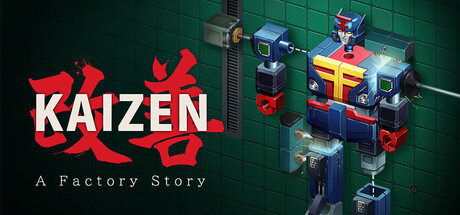
Story and Setting: The game features a story set in 1980s Japan, where the American protagonist, David, designs automated production lines. The narrative is delivered through text-based dialogue and well-voiced cutscenes with full-motion animations.
Frequent game crashes: Players are experiencing frequent crashes, especially during critical moments like boss fights or area transitions. This severely disrupts gameplay and leads to frustration, often resulting in lost progress.
Poor performance and FPS: The game suffers from significant performance issues, including low and inconsistent frame rates, even on high-end hardware. This makes the game feel sluggish and unresponsive, detracting from the overall experience.
Numerous in-game bugs: Many players report a variety of bugs, such as quests not progressing, character models T-posing, and audio glitches. These issues, while sometimes minor, collectively impact immersion and can hinder progression.
Inconsistent difficulty spikes: Some players feel that the game's difficulty spikes are inconsistent and unfair, particularly in certain boss encounters or enemy groups. This leads to a sense of frustration rather than challenge, as the difficulty feels arbitrary.
Game is a 'scam': A small but vocal group of players are expressing extreme dissatisfaction, labeling the game as a 'scam' or 'unplayable.' This appears to be part of a review-bombing effort, as the claims are highly exaggerated and lack specific constructive feedback.
Recommendations
Highly Recommended Puzzle Game: Many players highly recommend the game, especially to fans of Zachtronics' previous titles and puzzle enthusiasts. They praise its satisfying puzzle design and consider it a strong entry point for new players.
Consider Waiting for Sale: Several players suggest waiting for a discount, citing concerns about the quantity of puzzles or the price point relative to the content. Some veteran players also advise managing expectations regarding challenge level compared to previous Zachtronics games.
Good Entry to Zachtronics: Players recommend this game as a good starting point for the genre, often comparing it to Opus Magnum. They also suggest other Zachtronics titles like Infinifactory for those who enjoy this game.
Demo Reflects Full Game: A key piece of advice is that if the demo doesn't appeal to a player, they shouldn't expect significant gameplay changes in the full version, indicating the demo is representative of the core experience.
Desire for Sandbox Mode: One player expressed a desire for future updates or DLC to include more sandbox-like features and deeper automation mechanics, suggesting an area for potential expansion.
Other review notes
Classic Zachtronics style: The game maintains the signature style and quality expected from Zachtronics, despite being released under a new developer name. This continuity is a positive for fans of their previous work.
Difficulty curve issues: The game's difficulty curve might be too steep, lacking sufficient mid-level challenges. This could disengage casual players who find the jump from easy to hard too abrupt, while top players might not feel consistently challenged.
Unique rhythm game intro: The game features an unexpected rhythm game segment at the beginning, specifically based on radio calisthenics. This unique opening sets a distinct tone for the game.