- Beautiful Graphics Praised
- Adorable Rofleemo Creatures
- Engaging and Good Story
- Repetitive gameplay loops bore players
- Endings feel rushed and unsatisfying
- Story is incoherent and confusing
Emotions
Archetypes
Hardware
What players like:
Common complaints:
Gameplay feedback:
Performance notes:
Recommendations:
Other player notes:
Similar games
Blend with other games


Review evidence
Why players say this
Review evidence
Why players say this
Steam review verdict
Beautiful graphics and adorable Rofleemo creatures support an engaging story, but repetitive loops, rushed endings, and confusing plotting hurt.
What players like
Beautiful Graphics Praised: Many players consistently highlight the game's visuals as beautiful, amazing, and visually appealing. The graphics and overall world design are frequently described as fantastic.
Adorable Rofleemo Creatures: The Rofleemo creatures receive widespread praise for being incredibly cute, charming, and full of personality. Their animations and concerts add to the endearing experience.
Engaging and Good Story: The story is often described as good, interesting, and engaging with moral depth and unexpected moments. It is well thought out and moving in places.
Fun with Friends: Playing with friends is frequently mentioned as a highlight, making the game more fun and enjoyable. It is considered great for co-op and casual play with friends.
Enjoyable Gameplay Loop: The core gameplay loop is described as fun, pleasant, and enjoyable. Many players find the game interesting and engaging over time.
Common complaints
Repetitive gameplay loops bore players: A large share of feedback reports that the core gameplay loop becomes repetitive quickly, causing boredom within the first hours of play. Repetition is described across combat, tasks, and general progression, making the game lose its appeal fast.
Endings feel rushed and unsatisfying: Feedback consistently criticizes the game's endings as abrupt, random, and poorly explained. Players report that the finale feels incomplete, unearned, and leaves the plot ruined.
Story is incoherent and confusing: Many reviewers find the story nonsensical, hard to follow, and lacking logical connections. It is frequently described as random, choppy, and full of plot holes that undermine understanding.
Combat lacks impact and polish: Combat is criticized as atrocious, clunky, and uninspired, with no weight or impact. Enemies are also described as dumb and braindead, adding to the poor combat experience.
Lack of content and variety: Many players feel the game is lacking in fun and interesting content, with limited enemy variety and few overworld events. This leads to a sense of missing features and shallow overall experience.
Gameplay and performance
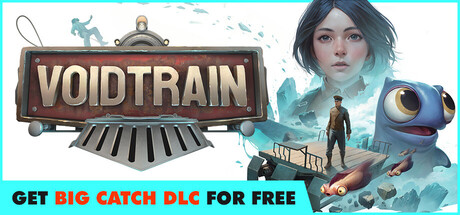
Train-based survival gameplay: The game centers on a train that players build, upgrade, and expand while surviving in a void. It combines base building with linear train travel and depot exploration.
Crafting and survival mechanics: The game features core crafting and survival elements, including resource gathering, item management, and building systems. Players craft weapons, gear, and train parts.
Co-op multiplayer supported: Players can team up with friends in co-op mode for 2-4 players, or play solo. Multiplayer allows joining others' games with a host.
Train customization and upgrades: Players can extensively customize and upgrade their train, from adding wagons and decorations to building new parts. The train evolves from an empty handcart to a mobile base.
Story-driven campaign with narrator: The game has a story campaign structured in chapters with branching paths and an interactive narrator. It provides goals and endgame content after finishing.
Mixed Optimization Reports: Feedback on optimization is split: some call it great, well-optimized, or surprisingly light, while others rate it as poor, heavy, or absurdly unoptimized. Results appear highly dependent on hardware.
Good Performance on Specific Hardware: Several reviewers highlight smooth performance on their specific setups, including a GTX 1660S with i5-10400F and stable medium settings on other PCs. This suggests acceptable optimization on mainstream hardware.
Crashes and Stability Issues: Beyond multiplayer, crashes to desktop, occasional fatal errors when opening chests, relogging needs, and the game breaking at points are reported. The game must sometimes be closed via Task Manager.
Settings and Resolution Problems: Players report screen resolution resets every launch, a low resolution cap at 1280x720, huge UI on large monitors, and non-functional screen shake settings. Graphics below medium become pixelated and blurry.
Minor Graphical and Physics Bugs: Frequent minor graphical bugs, mobs running through textures, and a few other small visual issues are reported alongside the note that very few bugs exist overall. These are mostly cosmetic annoyances.
Recommendations
Worth Buying on Sale: A large portion of feedback centers on price sensitivity, with reviewers saying the game is worth it at a discount but often not at full price. Several explicitly advise waiting for a sale before purchasing.
Best Played with Friends: Co-op and multiplayer are repeatedly highlighted as the ideal way to experience the game. Reviewers recommend playing with friends, partners, or groups of two to four players for maximum enjoyment.
Generally Recommended Game: Across many clusters, reviewers give broad recommendations and praise the game as spectacular or simply good. Many assign high scores or give an unconditional thumbs up.
Not Recommended by Some: A notable minority of reviewers explicitly do not recommend the game and advise against spending money on it. Their feedback focuses on perceived lack of value or overall disappointment.
Great for Raft Fans: Many reviewers recommend this game specifically to players who enjoyed Raft, often noting it improves on that formula. It is frequently described as a natural next step for fans of Raft and Subnautica-style survival crafting.
Buying context
Community fair range: $14.99 - $19.99.
Game completion: 30.0h.
Story completion: 15.0h.
Session length: 6.0h.
Most reports describe the game as fun in its early progression, especially in co-op, before repetitive combat, resource gathering, and late-game pacing make it less enjoyable. A minority reports a slow opening that either eventually becomes fun or never clicks.
Friction: Slow or boring opening for some players; Confusing and long introduction or tutorial; Solo play feels more repetitive; Tedious resource management and manual gathering; Unresponsive controls and UI issues.
Unlock drivers: Playing in co-op with friends; Story-guided tutorial explaining concepts.
Player profiles
Co-op Social Chill Player: Plays in small co-op groups, chatting while gathering resources, building and upgrading the train at a relaxed pace. Motivation: Sharing a chill cooperative survival-crafting experience with friends. Stance: buy.
Solo Survival Grind Critic: Solo resource gathering, inventory management, and crafting, often stopping before completion or waiting for a deep discount. Motivation: Attempting to progress through survival crafting and story alone. Stance: no buy.
Chill Narrative Atmosphere Seeker: Slow-paced play focused on exploration, resource collection, train decoration, and story discovery with minimal combat. Motivation: Relaxing immersion in a story-driven, visually charming world. Stance: buy.
Platform notes
Across these Windows GPU/RAM cohorts, higher-VRAM systems generally report good performance, while lower-VRAM and mixed mid-range cohorts show occasional FPS drops, crashes, or settings compromises.
Windows 12-15GB VRAM: positive. Most reports describe smooth performance even at max settings, though a few users note FPS drops in heavy combat and rare framepacing issues.
Windows <8GB VRAM / <16GB RAM: mixed. One user reports only rare FPS drops, while another had to lower settings to medium for a stable 60 FPS.
Windows 8-11GB VRAM: mixed. Several users report high frame rates and no issues at max settings, but others report poor optimization, overheating, and repeated crashes.
Steam Deck: The game is broadly playable on Steam Deck, with users reporting successful play and completion. However, friction remains from small font and image scaling, inconsistent controller support, and reported optimization or stability concerns. These issues align with the Tinkering Required band rather than a fully broken experience.
Extra review signals
Monetization: The reviews provide no evidence of real-money gacha, in-game cash shop, battle pass, paid power, or currency obfuscation. The dominant monetization complaint is a paid DLC that many users view as cut base content, a paywalled fix, or a rushed paid addition to an incomplete game. A separate cluster complains about a broken free-DLC promotion. Because the rules treat DLC/expansion complaints and promotional fulfillment issues as capped at 20, the final score is 20.
External guides: Users report a strong external-data dependency around crafting and upgrades: material requirements are opaque, forcing recipe lookups. They also cite unclear tutorials and unlock explanations, plus some idle-monitoring and repair-cost friction. Under the strict scoring hierarchy, the crafting recipe complaint triggers Tier 2, overriding lower-tier onboarding issues.
Other review notes
Constant Raft Comparisons: Many reviewers repeatedly compare this game to Raft, both favorably and unfavorably, often describing it as a Raft-like experience with its own twist. Some see it as an inferior or lightweight version of Raft, while others find it similar but more enjoyable or better executed.
Lengthy Early Access History: Reviewers frequently mention that the game spent a long time in early access before reaching full release. Some note it is still in an early access state or was in early access when their review was written.
Russian Voice and Localization Support: There is consistent feedback about the game featuring Russian voice acting and excellent Russian localization. Specific praise is given to voice actor Sergey Chikhachev, and many note that Russian voiceover is fully supported.
Presence of Paid DLC: The game offers DLC for purchase, and some reviewers describe it as monetized through pay-to-play DLC. There is also mention that more DLC and updates may be coming.
Story and Premise Noted: The game includes a story with many cutscenes and an interesting premise, though some note it moves at a slow pace. The narrative is a notable aspect that reviewers frequently bring up.