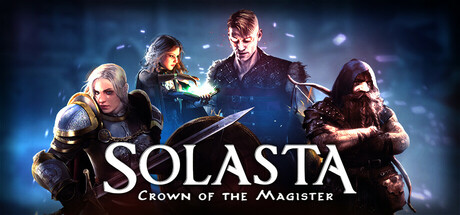
- Faithful D&D 5E tactical combat adaptation
- Highly enjoyable multiplayer co-op experience
- Extensive modding and customization options
- Linear and unengaging storytelling structure
- Frequent bugs and technical performance issues
- Outdated visuals and poor camera controls
Emotions
What players like:
Common complaints:
Gameplay feedback:
Performance notes:
Recommendations:
Other player notes:
Similar games
Blend with other games 86%Baldur's Gate 3
 86%Solasta II
 84%Neverwinter Nights: Enhanced Edition
 83%Demeo x Dungeons & Dragons: Battlemarked
 83%Divinity: Original Sin - Enhanced Edition
 82%Icewind Dale: Enhanced Edition
 81%The Adventurers
 81%Divinity: Original Sin 2 - Definitive Edition
 81%Baldur's Gate II: Enhanced Edition
 81%Wildermyth
 81%Pathfinder: Wrath of the Righteous - Enhanced Edition
 80%Zorbus
Review evidence
Why players say this
Review evidence
Why players say this
What players like
Exceptional D&D 5E combat adaptation: The game is widely praised for its faithful and engaging implementation of Dungeons & Dragons 5th Edition combat mechanics. Players highlight its tactical depth, adherence to rules, and superior execution compared to other CRPGs like Baldur's Gate 3. The combat system is described as engaging, well-balanced, and true to the tabletop experience, with features like verticality and environmental interactions adding strategic layers.
Extensive character customization: The game excels in providing deep and flexible character creation options, including races, classes, subclasses, backgrounds, and personalities. Players can customize their entire party, with personality traits influencing dialogue and interactions. The system is praised for its variety, accessibility, and the ability to create unique and dynamic party dynamics.
Rich modding and user-generated content: The game offers robust modding support, including a dungeon/campaign editor and Steam Workshop integration. Players can create, share, and download custom campaigns, subclasses, and mods, significantly extending replayability. The Unfinished Business mod, in particular, is highlighted for adding missing rules, multiclassing, and additional content, enhancing the core experience.
Highly enjoyable multiplayer co-op: The multiplayer co-op mode is a standout feature, offering a fun and engaging experience for players who enjoy collaborative gameplay. The game supports drop-in, drop-out multiplayer, robust modding, and community campaigns, making it ideal for playing with friends. Players appreciate the seamless co-op mechanics and the ability to create a shared tabletop-like experience.
Accessible and intuitive gameplay: The game is praised for its clean, modern UI and intuitive gameplay mechanics, making it accessible to both newcomers and veterans of CRPGs. The difficulty is well-balanced, tutorials are helpful, and the game avoids overwhelming players with overly complex systems. This accessibility is highlighted as a key factor in its broad appeal.
Common complaints
Linear and unengaging storytelling: The game's narrative is widely perceived as linear, railroaded, and lacking depth. Players note that choices feel guided or inconsequential, with minimal impact on the story or character arcs. The lore is often conveyed through long-winded dialogue or flavor text, which fails to engage players seeking dynamic or branching narratives.
Outdated and unpolished visuals: The game's graphics, character models, and animations are frequently described as outdated, resembling PS2-era visuals or those of games from a decade ago. Players criticize the lack of polish in cutscenes, facial animations, and overall production value, which falls short of modern AAA standards. Character designs are often called unappealing or low-quality.
Bugs and technical issues: The game suffers from numerous bugs, including game-breaking glitches, desynchronization in co-op, and performance issues like FPS drops. Players report frequent crashes, quest bugs, and unoptimized mechanics that disrupt gameplay. The lack of developer support and unresolved issues since launch further compound these problems.
Niche appeal and D&D limitations: The game's strict adherence to D&D 5E rules and mechanics limits its appeal to players unfamiliar with or disinterested in the system. It is often compared unfavorably to titles like *Baldur's Gate 3*, with players noting that it lacks the polish, depth, and accessibility of its competitors. The linear gameplay and lack of innovation further narrow its audience.
Repetitive and unbalanced combat: Combat encounters are criticized for being repetitive, drawn-out, and poorly balanced. Players highlight issues such as excessive enemy stacking, unfair difficulty spikes, and lack of meaningful progression. Spells and abilities are described as underwhelming due to terrain restrictions, unclear mechanics, or frequent misses, leading to frustration and monotony.
Gameplay and performance
Faithful D&D 5e tactical combat: The game closely follows Dungeons & Dragons 5th Edition rules, including turn-based combat, grid-based strategy, dice rolls, and tactical mechanics like stealth and verticality. Players familiar with tabletop D&D will recognize the SRD 5.1 ruleset, action economy, and spellcasting requirements, though some core mechanics (e.g., full feats) are omitted or adjusted.
Co-op and multiplayer focus: The game is designed for cooperative multiplayer, supporting a party of four customizable characters. Multiplayer extends to official and community campaigns, with features like dungeon creation and mod support. Solo play mimics a tabletop-like experience with a full party.
Vertical and dynamic 3D combat: Combat incorporates verticality, with abilities like flying, wall climbing, and multi-level environments. Enemies and players can exploit 3D space, adding tactical depth to battles. Light-based mechanics and terrain hazards further enhance the dynamic battlefield.
Campaign and DLC structure: The main campaign spans levels 1-12 and includes crafting, faction requirements, and resource management. DLCs add new campaigns, classes, races, and backgrounds, though some content is locked behind expansions. The scope is smaller than games like *Baldur’s Gate 3* but focuses on tactical depth.
Character-driven dialogue and choices: Dialogue and decisions are influenced by character backgrounds, alignments, and personality traits. Players can choose which party member responds, and side-quests adapt to these choices. However, the impact is more mechanical than narrative-driven.
Severe multiplayer desync issues: Players report frequent desynchronization in co-op and multiplayer modes, leading to parallel game states, non-existent monsters acting, and game freezes. This is a critical issue affecting core gameplay, particularly in online sessions. Some players note that host performance may mitigate the problem, but it remains widespread.
Medium-quality graphics and audio: The game's graphics and voice acting are described as medium or acceptable, particularly for a top-down dungeon crawler. While not a critical flaw, this feedback suggests room for improvement in presentation quality.
Minor UI and loading issues: Players note short pauses during encounter loading without system feedback, as well as increased shop UI loading times in late-game. These issues, while not game-breaking, contribute to a less polished experience.
Missing top-down camera option: Players note the lack of a top-down camera option, which could enhance gameplay visibility and strategy, particularly in a dungeon crawler. This is a minor but requested feature improvement.
Ironman mode design intent: Players acknowledge that Ironman mode is intentionally designed as a no-save challenge mode. This point is informational and reflects player understanding rather than a critique or issue.
Recommendations
Strong recommendation for D&D and tactical RPG fans: The game is highly recommended for fans of Dungeons & Dragons, tactical RPGs, and turn-based combat. Players who enjoy deep, rules-accurate combat and character customization find the game particularly appealing. This point is derived from clusters emphasizing niche appeal to D&D enthusiasts and tactical combat lovers (Clusters 1, 3, 4, 17).
Low recommendation for non-D&D or casual players: The game is explicitly not recommended for players who are new to D&D, prefer immersive storytelling, or are looking for a casual RPG experience. Reviewers emphasize its niche appeal and steep learning curve for those unfamiliar with D&D 5e mechanics (Clusters 1, 3, 11).
Mixed reception for storytelling and role-playing: While the game is praised for its combat and tactical depth, several reviewers note that it falls short in storytelling, immersion, and role-playing elements. Some players recommend it primarily for its combat mechanics rather than narrative or exploration (Clusters 1, 20, 21).
High anticipation for sequel and DLCs: Many reviewers express excitement for the sequel (Solasta 2) and recommend purchasing DLCs or expansions to enhance the experience. This sentiment is driven by players who enjoyed the core gameplay and are eager for improvements or additional content (Clusters 2, 8, 9).
Multiplayer limitations and solo preference: The game is often recommended for solo play, with several reviewers cautioning against multiplayer due to technical issues or lackluster co-op experiences. Some players suggest the game is more enjoyable with friends but note that multiplayer functionality is flawed (Clusters 10, 3).
Other review notes
Mixed reception on game execution: Players acknowledge the game's potential and good ideas but criticize its mediocre execution, particularly in storytelling, dialogue, and character models. Many feel the game starts slow but becomes enjoyable over time, though some see it as wasted potential. This feedback is constructive and specific, reflecting a balanced but critical perspective.
DLC and mod dependency: Players highlight that some DLCs are required for full access to content, including user-generated campaigns. Mods like 'Unfinished Business' are popular for enhancing gameplay but may introduce issues like broken gamepad interfaces. This feedback is actionable for developers to improve DLC integration and mod support.
Janky but functional gameplay: Players describe the gameplay as janky at times, with issues like high randomness, lack of consideration for player stats, and awkward mechanics. However, these flaws are often forgiven due to the game's charm and focus on delivering a raw D&D experience. Some players use mods or quicksaves to mitigate these issues.
Niche appeal and market positioning: The game occupies an awkward niche in the RPG market, often overshadowed by comparisons to Baldur's Gate 3. It appeals to fans of D&D 3.5, player-created characters, and tabletop-style experiences but is not for everyone. Players appreciate its focus on freedom and customization despite its limitations.
Low-budget indie limitations: The game is developed by a small team with limited resources, leading to intentional compromises like poor dialogue, rough character models, and lack of polish compared to AAA titles like Baldur's Gate 3. Players generally forgive these limitations but note them as a defining characteristic of the experience.