- Robot reduces survival needs
- DLC is valuable addition
- Robot makes game easier
- Developers supportive and engaged
- Deep engineering and automation
- Battery management is challenging
Emotions
Archetypes
What players like:
Common complaints:
Gameplay feedback:
Performance notes:
Recommendations:
Other player notes:
Similar games
Blend with other games 74%Kerbal Space Program: Breaking Ground Expansion
 72%Surviving Mars
 71%Stationeers
 71%Oxygen Not Included - Spaced Out!
 71%Icarus: Dangerous Horizons Expansion
 69%Astroneer: Megatech
 69%Dinky Guardians
 69%ASTRONEER
 69%Generation Zero®
 69%Smart Factory Tycoon
 69%Oxygen Not Included: The Aquatic Planet Pack
 69%Streets of Rogue Character Pack
Review evidence
Why players say this
Review evidence
Why players say this
Steam review verdict
The valuable DLC adds a supportive, engaged dev team and deep automation, though its robot simplifies survival while making battery management a tough challenge.
What players like
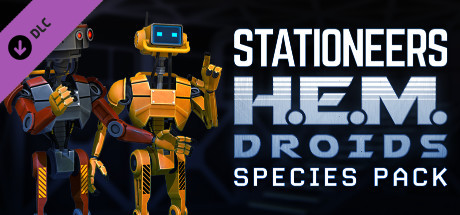
Robot reduces survival needs: Playing as a robot removes the need to eat, drink, breathe, and manage atmospherics, simplifying survival and allowing focus on engineering and building. This makes the game easier and more accessible for new players.
DLC is valuable addition: Players find the DLC useful, good, and a great addition that offers a uniquely different way to play the game. It is worth supporting the developers through this purchase.
Robot makes game much easier: The robot significantly lowers difficulty, with some calling it an easy mode or overpowered. It only needs to manage battery and health, reducing the complexity of survival.
Developers are supportive and engaged: The developers genuinely care about the game, listen to feedback, and engage with the community, including the CEO on Discord. They provide frequent updates and improvements, which players appreciate.
Game offers deep simulation: Stationeers features complex simulation mechanics for fluids, atmosphere, and realistic physics, providing depth and interlocking machinery that appeals to engineering-minded players. It rewards creativity and experimentation.
Common complaints
Battery management is challenging: The robot's battery drains quickly, especially in cold or heat, and when moving or using night vision, requiring constant battery swaps and careful power management. This often creates stressful situations before a decent power system is established.
No built-in light source: The robot lacks any built-in light, forcing players to rely on external lighting or wear a suit or headlamp to see in the dark. This is a frequent complaint among players.
Uniform slot restrictions: The battery occupies the uniform slot, preventing the robot from wearing undergarments or storing access cards, which removes dedicated card slots on servers that use them. This also means the robot cannot use extra uniform slots like the dedicated card slot.
Night vision issues: The built-in night vision uses a harsh monochrome green that is hard on the eyes and makes it difficult to distinguish ores, causing colorblindness. It is also undocumented and redundant with wearable NVGs.
Pay-to-win and cosmetics overpowered: Players feel the game is pay-to-win, with cosmetic items providing overpowered benefits. The difficulty settings being locked behind a paywall was also seen as a strange move.
Gameplay and performance
Droid play is battery-dependent: The droid relies on battery power as its sole critical resource. Batteries must be swapped and power managed to avoid loss of consciousness.
Game features multiple modes and races: The game includes creative mode for testing, multiplayer and offline play, and different playable species like H.E.M Droids, humans, and Zrillians. Difficulty settings and savegame editing allow further customization.
Game offers deep engineering and automation: The game involves building complex, interlocking machinery and designing intricate automation. Players can automate life support and explore realistic physics in a sandbox environment.
Built-in night vision available: The droid has built-in night vision that can be toggled with the N key. It provides better visibility than a headlamp and can see ores from afar.
Robot is playable character option: The game offers a robot as a selectable playable character, distinct from human options. It provides a different gameplay experience focused on power management.
Large Patch Size Concerns: Players note that a 4.6GB patch is required, which includes models, textures, metadata, and animations. This size may be excessive for some users, potentially causing storage or download issues.
Recommendations
DLC supports developers: Many reviewers recommend purchasing the DLC primarily to support the developers and fund continued work on the game. They see it as a worthwhile contribution even if not essential for gameplay.
Beginner-friendly DLC content: Several clusters highlight that the H.E.M Droid and other DLC elements are recommended for new players just starting out or learning the game. It simplifies survival mechanics, allowing focus on engineering and construction.
Appeals to engineering fans: The game and DLC appeal to fans of engineering, management, and simulation games. Players who enjoy building and designing with realistic physics find it perfect.
Not required for base game: Reviewers note that the DLC is not required to enjoy the base game, and nothing is missed by skipping it. It is an optional addition for those who want to support the developers.
Veteran construction focus: Veteran players who want to focus on construction and automation find the DLC appealing. It offers a different playstyle that emphasizes engineering over survival.
Buying context
Session length: 0.2h.
Reviews suggest the game and its DLC are immediately fun for players who enjoy complex automation and co-op, while early-game battery research and survival needs are notable friction points that can make the opening phase daunting.
Friction: Large batteries create a rush to complete research in the early game; The early game is daunting before batteries are researched; Survival needs like eating and drinking are burdens the robot DLC removes.
Unlock drivers: The robot DLC removes the need to eat food or drink water; The robot DLC enables a support character with different needs in co-op; Researching large batteries reduces the early-game power and research pressure.
Player profiles
Solo Sandbox Roleplayer: Plays alone, edits saves to simulate multiplayer, and roleplays as different species. Motivation: Freedom to build, roleplay, and create emergent stories in a solo sandbox. Stance: buy.
Newcomer Co-op Support: Takes a low-maintenance support role, often robot or species with reduced food and water needs. Motivation: Join friends in multiplayer without becoming a burden while learning the game. Stance: buy.
Engineering Veteran Builder: Designs and builds stations, optimizes power and life support, and seeks challenging survival constraints. Motivation: Master realistic physics and complex construction systems. Stance: buy.
Extra review signals
Monetization: The audit surfaced only limited and ambiguous monetization signals. The bulk of feedback concerns a paid DLC for an early-access title and its price/value, which is traditional paid content and not microtransaction evidence. One reviewer calls the game 'pay to win' and describes an element as overpowered, but the same sentence frames the paid item as cosmetic, and another reviewer explicitly says the DLC is not pay-to-win. No review describes real-money gacha, loot boxes, premium currency obfuscation, aggressive FOMO shops, or convenience items sold to offset frustrating design. Under the strict scoring rules, the available evidence does not exceed the fair/standard threshold.
Other review notes
Supporting developers through purchases: Players frequently buy DLC and extra copies specifically to support the developers. This is a common motivation mentioned across multiple clusters.
DLC adds minimal gameplay: Many reviewers note that the DLC does not add significant gameplay content to the base game. It is often seen as lacking substantial additions.
Robot provides easy survival option: The robot character simplifies survival by not requiring air, food, or specific atmospheres. It is seen as a great starting point for new players.
Developer and frequent updates: The game is developed by Rocketwertz and receives daily updates on the beta branch. A big Terrain Update was also mentioned.
Alien DLC with distinct atmosphere: There is an alien DLC that breathes a completely different atmosphere, adding variety. It may relate to specific planets like Vulcan or Venus.