- Fun and addictive gameplay
- Distinct character playstyles
- Beautiful pixel art style
- Great deckbuilding system
- Excellent roguelike experience
- Steep difficulty curve frustrates players
Emotions
Archetypes
What players like:
Common complaints:
Gameplay feedback:
Performance notes:
Recommendations:
Other player notes:
Similar games
Blend with other games








Review evidence
Why players say this
Review evidence
Why players say this
Steam review verdict
Addictive roguelike with great deckbuilding, distinct characters, and beautiful pixel art, though the steep difficulty curve frustrates.
What players like
Fun and addictive gameplay: Players consistently describe the core gameplay as very good, great, exciting, and addictive, with solid and pleasant feel. The game keeps players engaged and wanting to continue playing.
Distinct character playstyles: Each character offers a different playstyle with multiple variations, introducing a lot of variety. Characters are distinct and fun to play in their own ways.
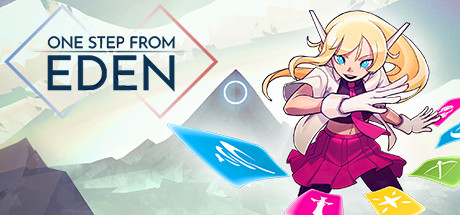
Beautiful pixel art: The pixel art style is highly praised, with stunning visuals, great animations, and high-resolution character portraits. It contributes significantly to the game's charm.
Great deckbuilding system: The deckbuilding aspect is inspired and well-made, allowing card deletion, upgrades, and synergy building. It appeals to deckbuilder fans and keeps the game fresh.
Excellent roguelike experience: The game is praised as one of the best roguelikes, offering a fun, challenging, and addictive roguelite action experience with variety and unique elements. It hits the niche perfectly for fans of the genre.
Common complaints
Steep difficulty curve frustrates many: The game is extremely difficult, with a punishing difficulty curve that spikes early and unfair moments. Even easy mode maxed out does not make it completable for many.
Fast-paced gameplay overwhelms players: Many players find the game too fast to react to and actively dodge attacks. This speed makes it hard to keep up even at base level, requiring very quick reflexes.
Story and lore are lacking: Players report that the game has almost no story, plot, world-building, or lore. This lack of narrative context is a common disappointment.
Deckbuilding feels weak and shallow: The deckbuilding mechanics are barebones with minimal synergies between spells. Many spells function independently, reducing strategic depth and leading to frustrating runs.
Poor tutorial and explanation of mechanics: There is no real tutorial, leaving players confused about core systems and mechanics. The game does not explain things well, making it hard to learn.
Gameplay and performance
Deckbuilding core mechanic: Players collect and add cards to build their decks, with numerous cards, spells, and artifacts. This is the central system of the game and appears consistently across feedback.
Mega Man Battle Network inspiration: Combat and deckbuilding are heavily inspired by Mega Man Battle Network, featuring real-time grid-based battles. The game is often described as a faster, roguelite rendition of that formula.
Roguelike deckbuilding fusion: The game blends deckbuilding with roguelike/roguelite progression, often compared to Slay the Spire. This genre hybrid is a defining feature frequently mentioned by players.
Real-time fast-paced combat: Combat is real-time and fast-paced, requiring quick reactions and positioning. Players highlight the action-oriented, twitch-based nature of battles.
Roguelike genre elements: The game is described as a roguelike or roguelite, with retro styling and fast-paced runs. This genre classification is consistently applied by players.
Fatal black screen bugs: A specific fatal bug causes a black screen during Japanese text sequences, potentially blocking progress. This is a severe issue affecting players who encounter it.
Occasional crashes reported: Some players experience infrequent crashes during gameplay, which can interrupt sessions. This is a stability concern noted by users.
Runs well on capable PCs: The game performs adequately on medium and high-end PC configurations without major performance issues. This indicates reasonable optimization for more powerful hardware.
Recommendations
Recommended for Mega Man Battle Network fans: Fans of Mega Man Battle Network are likely to enjoy this game, especially those who wished for more gameplay or found parts boring. The combat mechanics resonate with players who enjoyed the Battle Network series.
Worth the price: Many reviewers find the game highly worth its price, with some saying it is more than worth it for what it offers. The value proposition is repeatedly highlighted, including one review stating very few games are better money spent.
Steep learning curve: The game features a steep learning curve that may require hours to learn enemy attack patterns and mechanics. Reviewers suggest sticking with it for a couple of hours and watching tutorials before playing.
Positive overall experience: Many reviewers give strong positive reviews, calling the game incredible, awesome, and deserving of a positive review. The overall sentiment is highly favorable among those who enjoy the genre.
Recommended for action and bullet-hell players: Players proficient in high-speed action, bullet hell, and complex reactions will enjoy this game, while those less experienced in action or fighting games may struggle. It is best suited for those with fast reflexes and multitasking ability.
Buying context
Community fair range: $10.00 - $20.00.
Game completion: 2.0h.
Story completion: 10.0h.
Session length: 1.0h.
Endgame: 100.0h.
One Step From Eden often starts with a steep, tutorial-light learning curve and punishing early runs, but many players report it becomes addictive once they learn the systems and enter the combat flow. A minority either never get past the opening friction or find the mastered game repetitive.
Reported time to anchor: 3h.
Player profiles
Hardcore Action-Deckbuilder Veteran: Optimizes spell and chip decks, learns enemy patterns, and pushes high-difficulty runs for execution and build mastery. Motivation: Mastering fast-paced combat and deep deckbuilding in a harder Mega Man Battle Network-style roguelite. Stance: buy.
Genre-Curious Newcomer: Learns from scratch, uses assist mode or lower speed, and accepts a tricky difficulty curve as part of the experience. Motivation: Discovering a new action-roguelite and deckbuilding genre without nostalgia for its inspirations. Stance: buy.
Difficulty-Critical Roguelite Player: Attempts deckbuilding and pattern learning, but is put off by fast pacing, unclear attack indicators, and lack of tutorial. Motivation: Finding a fair, readable challenge that rewards strategy rather than memorization or RNG. Stance: no buy.
Platform notes
Steam Deck: The filtered reviews contain limited Steam Deck-specific feedback. The most impactful technical evidence is a Japanese review reporting PvP co-op crashes and fatal bugs including black screen and inability to progress. Other reviews are gameplay or humorous comments without Steam Deck hardware, launcher, battery, or text-size details. The reported stability failures justify a Broken assessment.
Extra review signals
External guides: The reviews primarily complain that One Step From Eden's obscure mechanics and systems are poorly explained, forcing players to seek external wiki, tutorial, or guide information. Early-game progression also creates guide dependency. One reviewer notes that combinations are not strictly wiki-dependent, but the dominant need is instructional data. No farming/drop-rate, inventory/crafting, or navigation/bug themes are present.
Other review notes
Spiritual successor to Mega Man Battle Network: Many reviewers describe the game as a spiritual successor or heavily inspired by the Mega Man Battle Network series. Its combat and deck-building mechanics draw clear inspiration from that franchise.
Compared to Slay the Spire: Frequent comparisons are made between this game and Slay the Spire, especially regarding deck-building and map structure. Some reviewers find it better, while others note less card strategy and more action.
Steam Workshop and mod support: The game launched with Steam Workshop support and has an active modding scene. Integrated mod support allows for community-created content.
Minimal story focus: Several reviewers note that the game has almost no story and that narrative is not a main focus. It is described as raw gameplay with only a little story about reaching Eden.
Hybrid of Battle Network and Slay the Spire: The game is often described as a hybrid that combines elements of both Mega Man Battle Network and Slay the Spire in its own way. This fusion creates a unique blend of action and card-based strategy.