- Innovative reverse tower defense concept
- Pleasant and attractive graphics
- Fun and engaging gameplay
- Repetitive gameplay
- Lacks depth versus competitors
- Short game length
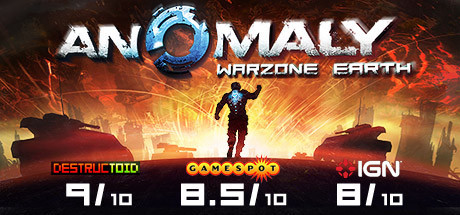
Emotions
Archetypes
What players like:
Common complaints:
Gameplay feedback:
Performance notes:
Recommendations:
Other player notes:
Similar games
Blend with other games




Review evidence
Why players say this
Review evidence
Why players say this
Steam review verdict
An innovative reverse tower defense game with attractive graphics and fun gameplay, though it grows repetitive, lacks depth next to competitors, and is quite short.
What players like
Innovative reverse tower defense concept: Players consistently praise the creative inversion of the tower defense genre, where the player becomes the attacker rather than the defender. Many describe it as original, rare, and refreshing compared to typical tower defense titles.
Pleasant and attractive graphics: Reviewers widely agree that the visual style is good, beautiful, and pleasing to the eye. Several note the graphics exceed expectations for the genre.
Fun and engaging gameplay: Many players describe the game as enjoyable, immersive, and entertaining. The core loop keeps attention and does not grow boring.
Generally solid and well-made: Overall reviews describe a well-made, quality game that is highly recommended and worth picking up.
Addictive replay loop: Several reviewers find the game highly addictive and hard to put down, often citing the compelling strategic gameplay as the reason.
Common complaints
Repetitive gameplay: The core loop becomes repetitive quickly, with missions feeling like the same tasks repeated and the story mode following boring patterns.
Lacks depth versus competitors: Compared to other tower defense titles like Sanctum, the game lacks polish, variety, and addictiveness.
Short game length: Players consistently note the game is not very long, with the campaign ending too quickly and the overall content feeling thin.
Shallow and predictable story: The narrative is criticized as short, cliché, and lacking depth, with an average and unimpressive plot.
Boring and dull experience: Many find the game monotonous and unengaging, getting boring fast and offering no compelling gameplay over time.
Gameplay and performance
Reverse tower defense core: The game is widely described as a reverse tower defense where the player controls the attacking convoy instead of building towers. This core genre inversion defines the gameplay.
Convoy route planning: Players plan and dynamically adjust convoy routes across maps to avoid enemy towers and reach objectives. Route planning is a central strategic mechanic.
Campaign and extra modes: The game features a 14-mission campaign with varying objectives, plus additional challenge modes unlocked after completion. This provides substantial replay value.
Progressive difficulty curve: Difficulty increases gradually across levels, with higher difficulties requiring more tactical thinking and escalating challenges in later missions.
Commander support abilities: The on-foot commander cannot shoot directly but provides tactical support such as repairs, smoke screens, decoys, and airstrikes. These abilities add a real-time tactical layer.
Stable and smooth performance: Many users report generally stable and smooth performance, with no crashes and very good optimization. The game runs quite smoothly on their PCs.
Runs well on low-spec: Multiple reviewers report the game runs cleanly on low-spec laptops and low-end PCs. Performance is stable and smooth on such hardware.
Frequent crashes and freezes: Some users experience unexpected crashes, freezes during play, and occasional system freezes requiring forced shutdown. These issues occur sporadically.
Linux compatibility problems: On Linux, the game is broken and requires Steam Play with the Windows version. Graphical issues arise, especially with multi-monitor setups, though some distributions work without patching.
Startup and black screen issues: Launching the game often fails, with black screens that return to desktop while the game remains in the taskbar. Clicking continue can also lead to prolonged black screens.
Recommendations
Also suits strategy fans: Reviewers frequently recommend the game to strategy game lovers, highlighting its tactical depth. It is seen as a good option for those who enjoy strategic planning.
Appeals to tower defense fans: Many reviewers recommend the game specifically to fans of the tower defense genre, including those new to it. It is often described as a must-play for tower defense enthusiasts.
Wait for a sale: A common sentiment is that the game is best purchased on sale, with many suggesting waiting for discounts of 50% or more. Some explicitly advise against buying at full price.
Not for everyone: Some reviewers note that the game may not appeal to all players, particularly those who dislike tower defense or replaying levels. It is recommended mainly for genre fans.
Generally positive recommendations: Many reviewers give simple positive recommendations, calling it a good, enjoyable game. Some highly recommend it without reservations.
Buying context
Community fair range: $4.99 - $9.99.
Game completion: 10.0h.
Story completion: 8.0h.
Session length: 2.5h.
Endgame: 28.5h.
The game's hook is often reported as delayed: opening levels and the tutorial are called bland or shallow, while learning mechanics and unlocking deeper strategy make it addictive later. Some players instead find it fun at first and repetitive afterward, so the profile is mixed.
Friction: bland and stretched opening levels; slow pacing and slow convoy movement; long tutorial with limited early units; learning curve for mechanics, enemy towers, and commander abilities; repetitive missions and limited ability variety; unreliable mouse targeting and repair controls.
Player profiles
Reverse Tower Defense Strategist: Plans convoy routes, chooses and upgrades vehicles, avoids or engages alien towers, and replays levels to optimize approaches. Motivation: To experience a familiar tower-defense loop from the attacker's side and solve routes with unit composition and upgrades. Stance: buy.
Short-Session Casual Tactician: Uses casual difficulty, pauses to plan routes, picks off towers at own pace, and fits missions into brief sessions. Motivation: To play compact, low-pressure tactical missions in short bursts and at a methodical pace. Stance: sale.
Achievement and Medal Completionist: Replays maps on harder difficulties, hunts gold medals and Steam achievements, and chases high scores or rankings. Motivation: To perfect missions, earn all medals and achievements, and climb rankings through repeated optimized runs. Stance: buy.
Platform notes
Steam Deck: Audit finds a split Steam Deck experience: the advertised native Linux build is unreliable and often stuck at loading or a white screen, forcing Proton or Wine and sometimes gamescope compatibility workarounds. Once launched through Proton, controller mapping is widely praised and Deck play is reported as good, but stability complaints and Linux crashes add risk. Overall friction is moderate: playable after tinkering, not seamless.
Linux and Proton: Linux support for this game is widely reported as rough. The native Linux build frequently fails to launch, hangs at the loading screen, crashes, or has multi-monitor display problems. Many users rely on Proton, Wine, gamescope, or community workarounds to reach gameplay, while a smaller number report that Linux works well or is playable with specific Proton versions. The overall evidence indicates a barely playable Linux experience that often requires heavy workarounds.
Other review notes
Campaign has 12-14 missions: Multiple reviewers note that the main campaign consists of 12 to 14 missions with diverse objectives. This provides a decent number of story missions.
Playtime varies 10-30 hours: Completion times range from about 10 to 30 hours depending on playstyle and completionist goals. A full playthrough with achievements can take around 20-30 hours.
Single-player only: The game focuses on single-player experience and has no multiplayer or cooperative mode. Some reviewers mention additional modes but not multiplayer.
Part of a series: The game belongs to a series with multiple entries, and is the first in the Anomaly series. Fans note it is one of the best in the series.
Pioneer of reverse tower defense: Reviewers highlight that this is one of the first reverse tower defense games, also known as tower offense. It is considered the origin of the genre.