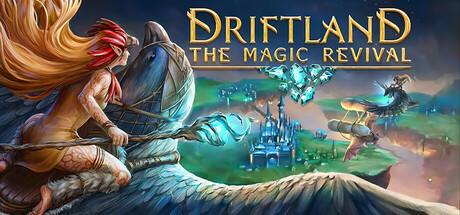
- Unique floating island mechanics and stunning graphics.
- Interesting concept with diverse resources and biomes.
- Good value with intuitive and polished UI.
- Repetitive gameplay and poor unit control mechanics.
- Unintelligent AI and lack of game depth.
- Frequent game crashes and performance issues noted.
Emotions
Archetypes
What players like:
Common complaints:
Gameplay feedback:
Performance notes:
Recommendations:
Other player notes:
Similar games
Blend with other games




Review evidence
Why players say this
Review evidence
Why players say this
What players like
Unique floating island mechanics: The game introduces a unique concept of floating islands that players can move and manipulate. This mechanic is central to the gameplay and adds a strategic layer to empire building.
Stunning graphics and visuals: The game features beautiful and realistic graphics, excellent art, and a unique graphics style. Players appreciate the smooth and colorful graphics, as well as the good animations.
Spiritual successor to Majesty: The game captures the essence of the Majesty series and is considered a successor with more depth and a relaxed pace. It combines elements from Netstorm and Majesty successfully.
Interesting and cool concept: The game features an interesting and cool concept with practical execution, including a unique world design and gameplay mechanics.
Unique races and magic systems: Players can choose from different races, each with unique buildings, units, and magic spells. This adds variety and depth to the gameplay.
Common complaints
Repetitive gameplay: Many players find the game to be very repetitive with little variety. This includes repetitive music, battles, and a general lack of depth beyond repetition.
Poor unit control mechanics: Players frequently report issues with the lack of direct control over units, making the gameplay feel clunky and unintuitive. This includes problems with AI unit control and a general lack of command over troops.
Unintelligent AI: The AI in the game is often criticized for being unintelligent and unbalanced. Players find the AI not challenging enough and too easy to beat.
Lack of game depth: The game suffers from a lack of automation, micromanagement, voice acting, and challenge. Additionally, there is a lack of unit diversity, making the gameplay feel shallow and cumbersome.
Poor storytelling: The game's storytelling tools and campaign story are criticized for being poor and confusing. Players find the story explanation lacking.
Gameplay and performance
Floating island empire building: The game focuses on building and managing an empire on floating islands. Players start with a base and expand by claiming nearby islands, connecting them with bridges, and managing resources.
RTS with resource management: The game is a real-time strategy game with a strong emphasis on resource management and island exploitation. Players gather resources, manage their economy, and control units to expand their territory.
Indirect unit control mechanics: Units in the game have free will but can be influenced by orders. Players use indirect commands and reward flags to manage unit behavior and production.
Unique RTS and RPG blend: The game combines real-time strategy with RPG and kingdom simulator elements. It offers a unique experience with indirect hero control and magic systems, set in a fantasy theme.
Building and upgrading structures: Players can build and upgrade various structures to enhance their empire. This includes buildings for resource management, unit production, and territory expansion.
Frequent game crashes: Multiple reports indicate that the game frequently crashes, including crashes to desktop and fatal exception errors. These issues are particularly noted in both single-player and multiplayer modes.
Performance issues noted: Players have experienced long loading times and slow startup times, even on mid-to-high end gaming PCs. However, some players report no FPS drops or major performance issues.
Positive feedback on optimization: Some players have praised the game for its good optimization, indicating that it runs smoothly on their systems without major bugs or performance issues.
Moderate system requirements: The game requires at least 2GB RAM and a 1.5GB VRAM graphics card with DirectX 11. It is noted that the game does not demand much from the processor, with an i3 at 1.8GHz being sufficient.
Steam detection issues: There are reports of issues with Steam detecting the program closure, which can lead to problems with game management and updates.
Recommendations
Buy on sale or discount: Many reviewers recommend purchasing the game only when it is on sale or available at a discount. The game is seen as good value for money at a lower price point.
Recommended for RTS and Majesty fans: The game is highly recommended for fans of real-time strategy games and those who enjoy Majesty-like games. It is particularly appealing to players with nostalgia for the Majesty series.
Buying context
Community fair range: $10.00 - $15.00.
Game completion: 40.0h.
Session length: 3.0h.
The game becomes fun once players start building and expanding their empire by linking islands, which is described as a satisfying and enjoyable process.
Reported time to anchor: 1h.
Friction: slow pacing; repetitive early tasks.
Unlock drivers: strategic planning; visual satisfaction of empire building.
Player profiles
Casual Strategist: Enjoys a slower, more relaxed pace and less micro-intensive gameplay. Motivation: Relaxation and casual gameplay. Stance: sale.
Completionist Achiever: Focuses on completing all aspects of the game, including achievements and campaign goals. Motivation: Earning achievements and completing the game. Stance: deep sale.
Nostalgic Comparer: Enjoys comparing the game to classics and appreciating the similarities and differences. Motivation: Nostalgia and comparison to classic games. Stance: sale.
Other review notes
Long-term engagement: Players have engaged with the game over a long period, indicating sustained interest and replayability.
DLC purchase decisions: Some users have chosen not to buy the DLC, which could reflect their satisfaction with the base game or their perception of the DLC's value.
Comparison to other games: Some users mentioned other games while reviewing this game. This could indicate that players are drawing comparisons between this game and others in the same genre.