- Highly enjoyable and fun
- Bright, colorful pixel art
- Unique and trippy art style
- Visual clutter obscures gameplay
- High difficulty for newcomers
- Incomprehensible dialogue and descriptions

Emotions
Archetypes
What players like:
Common complaints:
Gameplay feedback:
Performance notes:
Recommendations:
Other player notes:
Similar games
Blend with other games





Review evidence
Why players say this
Review evidence
Why players say this
Steam review verdict
It’s highly enjoyable with bright, colorful, uniquely trippy pixel art, but visual clutter obscures gameplay, difficulty is steep for newcomers, and dialogue and descriptions are incomprehensible.
What players like
Highly enjoyable and fun: Players consistently describe the game as fun, satisfying, and well-made, with engaging and creative gameplay that keeps them coming back.
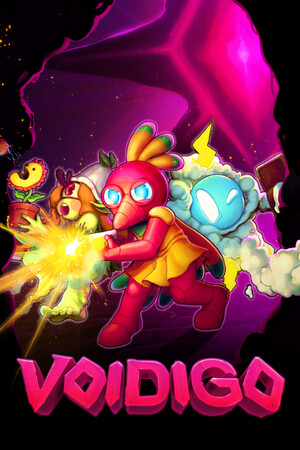
Bright, colorful pixel art: The pixel art graphics are frequently praised for being bright, colorful, and well-executed, contributing to a pleasant and appealing aesthetic.
Unique and trippy art style: The game's unusual, colorful, and trippy visual style stands out as a distinctive and charming feature that players appreciate.
Bizarre humor and charm: The game's weird sense of humor, odd writing, and overall weirdness are seen as charming and amusing, adding to its personality.
Tons of unlockables: A large number of unlockables, including characters, mutators, cheats, and hats, provide long-term progression and keep players engaged.
Common complaints
Visual clutter obscures gameplay: The flashy, busy graphics and lack of contrast between foreground and background make it hard to distinguish enemies, bullets, and hazards, leading to frequent accidents and eye strain.
High difficulty for newcomers: The game is consistently described as very difficult, especially in the early hours, with a steep learning curve that can be frustrating and intimidating for new players.
Incomprehensible dialogue and descriptions: The game uses 'baby talk' or broken English for all text, including item descriptions and menus, making it difficult for players to understand item effects and game mechanics.
Repetitive and lacking variety: Many players find the game repetitive, with identical rooms, few enemy types, and minimal unlockables or item combinations, leading to a sense of sameness across runs.
Confusing UI and unclear information: The user interface is often described as confusing, with unclear icons, unreadable health displays, and menus that are hard to navigate, requiring players to experiment or consult external guides.
Gameplay and performance
Roguelike Dungeon Crawler Core: Reviewers consistently describe the game as a roguelike or roguelite dungeon crawler, with several comparing its structure to The Binding of Isaac. Runs are organized room-to-room with procedural generation and gradual mission progression.
Unlockables and Progression: Repeated runs unlock new characters, mutators, cheats, and hats, alongside achievements ranging from easy to very difficult. This progression gives players long-term goals beyond individual runs.
Multiple Game Modes: The game offers several distinct modes, including a boss rush and a 'Small Cubes' mode that shrinks dungeons and shortens runs. Players can also select from different map sizes.
Randomly Generated Dungeons: Dungeons and rooms are procedurally generated, giving each run a different layout. This randomness is frequently cited alongside the game's roguelite structure.
Bullet Hell Combat: The game blends roguelike structure with bullet hell gameplay, with dense enemy fire patterns as a core challenge. Enemies fire homing shots from all directions, often shown as yellow or blue sparks.
Game crashes prevent completion: Players report crashes with errors that block finishing a playthrough. This makes the game unplayable for affected users.
Settings changes cause shader crash: Changing game settings triggers a crash with an error creating object Sheen. This indicates a bug in the settings or shader initialization.
Shader background fatal error: A fatal error occurs in the Create Event for object ShaderBg, likely during startup or rendering. This crash prevents the game from running properly.
Smooth performance reported: One player notes that the game runs very smooth, indicating good performance on their system. This contrasts with the crash reports.
Recommendations
Good value for the price: Reviewers repeatedly describe the game as worth the price, well worth the money, and worth every cent, with some noting it is a great deal on sale and fair at full price. Value perception is consistently positive across clusters.
Strongly recommended for roguelite fans: Multiple reviewers wholeheartedly recommend this game to fans of the roguelite genre and consider it worth trying for genre lovers. It is positioned as a must-play for people already invested in similar games.
Buy it now, highly recommended: Many reviewers simply urge others to buy the game, with some wishing they had bought it sooner and strongly endorsing it. The overall recommendation sentiment is enthusiastic and unambiguous.
Appeals to retro shooter fans: Fans of retro side-scrolling shooters, shmups, and challenging shooters are repeatedly pointed to as the ideal audience. The game is recommended for players drawn to bullet-heavy action.
Challenging but rewarding experience: Reviewers note the learning curve is steep but the effort of getting the hang of it is worthwhile, and that those who invest time are rewarded. Difficulty is acknowledged alongside a positive payoff.
Buying context
Community fair range: $4.99 - $7.00.
Game completion: 4.0h.
Session length: 1.0h.
Endgame: 28.0h.
Players typically describe the game as fun and addictive from early play, despite a steep learning curve and barebones tutorial; no clear timed turning point is reported.
Friction: Steep learning curve; Barebones tutorial with little explanation; Harsh combat where enemies can one-shot you; Occasional bugs from frequent updates; Repetition and boredom during long sessions.
Player profiles
Roguelite Replayability Seeker: Plays repeated runs to unlock characters and achievements, compares room-to-room structure to other roguelites, and values build variety and arcade pacing. Motivation: Unlock-driven replayability, distinct characters, and repeatable run-based progression. Stance: buy.
Hardcore Arcade Challenger: Seeks tough runs, learns enemy and boss patterns, uses precise movement and dashes, and enjoys high-pressure modes such as Boss Rush. Motivation: Mastering difficult bullet-hell and arcade combat through pattern recognition and repeated attempts. Stance: buy.
Overwhelmed Genre Newcomer: Starts with short, chaotic runs, struggles to identify items and hazards, and may adjust visibility settings or bounce off early difficulty. Motivation: Trying a bullet-hell or roguelite game outside their comfort zone while seeking clearer onboarding and manageable difficulty. Stance: no buy.
Other review notes
Frequent Binding of Isaac comparisons: Many reviewers compare the game to The Binding of Isaac, often citing similar roguelike variety and replayability, though some note it is harder and lacks certain item synergies.
Active developer and updates: The solo developer actively supports the game, quickly fixing bugs reported on forums and consistently adding new content such as items, rooms, bosses, and modes.
Retro NES-style inspiration: The game is often compared to NES classics like Section-Z, Abadox, and Life Force, appealing to nostalgia for 90s-era scrollers and arcade shooters.
Hard difficulty and challenge: Reviewers frequently describe the game as very hard, comparing it to Dark Souls or Straima, and note it can be salt-inducing, with some levels feeling impossible.
Roguelike and Metroidvania blend: The game is described as combining roguelike, arcade shooter, dungeon crawler, and exploration elements, often likened to a cross between Metroid and Binding of Isaac.