- Excellent and fun game
- Great roguelike twin-stick shooter
- High build variety and synergies
- Learning curve is too steep
- UI and interface are overwhelming
- Game balance is problematic
Emotions
Archetypes
What players like:
Common complaints:
Gameplay feedback:
Performance notes:
Recommendations:
Other player notes:
Similar games
Blend with other games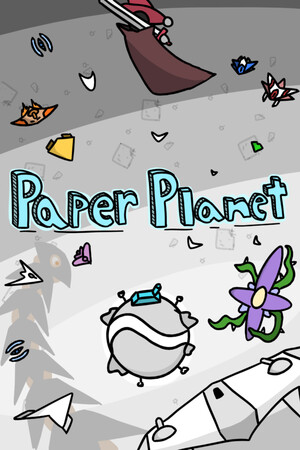







Review evidence
Why players say this
Review evidence
Why players say this
Steam review verdict
A fun roguelike twin-stick shooter with great build variety and synergies, but suffers from a steep learning curve, overwhelming UI, and balance issues.
What players like
Excellent and fun game: Reviewers consistently praise the game as excellent, fun, and worth its price, indicating high overall satisfaction.
Great roguelike twin-stick shooter: The game is described as an entertaining roguelike and a hidden gem, favorably compared to other similar titles in the genre.
Common complaints
Learning curve is too steep: The game is not streamlined and not friendly to new players, with a steep learning curve and too many mechanics to learn. Many players feel the game only explains the bare minimum, leaving them confused and not playing right.
UI and interface are overwhelming: The UI is described as overbearing, convoluted, and overwhelming, with too much information on screen, leading to initial confusion and readability issues. This affects new players' ability to engage with the game.
Game balance is problematic: Balance concerns include enemies becoming bullet-spongy when behind, builds must go exponential or you die, and bosses scaling quickly. Some weapons are useless without AOE or wall-piercing, and the game can become too easy when outscaling enemies.
Crashes disrupt game progression: Frequent crashes, including seeded crashes that repeat at the same spot and hard-locks during powerful builds, cause unavoidable run losses and significantly damage enjoyment. These issues are reported across multiple clusters and are critical for stability.
Too many mechanics and systems: The game has numerous mechanics and hidden events that feel added on top of one another, making it chaotic and esoteric. Players report too much to learn and a feeling of not understanding what is happening even after playing.
Gameplay and performance
Bullet hell roguelike game: The game is consistently described as a bullet hell roguelike or roguelite, with dense enemy fire and roguelike progression. This genre combination is highlighted across multiple clusters, indicating it is a core identity of the experience.
High build variety and synergies: The game offers a large variety of builds with item synergies and modifiable weapons, allowing for diverse playstyles and broken combinations. This depth is appreciated by players seeking replayability and experimentation.
Ikaruga-style color switching: Players note a color-switching mechanic similar to Ikaruga, which adds strategic depth by allowing players to absorb or dodge bullets based on their current color. This is a distinctive feature that stands out in reviews.
Twin-stick shooter controls: The game is frequently labeled as a twin-stick shooter with top-down view, often combined with roguelike elements. This control scheme is central to the gameplay and influences how players interact with the bullet hell patterns.
Complex stat and leveling systems: Several reviews mention the game's complex stat system with multiple bars, effects, and leveling mechanics, which can be overwhelming at first. Understanding these systems is key to optimizing performance and exploiting game mechanics.
Performance drops during heavy effects: Players experience slowdowns and framerate tanks when large numbers appear or when many effects are on screen. This performance degradation is common and can significantly impact gameplay.
Handheld device UI and scaling issues: Some players report UI quirks and scaling issues on handheld devices, though overall performance is solid for many. These issues may affect usability on smaller screens.
Weak PCs can result in run termination: A cluster indicates that players with weak PCs can have a run ended due to performance issues. This is a niche concern but highlights hardware limitations.
Recommendations
Recommended for roguelike fans: Multiple reviewers recommend this game to fans of roguelikes and roguelites, citing its complex, replayable nature. It appeals to those seeking a challenging and original experience in the genre.
Worth the price: Several reviewers state the game is worth its asking price, with some saying it's easily worth full price. The value is a common positive point.
Not for everyone: Some reviewers warn that the game isn't designed for everyone due to its difficulty, density, and steep learning curve. It's recommended only for players who are up for a challenge.
Engaging and fun: Reviewers give a big thumbs up and highly recommend the game, saying it's fantastic and will keep players busy. The overall experience is enjoyable.
Great for crazy builds: The game is praised for allowing players to create ridiculous synergies and god builds, making it appealing to those who enjoy breaking the game. It's specifically recommended for this type of gameplay.
Buying context
Community fair range: $5.00 - $7.00.
Game completion: 72.6h.
The game has a steep initial learning curve due to overwhelming UI and complex God system, but becomes highly enjoyable after 5–7 hours once players understand the mechanics, with many describing a 'click' moment.
Friction: overwhelming UI; confusing God system; steep learning curve.
Unlock drivers: understanding UI; grasping God system; passing tutorial.
Player profiles
Roguelite Purist: Methodical, optimizing, skill-refining; avoids reliance on meta-progression. Motivation: Challenge and mechanical depth with no grind. Stance: buy.
Build-Breaker: Experimenting, seeking overpowered item synergies and infinite combos, pushing system limits. Motivation: Creating and enjoying ridiculous, game-breaking builds. Stance: buy.
Isaac Veteran: Similar to Binding of Isaac – item stacking, exploration, card usage, color-swapping dodge. Motivation: Replicating the Binding of Isaac experience and discovering a worthy alternative. Stance: sale.
Other review notes
Frequent Binding of Isaac comparisons: Many reviews compare the game to The Binding of Isaac, citing similar roguelike mechanics, feeling of being lost, active cards, and the potential for broken builds. This suggests the game strongly evokes Isaac's style and is seen positively by fans of that title.
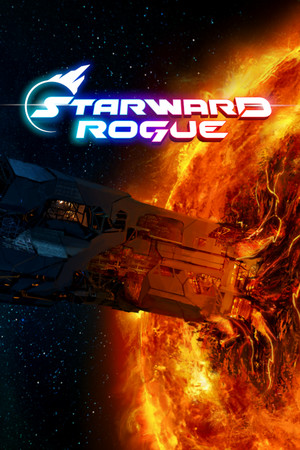
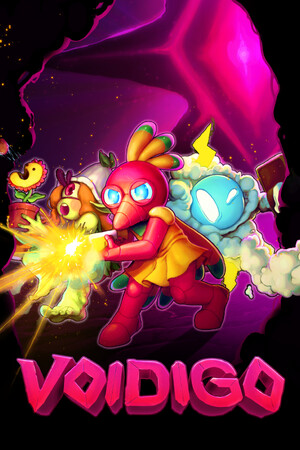
Comparison to other popular roguelikes: Reviewers frequently compare the game to other popular roguelikes like Nuclear Throne, Enter the Gungeon, and Dungeon Crawl Stone Soup. These comparisons highlight its genre blending and appeal to fans of the genre.
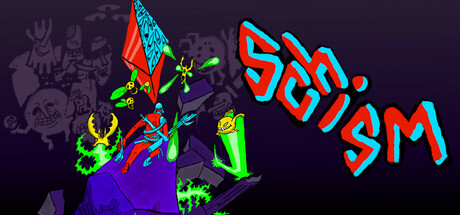
Unique visual and audio style: The game is praised for its distinctive aesthetic, described as gritty sci-fi with neon accents, industrial decay, and a grimy, uncomfortable atmosphere. Its art and sound design contribute to a cohesive audiovisual experience.
Ikaruga color-switching mechanic comparisons: Several reviews note the game's unique color-switching dodge mechanic, reminiscent of Ikaruga. This mechanic is often highlighted as a distinguishing feature that sets it apart from other top-down shooters and roguelikes.
Early access status acknowledged: The game is currently in Early Access, and reviewers are aware of its incomplete state. They note limited content and some bugs but generally express optimism about future improvements.