- Massive customization and build variety
- Major improvement over predecessor
- Highly fun and addictive gameplay
- Forced unskippable tutorial frustration
- Build imbalance with overpowered combos
- Developer hostility and unprofessionalism
Emotions
Archetypes
Hardware
What players like:
Common complaints:
Gameplay feedback:
Performance notes:
Recommendations:
Other player notes:
Similar games
Blend with other games


Review evidence
Why players say this
Review evidence
Why players say this
Steam review verdict
Huge customization and addictive fun make it a big step up, but forced unskippable tutorials, overpowered build combos, and unprofessional developer hostility drag it down.
What players like
Massive customization and build variety: The game offers an enormous range of builds, weapon combinations, and customization options, with turrets fully customizable from scratch. Players highlight the variety of playstyles and meaningful choices compared to previous entries.
Major improvement over predecessor: Players overwhelmingly describe the game as a substantial upgrade over the first title, citing better visuals, feel, and gameplay. Many call it a straight upgrade that refines both the strong and weak aspects of the original.
Highly fun and addictive: Many reviewers find the base gameplay fast, fun, and satisfying, with an addictive quality that keeps them coming back. The game is often described as a dopamine-inducing experience.
Excellent roguelite with high replayability: The game is praised as an outstanding roguelite with infinite replayability, thanks to its large number of customizations and procedurally generated runs. Players consider it a masterclass in the genre.
Packed with content and unlockables: There is a wealth of content to enjoy, including many modes and a large number of things to unlock over repeated dives. The game is described as rich and full of variety.
Common complaints
Forced, unskippable tutorial frustration: Many players report the tutorial is forced, cannot be disabled, and lingers even hours into the game. It interrupts gameplay with frequent popups and repeated reminders.
Build imbalance and overpowered combos: Some builds are extremely overpowered and can break the game, while others are unusable. Many part combinations result in massive damage or firerate reductions, making most setups ineffective.
Developer hostility and unprofessionalism: The developer responds rudely to reviews, uses alts, dismisses criticism, and even bans or locks forum posts. Some players report being told to 'piss off' and receiving condescending warnings.
Repetitive and shallow gameplay: The game can feel repetitive, short, and lacking depth. It does not emphasize unique appealing parts early and becomes simple to auto-pilot.
Difficulty scaling and DPS check: Higher depths become a DPS-check that restricts weapon setup to optimal builds. Upgrade costs outpace enemy HP, and round timers are too short.
Gameplay and performance
Roguelite Shooter Core: Many reviews classify the game as a roguelite or roguelike shooter, often mentioning twin-stick or bullet-hell elements. The stationary defense shooter format with rogue-like progression is a common descriptor.
Extensive Weapon Combinations: The game offers a large number of weapon combinations that players can mix and experiment with. This combinatorial system is a core part of the gameplay and is often highlighted as a strength.
Massive Customization Options: Players repeatedly highlight the enormous number of customization options, describing the game as infinitely or nearly unlimitedly customizable. This depth is a major draw for many reviewers.
Multiple Distinct Game Modes: Players frequently note the game includes several completely different modes, from bullet hell to Brotato and shoot 'em up styles. Each mode substantially changes the experience, adding variety and replay value.
Deep Turret Customization: Turrets can be fully customized from scratch, including weapon mounts, energy types, mods, and abilities. Even the turret's appearance changes based on weapon and attachment choices.
Performance praised on Windows: Several clusters report the game runs great and is surprisingly well optimized on Windows. High-intensity bullet patterns cause no lag on capable hardware like a 4060 laptop.
Lag spikes and frame drops: Players experience FPS drops, massive lag spikes when firing, and more noticeable lag than in the prequel due to increased on-screen effects. These issues appear related to the volume of objects on screen.
Crashes and freezes reported: Some players report the game crashing after about 20 minutes, freezing entirely requiring Task Manager, or freezing for a few seconds when an event starts. A specific full-power build caused a complete freeze.
Linux and Proton instability: The 0.6.1 release became unstable on Linux, and a Proton patch caused weird behaviors for around 16 hours. However, other players report working well through Wine 11 and Proton 9+ on integrated graphics.
High system resource usage: The game causes PCs to sweat and become like a space heater until Task Manager is used, indicating optimization issues. This suggests excessive CPU or GPU load on some systems.
Recommendations
Overwhelmingly Positive Recommendation: The vast majority of reviewers strongly recommend this game, with many urging others to buy it immediately. It is described as an easy and safe purchase, especially for fans of the genre.
Excellent for Build Enthusiasts: The game is highly recommended for players who enjoy experimenting with builds, theorycrafting, and discovering overpowered combinations. Its deep customization and synergy-driven mechanics are a major draw.
Great Value for Money: Many players consider the game well worth its price, with several noting it is an even better deal when purchased on sale. It is frequently described as worth every penny.
Strong Sequel to Predecessor: Fans of the original game will find this sequel to be a worthy and improved continuation. It offers more content and refinement while retaining the core appeal of the first game.
Fans of Genome Guardian Will Love: Those who enjoyed Genome Guardian 1 will likely appreciate this sequel, which offers more customization and optimization. It is seen as a worthy successor.
Buying context
Community fair range: $10.00 - $16.00.
Game completion: 80.0h.
Story completion: 15.0h.
Session length: 0.5h.
Endgame: 3.0h.
Most reports describe a delayed fun profile: the forced early tutorial and hand-holding are a barrier, but once the game frees the player and unlock/progression opens up, many find it satisfying and addictive. A minority either click immediately or never get past the tutorial.
Friction: Forced, prolonged tutorial and hand-holding; Save and option slots gated behind tutorial progress; Tutorial prompts continue after the tutorial is over; Early part combinations are not obvious and often ineffective; Early dives feel repetitive with the same starting weapon.
Player profiles
Synergy Build Tinkerer: Iteratively theorycrafts turret, core, and weapon combos across runs, chasing broken synergies and pushing optimization as far as possible. Motivation: Discovering and optimizing absurd, highly modular build synergies. Stance: buy.
Genome Guardian Series Loyalist: Skips or wants to skip onboarding, immediately compares systems to the first game, and pushes into deeper customization and optimization. Motivation: Continuing and mastering a franchise they already invested heavily in. Stance: buy.
Casual Chill Session Player: Short casual dives, saving mid-run and playing for fun rather than chasing optimal builds. Motivation: Relaxing, bite-sized entertainment that fits around a busy schedule. Stance: buy.
Platform notes
Performance reports for this cohort are limited but negative: users describe crashes, high thermals, and severe lag spikes, with playability achieved only after reducing settings.
Windows <8GB VRAM: negative. Users report crashes, high thermals, and severe lag spikes, and the game becomes playable only after reducing projectile count.
Steam Deck: The feedback shows mixed Linux/Proton compatibility rather than a native Steam Deck experience. The app can run well through Wine 11 and Proton 9+ even on low-end integrated graphics, but the 0.6.1 release caused instability on CachyOS, the developer explicitly says Linux is unsupported, and a Proton patch caused short-lived odd behavior. This fits the tinkering-required range: playable with compatibility-layer caveats, but not seamless.
Linux and Proton: The filtered reviews show that the game can run well on Linux through Wine 11 and Proton 9+, including on an underpowered laptop with integrated graphics. However, one Linux user on CachyOS reported a stability regression after the 0.6.1 release, and the developer explicitly stated that Linux is not supported. The instability appears linked to a temporary Proton patch issue lasting roughly 16 hours. Overall, Linux/Proton compatibility is mostly functional with minor-to-moderate friction rather than being broken or requiring heavy workarounds.
Other review notes
Strong Improvement Over Original: Many reviewers describe the sequel as a direct upgrade that improves on nearly every aspect of the first game. It is seen as elevating the formula, making the original feel basic by comparison.
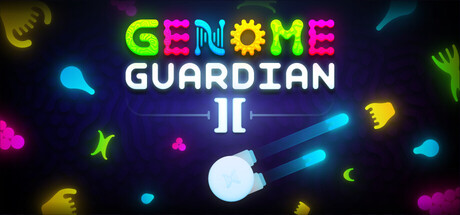
Direct Sequel to Genome Guardian: Reviewers consistently identify the game as the sequel to Genome Guardian, with some calling it a reimagining or worthy successor. It continues the franchise established by the original.
Early Access with Ample Content: The game is currently in Early Access, but already offers substantial content and has plans for a full release. Many reviewers highlight the impressive amount of content available despite the unfinished state.
Expanded Build Complexity and Customization: Compared to the first game, this sequel introduces far more complex builds and greater customizability. Reviewers appreciate the exponentially more interesting build options and expanded mechanics.
Developer Alpherior Praised: The developer, Alpherior, receives praise for being responsive and community-focused. Reviewers note that bugs are fixed quickly, sometimes within hours, and the developer actively engages with players.