- Masterful storytelling and deep immersion
- Rich character development and arcs
- Innovative time-travel mechanics explored
- Slow early-game pacing frustrates players
- Protagonist’s behavior alienates audiences
- True ending requires external guides
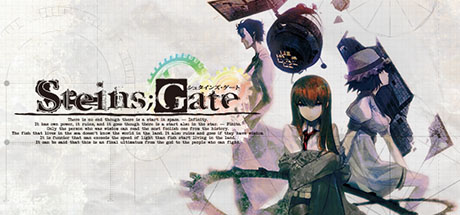
Emotions
What players like:
Common complaints:
Gameplay feedback:
Performance notes:
Recommendations:
Other player notes:
Similar games
Blend with other games




Review evidence
Why players say this
Review evidence
Why players say this
What players like
Masterful storytelling and immersion: The game excels in narrative depth, logical consistency, and emotional engagement. Players highlight its self-contained world-building, immersive first-person perspective, and strong emotional payoffs during key moments, making it a standout experience in sci-fi storytelling.
Rich character development and arcs: Characters like Okabe, Kurisu, and Mayuri are praised for their depth, relatability, and emotional impact. The game explores their backstories, motivations, and growth through layered interactions, making them feel alive and memorable.
Innovative time-travel mechanics: The game’s time-travel logic, world-line shifts, and butterfly effect are lauded for their coherence and emotional weight. Players appreciate the detailed explanations of scientific theories and their integration into the narrative without oversimplification.
Deep thematic exploration: The game delves into complex themes like existentialism, determinism, sacrifice, and the ethics of time travel. Players appreciate its philosophical depth and the way it roots sci-fi elements in human emotions like grief, love, and hope.
High-quality audiovisual presentation: The game’s soundtrack, voice acting, and art style are frequently praised for enhancing atmosphere and emotional resonance. The music, in particular, is described as a masterpiece that complements tense and reflective moments.
Common complaints
Slow early-game pacing frustrates players: The first 4-6 chapters (8+ hours) are criticized for excessive daily-life scenes, slow plot progression, and filler content. Many players nearly quit due to boredom or confusion during this phase.
Protagonist’s behavior alienates audiences: Okabe’s ‘chuunibyou’ personality, poor decisions, and inappropriate actions (e.g., sexual harassment) are frequently cited as off-putting, especially in early chapters. His lack of intelligence and emotional resilience frustrates players.
True ending requires external guides: The multi-ending system, particularly the true ending, is nearly impossible to achieve without guides due to obscure branching mechanics (e.g., email checkpoints) and unclear choices. This frustrates players seeking narrative closure.
Tonal inconsistencies and forced plot twists: The narrative suffers from illogical time-travel mechanics, abrupt tonal shifts (e.g., comedy to tragedy), and contrived resolutions (e.g., surviving impossible scenarios). Some endings feel underdeveloped or clichéd.
Repetitive and filler-heavy dialogue: Dialogue is criticized for being 80% filler, with redundant explanations and irrelevant interactions. Players report skimming or losing interest due to lack of meaningful progression.
Gameplay and performance
Dialogue-heavy with minimal interactivity: Gameplay is primarily text-based with limited interactive choices (e.g., phone triggers, dialogue options). Voice acting and CGs enhance immersion, but the experience is reading-focused.
Branching narrative with time travel: The game is a visual novel centered on branching timelines, multiple endings, and time-travel mechanics (e.g., D-mails, world-line shifts). Player choices significantly alter the narrative, requiring replayability to explore all routes.
Hardcore sci-fi with emotional depth: The narrative integrates theoretical physics (e.g., world-line theory, causality) into a character-driven story with emotional arcs, moral dilemmas, and psychological depth. Themes of sacrifice and human struggle are prominent.
Foreshadowing and plot twists: The narrative employs tight causality, foreshadowing, and late-game twists (e.g., world-line convergence, character betrayals). Early mysteries are resolved in climactic reveals.
Phone/email interaction mechanics: A core gameplay innovation where players use in-game phones or emails (e.g., D-mails) to interact with characters and alter timelines. These mechanics drive narrative progression and ending variations.
Startup and launch failures: Frequent crashes during startup or launch, often tied to system locale settings, D3D9 renderer issues on AMD GPUs, or patch installation failures. Players must use workarounds like DXVK to resolve these problems.
Borderless fullscreen missing: Players report the absence of borderless fullscreen mode, causing compatibility issues with system settings and requiring manual fixes. This affects immersion and convenience, especially on high-end PCs labeled as 'EBA Monster'.
Save system flaws: Auto-saves are limited to chapter beginnings, and quick save/load bugs cause progress loss when the game is turned off. Crashes may also corrupt or delete saves, leading to soft-locks and frustration.
Audio device crashes: Switching audio devices triggers repeated crashes, disrupting gameplay. This issue is particularly problematic for players using multiple audio outputs.
Controller input display bugs: Controller prompts fail to display correctly, creating confusion during gameplay. This technical issue affects players who prefer controllers over keyboard/mouse.
Recommendations
Replay value and endings: Players are encouraged to explore multiple endings, use spoiler-free guides, and save frequently to experience all story paths. Replaying is recommended to uncover hidden details and fully appreciate the narrative depth.
Must-play for narrative fans: The game is highly recommended for fans of narrative-driven, time-travel, and sci-fi stories, with strong emotional engagement and deep world-building. It is praised as a gateway for newcomers to visual novels and anime fans alike.
Best experienced unspoiled: The game’s emotional and narrative impact is maximized when played without prior knowledge of the story. Watching the anime first is suggested for newcomers, but playing the VN afterward enhances immersion.
Discount purchase recommended: The game is frequently recommended for purchase during sales (e.g., 80% off) due to its value, though it is still considered worth the full price for its quality. Buying outside of sales is less advised unless it aligns with personal interests.
Additional content and spin-offs: Players are encouraged to explore related content like *My Darling’s Embrace* or *Linear Bounded Phenogram* after completing the main game to deepen their experience of the *Steins;Gate* universe.
Other review notes
Humor and themes divisive: Players debate the game's dark humor and philosophical themes, with some defending its narrative choices while others criticize reviews as overly sensitive. The game's cult following and memes (e.g., 'El. Psy. Kongroo') are frequently mentioned.
Fan-made patches improve experience: Players frequently mention using fan-made patches to enhance text quality and translations, suggesting official localizations may be lacking.
Save often to avoid progress loss: Players recommend frequent saving due to the risk of skipping too far ahead, which can disrupt gameplay. Playtime varies significantly depending on player choices and engagement.
Anime adaptation impacts experience: Some players express regret about watching the anime before playing the game, as it altered their perception of the story. Comparisons between the game and anime are common.
Mental health content warning: The game includes warnings for individuals with severe depression or anxiety, reflecting its intense and potentially triggering themes.